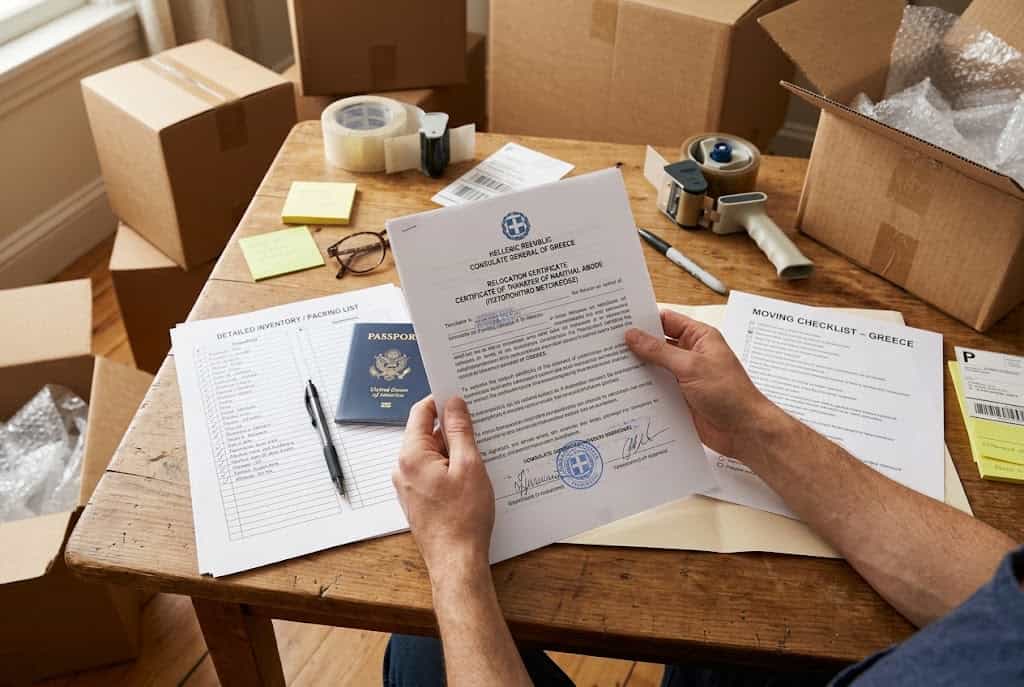

Can I Ship My Household Goods to Germany from the USA?
Yes, you can ship your household goods to Germany from the United States, but eligibility is what makes the difference between a smooth, duty-free move and a shipment that gets delayed or flagged by customs. Germany is very precise about who qualifies, what counts as household goods, and when shipments are allowed to arrive. Understanding those rules upfront saves time, stress, and unnecessary costs.
If you’re comparing international movers and want a clear door-to-door process, start with our international moving company overview.

Who this applies to, and who it doesn’t
This guide is written for people who are genuinely relocating their home to Germany. That includes individuals and families moving their primary residence, whether they are German citizens returning home, Americans relocating for work, or other nationals establishing long-term residence. It also assumes you are shipping used household goods and personal effects by sea freight, either in a full container or as part of a shared container.
It is not meant for car-only shipments, commercial imports, resale goods, or short-term visitors sending a few boxes by courier. Germany treats household relocations very differently from those scenarios, and mixing them up is one of the most common causes of confusion.
The real eligibility question, explained simply
German customs is not focused on nationality. What they care about is whether you are making a legitimate change of residence. In practical terms, that usually means you have been living outside the European Union for a sustained period and are now establishing your home in Germany. Your household goods should be items you already own and use in daily life, not new purchases made just before shipping.
When those conditions are met and the shipment arrives within the allowed window around your move, household goods typically qualify for duty-free entry. When one of those elements is missing, the shipment can still be imported, but duties, VAT, or additional scrutiny may apply.
What Germany considers “household goods”
Household goods are not defined by value or style, but by use. Furniture, clothing, books, kitchenware, décor, and personal belongings that have clearly been part of your home usually fall within acceptable limits. Electronics are generally fine as well, provided they are for personal use and not new or duplicated in large quantities.
Problems tend to arise when items look commercial or undeclared. Brand-new goods in original packaging, large numbers of identical items, or specialty items like alcohol and tobacco often trigger questions. This is why professional packing and a clear, descriptive inventory matter so much. Customs officers rely on that paperwork to determine whether your shipment fits the household category.
Do you have to be a German citizen?
No. Citizenship is not the deciding factor. Germany bases eligibility on residency change, not passport color. What matters is your ability to document that you lived outside the EU and are now moving your primary residence to Germany. Returning citizens, foreign workers, and long-term residents are all evaluated under the same basic framework, even though the supporting documents may differ.
Shipping before you arrive in Germany
Many people ask whether their household goods can arrive before they do. In many cases, the answer is yes, but timing and documentation must be aligned. Customs still needs proof that you are in the process of relocating and will legally reside in Germany. Shipping too early, before any residency paperwork exists, can result in the container being held at the port or placed into storage while authorities wait for confirmation.
This is why move planning is not just about dates, but about coordination. Your visa status, registration timeline, and shipping schedule should support one another rather than compete.
If duty-free entry doesn’t apply
Not qualifying for duty-free entry does not automatically mean your goods are refused. It usually means the shipment becomes subject to import taxes or additional declarations. In those situations, movers often reassess what to ship, whether to delay part of the move, or whether storage makes sense until eligibility improves.
Knowing this before packing day gives you control instead of surprises.
Why shared container shipping is common for Germany
Many households relocating to Germany do not need an entire container. Shared container shipping, often called groupage, is widely used for apartment-sized moves or partial households. It allows you to ship only what you need while sharing container space with other shipments heading to the same destination.
For Germany and much of Europe, groupage is a normal and well-established option when handled by an experienced mover. It trades some speed for flexibility and cost efficiency, which suits many international relocations.
What the process usually looks like
A typical household move to Germany starts with an eligibility review and planning conversation, followed by professional packing and inventory preparation in the United States. Your shipment then moves by sea freight to a German port, clears customs using your residency documentation, and is delivered to your new home. Each step depends on the previous one being handled correctly, which is why shortcuts often lead to delays.
Common reasons shipments run into trouble
Delays are rarely caused by Germany being “difficult.” More often, they stem from incomplete inventories, unclear residency status at the time of arrival, or assumptions that all used goods are automatically duty-free. When expectations and paperwork don’t line up, customs has little choice but to pause the process.
Final takeaway
Yes, shipping household goods from the USA to Germany is very possible, and often duty-free, when the move qualifies as a true change of residence and the shipment is prepared correctly. Germany favors organized, well-documented moves and quickly exposes vague or rushed ones.
If you’re planning a household relocation and want a clear, door-to-door approach from pickup in the U.S. to delivery in Germany, our nationwide international moving services guide you through eligibility, packing, shipping, and customs so there are no surprises along the way.