Moving from Boston to Portugal
Boston has become one of the more active departure points for Americans relocating to Portugal. The combination of affordable housing relative to western Europe, year-round mild weather in Lisbon and Porto, and Portugal’s relatively straightforward residency options has drawn a steady stream of New Englanders making the move. If you’re among them, this guide covers what the shipping process actually looks like from this corridor, how your goods get from Boston to Portugal, what customs qualification requires, and where the process tends to go wrong.
SDC International Shipping is a licensed door-to-door shipping company serving all 50 states, including full pickup and export packing services throughout Greater Boston and the rest of Massachusetts.

How a Boston-to-Portugal Move Is Routed
Household goods shipments from Boston to Portugal move by sea. Your container departs from the Port of New York and New Jersey, the primary export hub for the northeastern United States. Boston-area pickups typically involve a 3- to 4-hour drive to the port facility, and that’s handled by SDC’s logistics team, not the customer.
From New York, containers route across the North Atlantic to one of Portugal’s main receiving ports: Leixões (serving Porto), Lisbon, or Sines. Leixões handles most of the northbound household goods volume and is typically the receiving port for moves to Porto, Braga, and northern Portugal. Lisbon receives shipments bound for the capital and the wider Lisbon metro area, including Cascais, Sintra, and Setúbal. The Algarve is typically served by road from Lisbon or through Sines.
Ocean transit from New York to Portuguese ports runs roughly 10 to 14 days on a direct vessel. Total door-to-door time, from Boston pickup to delivery at your Portuguese address, is typically 6 to 10 weeks, accounting for container booking lead time, customs clearance on the Portuguese side, and final delivery.
Container Options for Boston-Area Moves
Most Boston-to-Portugal household goods shipments move in one of two configurations: a full 20-foot container for larger homes, or consolidated (shared container) space for smaller apartments and partial moves.
Full Container (FCL)
A 20-foot container handles the contents of most 2- to 3-bedroom homes. A 40-foot container is appropriate for larger households or when a vehicle is included in the shipment. FCL moves give you a dedicated container, nothing else goes inside, which means your goods are only handled twice: loaded at origin and unloaded at destination.
Consolidated (LCL / Groupage) Shipping
Smaller moves like a studio apartment, a partial household, or someone who’s already sold most of their furniture, often move better on consolidation. Your goods share container space with other shipments bound for the same destination region. The trade-off is that consolidated shipments typically add 1 to 3 weeks to the overall timeline because they aggregate at a consolidation point before departure. For customers who have a hard deadline at destination, FCL generally offers more predictable timing.
For Boston moves specifically, the volume decision is worth a careful conversation with your coordinator before booking. Some customers moving from a 1-bedroom Cambridge or Somerville apartment assume they need full container space and find consolidation saves meaningful money without much timeline impact.
Portugal Customs: What Qualifies for Duty-Free Import
Portugal, as an EU member state, applies EU customs rules for imports of household goods from non-EU countries including the United States. Americans moving to Portugal with used household goods can qualify for duty-free importation under the EU’s Transfer of Residence (ToR) relief provisions, but qualification isn’t automatic, and the documentation requirements are specific.
The Core Qualification Requirements
To qualify for duty-free import of household goods into Portugal, you generally need to meet all of the following:
- You are transferring your normal place of residence to Portugal from outside the EU
- You have lived outside the EU for a continuous period of at least 12 months prior to the move
- The goods have been owned and used by you for at least 6 months prior to shipment
- The goods are for personal use and will not be sold, transferred, or hired out within 12 months of importation
- The shipment arrives within 12 months of your arrival date in Portugal
The 12-month ownership-of-use rule is the most commonly overlooked requirement. Items purchased in the months immediately before your move — a new laptop, a recently bought sofa — may not qualify unless you can demonstrate they were purchased and in use before the threshold. This affects how your inventory should be written and which items you include in the shipment.
Documents You’ll Need
Portuguese customs typically requires the following for a household goods importation under Transfer of Residence relief:
- Passport copy
- Portuguese residence permit or proof that residence permit application is in process
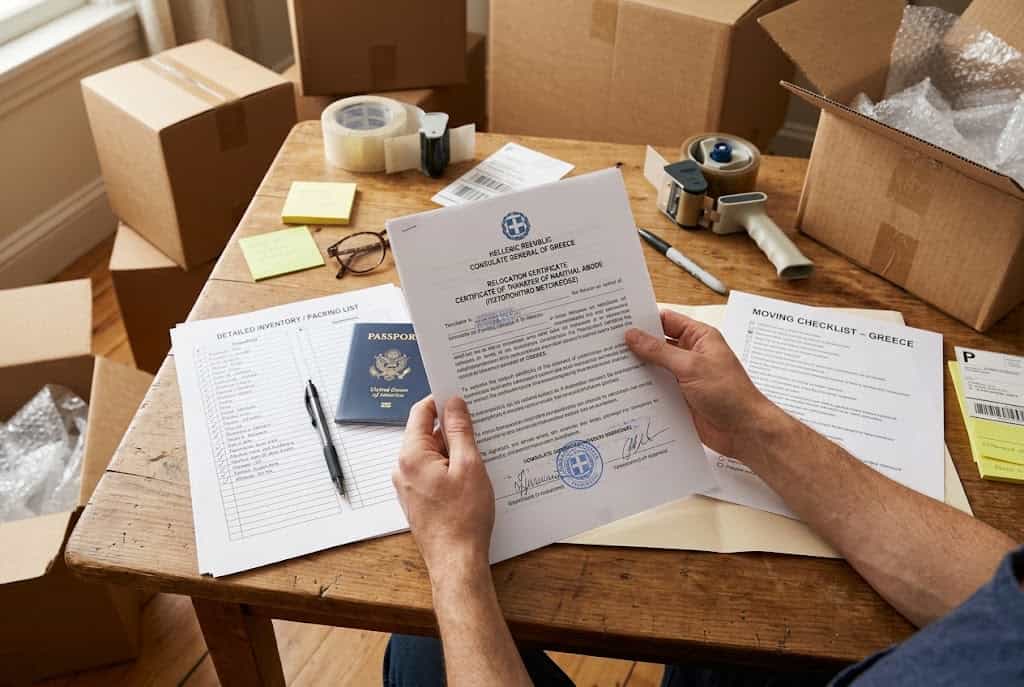
- Detailed itemized inventory (room by room, describing condition and approximate age of items)
- Bill of lading
- A confirmed delivery address in Portugal
- A signed declaration that goods will not be sold or transferred within 12 months of importation
Portugal’s customs process requires your residence permit — or documented evidence that you’ve applied for one — to be in place before clearance can proceed. This is a meaningful logistics constraint: your shipment can be in transit while your permit application is pending, but clearance at the Portuguese port cannot be completed without it. SDC coordinates the timing of your shipment departure with your permit status to avoid your goods sitting in port storage waiting for documentation.
The 90-Day Rule After Arrival
A detail that matters particularly for people who travel to Portugal ahead of their shipment: Portuguese customs prefers that your household goods arrive within 90 days of your arrival date. Shipments arriving significantly after that window may face additional scrutiny or documentation requirements. If there’s going to be a meaningful gap between when you arrive in Portugal and when your container ships from Boston, your SDC coordinator needs to know this upfront so the logistics plan accounts for it.
What Boston Residents Commonly Ship to Portugal
Portugal has a well-developed furniture market, and Lisbon and Porto both have solid IKEA access, so some Boston-area movers opt to sell or donate larger furniture and ship a lighter load of personal effects, books, artwork, and sentimental items. Others — particularly those moving from larger suburban homes in Newton, Needham, Brookline, or the South Shore — bring a fuller household.
Items that ship regularly in this corridor include furniture and beds, kitchen goods, personal libraries, artwork, musical instruments, electronics, clothing, and bicycles. One practical consideration for Boston movers: heavy winter clothing takes up significant volume in a container, and Portugal’s climate means most of it won’t see regular use. It’s worth evaluating whether that space is better used for items you’d actually need to replace at destination.
Items that require extra handling or coordination include pianos and large musical instruments (which need custom crating), antiques with high declared values (which affect the customs inventory), and anything that could be classified as newly purchased. Professional export packing is strongly recommended for ocean shipments, the transatlantic crossing involves extended time in a container subject to ship movement, temperature variation, and humidity. Items that aren’t properly packed for ocean conditions don’t always arrive in the condition they left Boston in.
The Inventory: Where Most Portugal Moves Run Into Trouble
The single most common source of delay in Portugal household goods imports is the inventory. Portuguese customs requires a detailed itemized list, room by room, item by item, with descriptions that convey the items are used personal effects, not new goods.
Inventories that list items in commercial-sounding language (“1 x 55-inch television, model XYZ, retail $1,200”) read differently to customs officials than inventories that describe the same item as it actually is (“55-inch flat screen TV, 4 years old, used”). This isn’t about deceiving anyone — it’s about describing your goods accurately in a way that reflects their nature as household effects rather than merchandise.
Every carton also needs to be described with its contents. A packing list that says “25 boxes, miscellaneous household goods” will not clear Portuguese customs smoothly. Your SDC coordinator reviews the inventory before the container ships to flag anything that could cause problems at clearance — this is one of the operational details that makes a real difference in how quickly your goods arrive at your Portugal address.
If you’re shipping multiple consignments, for example, an initial shipment of essentials and a second container later, each shipment requires a separate inventory, and the second shipment needs prior authorization at the time of the first importation. Portugal does not allow a second shipment to clear under ToR relief if it wasn’t declared at the time of the first.
Frequently Asked Questions
Does SDC pick up directly from my Boston-area address?
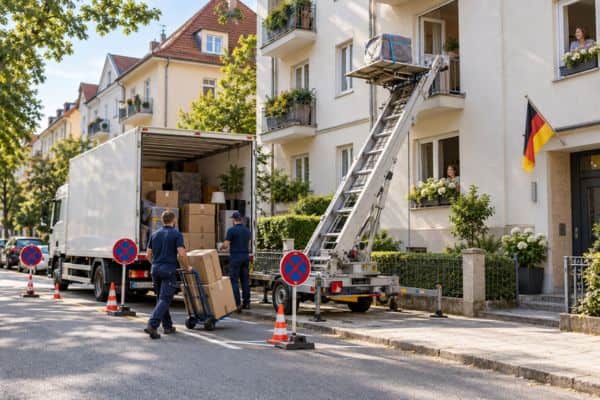
Yes. SDC dispatches a packing and pickup crew to your address anywhere in Greater Boston, including Cambridge, Somerville, the South Shore, the North Shore, and western suburbs. You don’t transport anything to a depot or terminal. The crew handles export-grade packing and loads directly onto the truck that carries your goods to the Port of New York and New Jersey.
How far in advance should I contact SDC before my move date?
For ocean freight moves to Portugal, 6 to 8 weeks before your planned pickup date is the right window to start the process. This allows time for a home survey, container booking, and documentation review. If your Portuguese residence permit is still pending, contacting us early also gives us room to plan the timing around your permit timeline rather than having your container wait at port for clearance documents.
Can I ship my car in the same container as my household goods?
Yes. SDC ships vehicles inside containers together with household goods. A vehicle occupies a significant portion of a 20-foot container, so most customers doing this use a 40-foot container for the combined shipment. Portugal’s rules for importing a vehicle differ from household goods, separate documentation applies, and duty-free vehicle import has its own qualification requirements. Your SDC coordinator will review vehicle eligibility and Portugal-specific import requirements before the container is booked.
What if my Portugal address isn’t confirmed when the shipment departs?
Portuguese customs requires a delivery address to complete clearance. If you don’t have a confirmed address when your container ships, your goods can be held in port storage while you finalize your housing situation. This adds cost and extends your timeline. If there’s any uncertainty on your housing, the better option is to delay your container departure rather than arrive at port with an incomplete clearance package.
What items cannot be shipped to Portugal?
Standard international restrictions apply: hazardous materials, firearms and ammunition (which require separate licensing), certain food items, plants and soil, and anything subject to CITES wildlife protections. Portugal follows EU import regulations, which means items that comply with US standards may still face restrictions or inspections at Portuguese customs. SDC provides a destination-specific restricted items list during the intake process so nothing gets packed that would create a problem at clearance.