
Moving to Hong Kong from the US
Hong Kong remains one of the most active relocation corridors from the United States, driven by finance, technology, and regional business placements. Moving household goods from the USA to Hong Kong involves ocean freight across the Pacific, customs clearance in one of the world’s busiest port cities, and final delivery into a dense urban environment where building access and elevator coordination matter. This guide covers how the process works, what Hong Kong customs requires, and what to expect at each stage. SDC International Shipping is an FMC-licensed door-to-door moving company with direct experience on the USA to Hong Kong corridor.
Moving Household Goods to Hong Kong
One of the practical advantages of relocating to Hong Kong is that household goods can be imported duty-free, provided the items are for personal use and not for resale or commercial purposes. Hong Kong’s customs framework for personal effects is relatively straightforward compared to many other Asian destinations, but accuracy in the packing inventory and consistency across your documentation remain essential for smooth clearance.
SDC handles full household moves to Hong Kong including furniture, clothing, books, kitchenware, electronics, carpets, and personal effects. For fragile or high-value items, specialized packing applies: pianos require dedicated crews and custom rigging, and artwork and antiques are crated individually with climate-appropriate materials for the Pacific crossing. SDC’s international packing and export documentation service covers the full origin process, from building a customs-ready inventory to loading and sealing the container at your US address.
Shipping Options: Sea Freight and Air Freight
Ocean freight is the standard method for full household moves to Hong Kong. Shipments from US West Coast ports, primarily Los Angeles and Seattle, typically reach Hong Kong in 14 to 18 days in transit. From East Coast ports, transit runs 25 to 30 days via the Pacific routing. Door-to-door delivery, including packing at origin, export clearance, ocean transit, Hong Kong customs, and final delivery to your address, generally takes 8 to 12 weeks from the date of origin pickup.
Container options depend on shipment volume. A full 20-foot container suits most two to three-bedroom households. Larger homes may require a 40-foot container. Smaller moves can use a shared container arrangement (LCL, or less than container load), where your goods are consolidated with other shipments to the same region. LCL is more cost-effective for smaller volumes but requires more schedule flexibility than a dedicated container.
Air freight is available for urgent smaller shipments or essential items needed quickly after arrival. Transit time from the US to Hong Kong by air is two to three days, but cost is significantly higher than ocean freight and is best reserved for carefully selected items rather than full household contents.
Documents Required for Customs Clearance in Hong Kong
Hong Kong customs clearance for personal effects is document-driven. The standard documentation for a household goods shipment from the USA includes:
- Valid passport copy
- A complete itemized packing list describing contents by carton and room
- Bill of lading from the ocean carrier
- Authorization letter if a destination agent is handling clearance on your behalf
- Import licenses for any restricted items such as certain medications or controlled goods
There are no restrictions on bringing local or foreign currency into Hong Kong, which simplifies the financial side of the transition. For the latest customs requirements, the Hong Kong Customs and Excise Department publishes current guidance online.
Restricted Items When Moving to Hong Kong
Hong Kong has a defined list of items that are prohibited or require import licenses. The most relevant categories for household moves include firearms and ammunition (require a license from the Hong Kong Police), certain medications and controlled drugs (require a license from the Department of Health), and items made from protected species under CITES regulations. Food items and plants are subject to inspection by the relevant authorities and are generally best excluded from household shipments.
Screening your inventory against the restricted items list before packing day prevents holds at the Hong Kong port. Any item in a grey area should be confirmed with your SDC coordinator before the container is loaded.
Vehicle Shipping to Hong Kong
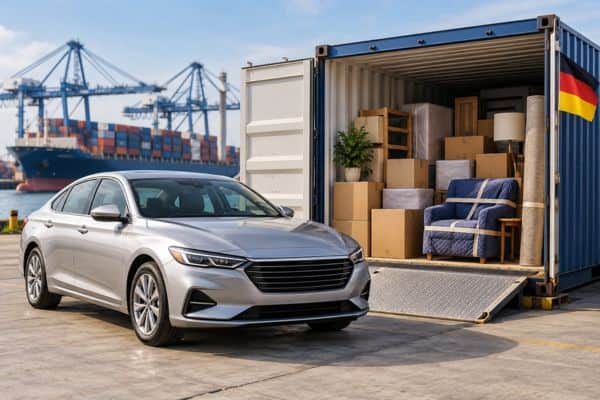
Vehicles can be shipped from the USA to Hong Kong inside a container alongside household goods. SDC does not offer standalone car shipping or RoRo for this corridor. When a vehicle is included, it is blocked and braced inside the container with household goods for a consolidated move.
Importing a vehicle to Hong Kong requires documentation confirming compliance with local emissions standards, typically obtained from the manufacturer or a certified testing laboratory. Within 14 days of the vehicle’s arrival, a vehicle list must be submitted to Hong Kong Customs, and an import return form must be filed within 30 days. After clearing customs, a roadworthiness certificate is required before registering with the Hong Kong Transport Department. Vehicle eligibility and documentation requirements should be confirmed early in the planning process, not after the container has shipped.
Delivery in Hong Kong
Hong Kong’s urban density creates specific delivery logistics that differ from most US destinations. High-rise residential buildings in Kowloon, Hong Kong Island, and the New Territories typically require advance coordination with building management for freight elevator access and loading bay scheduling. Narrower streets in older neighborhoods may limit vehicle access, requiring smaller shuttle vehicles for the final delivery leg. SDC’s destination partners in Hong Kong handle these logistics regularly and build them into the delivery plan.
If your permanent Hong Kong residence is not ready when the shipment clears customs, bonded storage is available while you finalize the delivery address. Planning for this contingency in advance is considerably easier than resolving it after the container has arrived.
What Clients Say
“SDC international movers were fantastic. They moved us out of our large apartment in two days, including packing. Communication was straightforward. I thank the whole team involved. It was my third move and they were the best.” (Lue K.)
“We picked SDC because of good reviews. The quotes we got from other companies were higher. We agreed on pickup and scheduling, and it was pretty fast. Movers came on time and were very courteous. Tom was a primary point of contact for me, and he always updated me on every step of the move. We got our shipment and nothing was broken.” (Kerry B.)
Frequently Asked Questions
How long does it take to ship household goods from the USA to Hong Kong?
Ocean freight from US West Coast ports to Hong Kong typically runs 14 to 18 days in transit. From East Coast ports, expect 25 to 30 days. Door-to-door delivery including packing, export clearance, ocean transit, Hong Kong customs, and final delivery generally takes 8 to 12 weeks from origin pickup. West Coast origins have a meaningful time advantage on this corridor, which can influence planning for clients with firm arrival deadlines.
Are household goods duty-free when moving to Hong Kong?
Yes. Hong Kong does not impose import duties on used personal effects and household goods brought in as part of a genuine relocation. Items must be for personal use and not for resale. There is no minimum ownership period specified under Hong Kong customs rules for personal effects, but goods that appear new or commercial in nature may be questioned. An accurate, itemized inventory describing items as used personal effects supports smooth clearance.
What items are restricted when shipping household goods to Hong Kong?
Firearms and ammunition require a Hong Kong Police license. Certain medications and controlled substances require a Department of Health license. Items made from protected species under CITES regulations are either prohibited or require permits. Food items and plant material are subject to inspection and are generally best excluded from household shipments. Most ordinary household goods, furniture, clothing, books, and electronics clear without issue when the inventory is accurate and complete.