

Moving to France from the USA
From Paris apartments and Provençal farmhouses to Riviera condos and family homes near international schools, moving to France is a dream worth planning well. The right partner turns export packing, ocean or air freight, French customs, and in-home delivery into a clear, step-by-step plan. That’s where SDC International Shipping comes in.
We specialize in door-to-door household relocations from the United States to France, whether you’re shipping a full household, a curated selection of furniture, or a split shipment with essentials by air and the rest by sea.
How Your France Move Works
Every move starts with a quick planning call and a virtual or in-home survey. We map your priorities, timing, budget, and destination in France, and build a door-to-door plan. Your dedicated coordinator keeps you updated from packing day through delivery and assembly in your new home.
Key services include professional packing services, crating for fragile pieces, sea or air freight, customs coordination, in-home delivery, and optional climate-controlled storage at origin or destination. We also offer specialty handling for artwork and valuables, and can ship a vehicle in the same container as household goods (we’re not a car-only shipper): vehicle shipping with HHG.
Shipping Options: Sea, Air, and Smart Hybrids
Direct containers (FCL). An exclusive 20′ or 40′ container dedicated to your shipment, best for full households or fewer handoffs. Typical planning range for direct shipments to France: about 6 to 12 weeks door-to-door, depending on routing and customs.
Shared containers (LCL / Groupage). Ideal for smaller volumes and flexible timelines, consolidated with other shipments bound for France. Planning range: about 8 to 16 weeks door-to-door.
Air freight. The fastest option for essentials, work kits, or tight start dates. Many families ship a small air consignment and send the balance by sea. Not sure which is right for you? We’ll estimate both routes, and for a closer look at what actually determines your delivery date, see our guide to France shipping timelines.
Expert Packing for French Customs and Safe Transit
Export packing is different from local moving. Our crews build a detailed inventory for customs and insurance, then protect each item with international methods: the right cartons, cushioning, moisture and vibration control, wardrobe boxes, and custom wood crates for chandeliers, glass, instruments, and fine art. Professional packing reduces transit risk, speeds customs processing, and is often required for full insurance coverage.
Ask about our specialized services for artwork and valuables and pianos. We’ll advise what to ship, store, or replace locally to fit French homes and power standards.
Customs in France: A Practical Overview
France offers duty and VAT relief for personal effects when you qualify under change-of-residence rules: goods should be for personal use, not new for resale, and typically owned and used for a qualifying period before import. Your coordinator sequences documents and timelines with our French customs partner and plans delivery after clearance.
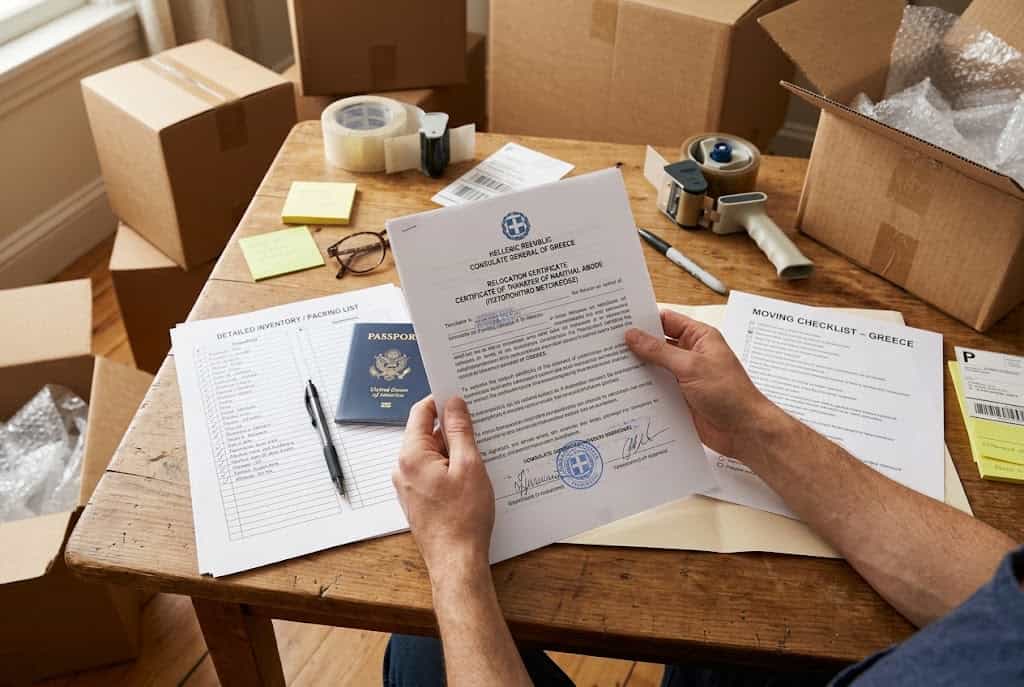
Expect to provide a passport, French visa or residency documentation, proof of address in France, and a valued inventory, often in French, dated and signed. We share templates and a checklist so nothing is missed. For step-by-step help, see our Customs Forms Guide, and for what qualifies you for duty-free entry and what happens if a shipment is held, see our guide to change of residence rules for France. Restricted items include firearms, certain foods, and unapproved medications, so tell us early about wine collections or specialty equipment.
Vehicles, Pets, and Special Items
Vehicles (with HHG). We don’t ship cars alone, but we do ship vehicles inside your container with household goods, confirming feasibility, paperwork, and routing in advance.
Pets. France follows EU entry rules: microchip, rabies vaccination timing, and an Animal Health Certificate from a USDA-accredited vet before travel. We can coordinate pet logistics alongside your household move.
Artwork, antiques, and instruments. High-value pieces receive custom crating, condition reporting, and tailored transport plans, with insurance available for declared values.
How Much Does It Cost to Move to France?
Pricing depends on shipment size, service level (FCL vs. LCL vs. air), origin and destination access, seasonality, and specialty handling. We help you right-size volume for French homes and power standards (230V/50Hz), and suggest hybrids like a small air pallet for essentials with sea freight for the rest. For coverage, consider international moving insurance, as many clients insure for replacement value in France. For a personalized estimate, use the quote form below.
Where We Deliver in France
We serve major metros and regional hubs across mainland France, including Paris, Lyon, Marseille, Nice, Cannes, Toulouse, Bordeaux, Nantes, Montpellier, Lille, Strasbourg, and Grenoble. For Corsica and island deliveries, we arrange ferry transfers and local access planning, and your coordinator confirms elevator reservations or shuttle requirements for narrow streets and historic districts.
Your France Move Timeline (Simple Checklist)
6 to 8 weeks before packing: book your survey, choose FCL, LCL, or air, and confirm dates, while setting aside restricted items and documents. 3 to 4 weeks before: finalize inventory and documents, schedule building access at origin, and confirm auto paperwork if shipping a vehicle with HHG.
Packing week: export packing, inventory verification, and load-out, with your coordinator sharing vessel or flight details and tracking updates. Arrival in France: customs clearance, delivery scheduling, placement and assembly. Keep passports, keys, and initial essentials with you, not in the shipment.
Living in France: Practical Setup Tips
Housing and access. Many Parisian and historic properties have tight stairwells, lift restrictions, or pedestrian zones, so we plan shuttles, hoists, or small vans if a container truck can’t reach your street. Power and appliances. France uses 230V/50Hz and Type E sockets; most 120V US appliances aren’t practical to convert, though laptops and phones with universal adapters are fine. We’ll help you decide what to ship versus replace locally.
Schools and work. International schools cluster around Paris, Lyon, and major metros, so allow extra lead time in peak enrollment seasons. If relocating with an employer, request your transfer letter early, we provide a template during onboarding. Banking and mobile. Opening a French bank account and setting up mobile service is easier with proof of address, so keep key documents handy rather than in your shipment.
FAQs: Moving to France from the US
Can I ship wine or pantry items? Some food items are restricted and alcohol allowances are limited. Tell us what you plan to bring and we’ll advise on documentation.
Do I need professional packing? Strongly recommended. Export methods lower transit risk, speed customs, and are often required for full-value insurance.
What if my housing dates change? We can hold shipments in climate-controlled storage at origin or destination and re-time delivery to match your keys-in-hand date.
Can you ship my car? Yes, when containerized with household goods (FCL). We’re not a car-only shipper. We’ll confirm feasibility and paperwork early.
What’s the fastest way to get essentials? A small air shipment gets you set up quickly while your sea container follows. Many families use this hybrid approach.
Get a France Moving Quote
Tell us what you’re moving and when, and we’ll build a clear plan with timelines and options, no surprises.
Related Services
Explore more resources to plan with confidence: Sea Freight Shipping and Air Freight vs. Ocean Freight.