

Moving to Germany: Customs & Shipping Guide
Shipping household goods from the U.S. to Germany involves a specific set of customs documents and duty-free conditions, and getting them right the first time avoids delays once your container reaches port. As a licensed overseas moving company serving all 50 states, we handle these Germany-bound moves regularly and have laid out below exactly what German customs will ask for.
What German Customs Requires for Your Shipment
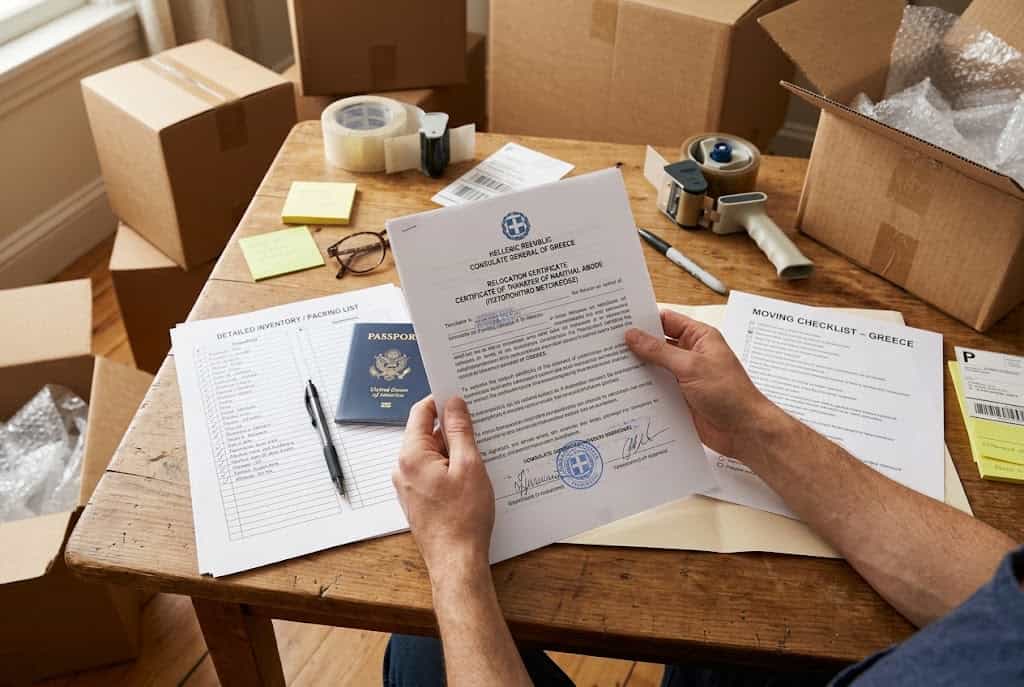
Your household goods shipment needs a customs registration form (Form 0350), along with proof that you lived outside the EU for the qualifying period. That proof can be a deregistration confirmation from your prior address abroad (Abmeldebestätigung), or a letter from your employer or the German consulate confirming your residency abroad or upcoming assignment. Once you arrive, you’ll also need proof of registration at your new German address (Anmeldebestätigung).
Beyond that, plan to provide a copy of your passport, a rental contract or proof of your new address if available, an employment contract if applicable, and a complete goods inventory. We also recommend a signed statement confirming that firearms, alcohol, tobacco, tea, and coffee are not part of the shipment, since customs officers commonly ask for this. Any single item valued over €5,000 needs to be listed individually on the inventory rather than grouped in with everything else.
Duty-Free Conditions
German customs grants duty-free entry on used household goods when all of the following apply:
- You lived, or had firmly planned to live, outside the EU for at least 12 months
- The goods arrive within one year of establishing your permanent residence in Germany
- You owned and used the items for at least 6 months before your ship date
- The goods will be used in Germany for the same purpose they served before
- You keep possession of the goods for 12 months after import
Only German customs authorities can grant this duty-free status, and it’s assessed case by case, so accurate paperwork matters more than anything else in this process.
Items With Special Rules
Food can enter duty-free as part of your household goods shipment, but only in quantities considered normal personal provisions, and meat, poultry, fish, and dairy products are prohibited outright. Wine, spirits, and tobacco are subject to duty regardless of quantity. If you’re shipping firearms, you’ll need a German gun license, a hunting permit if applicable, and a valid import permit; some weapons categories can’t be imported at all under German arms law, so check this well before your ship date if it applies to you.
Shipping a Car with Your Household Goods
A car travels inside the same container as your household goods. SDC ships vehicles only when they are containerized with household goods, and does not handle vehicle-only shipments. The car still has its own requirements: proof of ownership, and proof that it was registered abroad in your name for at least 6 months before shipping. Once it clears German customs, it needs a technical inspection by an approved inspection body such as TÜV, followed by registration at the local traffic authority before you receive German registration papers. Depending on your situation, German motor vehicle tax (Kraftfahrzeugsteuer) may apply even after duty-free customs clearance. Our guide to shipping a car to Germany with household goods covers the steps in order.
A Realistic Shipping Timeline
Most household goods shipments from the U.S. to Germany move by ocean freight, either in a shared groupage container or a dedicated one if you have enough volume. Door-to-door transit typically runs 8 to 16 weeks depending on whether your goods are consolidated with other shipments. We recommend starting the booking process, and gathering your customs documents, at least 8 to 12 weeks before your target ship date so there’s no last-minute scramble for paperwork. Specialty packing for pianos, artwork, or other fragile high-value items should be scheduled even earlier, since our professional packing services need extra lead time to prepare the right crating.
What We Handle, and What’s Outside Our Scope
We coordinate the shipping, packing, and customs documentation side of your move to Germany, and we can walk you through exactly what German customs will expect from your paperwork. Visa applications, residency permits, and immigration requirements are handled by the German consulate or an immigration attorney, not by us, so we’d always recommend confirming your specific visa pathway directly with the nearest German consulate before finalizing your move date.
Frequently Asked Questions
How long does it take to ship household goods from the U.S. to Germany?
Groupage (shared container) shipments typically take 8 to 16 weeks door-to-door. A dedicated full container moves somewhat faster since there’s no wait to consolidate with other shipments.
Do I need a separate process to ship my car to Germany?
Not a separate shipment, but a separate set of steps. The car ships only inside the container with your household goods, and it brings its own ownership and registration proof. Germany then requires a technical inspection by TÜV or a similar approved body before the car can be registered.
What items can’t be included in my shipment?
Firearms, alcohol, tobacco, tea, and coffee are commonly excluded from standard household goods shipments and typically require a signed statement confirming they’re not included. Meat, poultry, fish, and dairy products are prohibited from food shipments entirely.
Call 877-339-0267 to talk through your move to Germany, or reach out through our website so we can put together a shipping timeline based on your target dates.