

International Piano Movers
Shipping a piano overseas is one of the more specialized moves SDC handles. The combination of weight, fragility, and customs complexity, particularly for instruments with ivory components, puts piano shipping in a different category from standard household goods. This page covers how the process works, what to expect at each stage, and what affects the cost, whether you’re moving a baby grand, a concert grand, or a digital instrument as part of a full household relocation or as a standalone shipment.
For a full overview of SDC’s door-to-door process from any US state, SDC International Shipping serves clients across all 50 states with dedicated teams on both coasts.
Types of Piano We Ship Internationally
SDC ships all horizontal and vertical piano types internationally, including grand pianos, baby grand pianos, concert grand pianos, ballroom pianos, spinet and studio pianos, and digital pianos. Each type requires a different approach to dismantling, crating, and customs documentation, and SDC tailors the packing and logistics plan accordingly.

How SDC Ships a Piano Overseas
An average upright piano weighs between 500 and 900 lbs. A grand piano typically runs around 1,200 lbs. With over 1,000 internal moving parts, a piano is one of the most damage-sensitive items in any international shipment: small impacts, moisture exposure, or improper crating can affect tuning stability, action parts, and finish in ways that aren’t immediately visible at delivery. The process SDC follows reflects that reality at every stage.
1. Pickup
SDC’s crew collects the piano from your location, securing it with straps for transport to our warehouse. The pickup team assesses access, stairwells, narrow hallways, elevator dimensions, in advance so there are no surprises on the day.
2. Packing and Crating
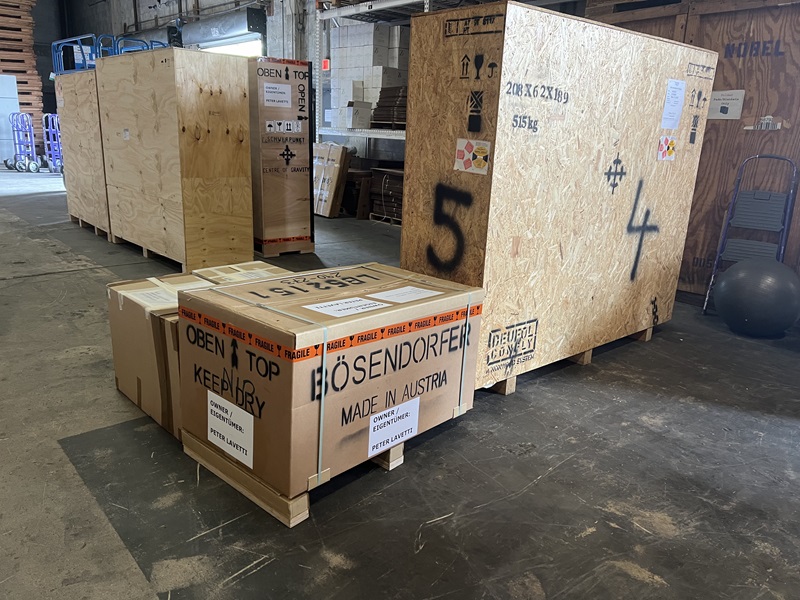
At the warehouse, the piano is wrapped in protective padding and placed on a skid board. The skid is bolted to a platform, the crate is sealed with additional packing material inside to keep the instrument stationary, and the finished crate is labeled for export. For grand and baby grand pianos, this stage includes removing and individually wrapping legs, pedals, and the lid before crating. The crate is custom-built to the instrument’s dimensions; SDC does not use generic crate sizing for piano shipments.
Clients including a piano as part of a broader household move can have the full shipment packed and inventoried under SDC’s professional packing service, with the piano crated separately within the same container.
3. Customs Documentation
SDC handles export documentation from the US side and coordinates with destination agents on import requirements. One issue that comes up regularly with older instruments: pianos with ivory keys are restricted or banned in many destination countries under CITES regulations governing trade in protected materials. If your piano has ivory keys and is traveling to a jurisdiction with those restrictions, SDC can remove the ivory prior to customs clearance in a way that preserves the instrument. This needs to be identified and addressed before the shipment departs, not at the destination port.
4. Insurance
SDC strongly recommends covering the full declared value of the instrument. Piano claims during international transit, when they occur, tend to involve internal damage that is not visible externally: tuning pins, soundboard cracks, or action damage from vibration or moisture. Standard carrier liability does not cover full replacement value. SDC’s international moving insurance options cover the full declared value of the instrument with options for all-risk coverage.
5. Delivery
Once the piano clears customs at the destination port, SDC’s affiliate agents transport it to your address. Door-to-door delivery is standard. For destinations where access is constrained, apartment buildings, island locations, properties with limited vehicle access, this is coordinated in advance with the destination agent so the final delivery doesn’t stall at the port.
Sea Freight vs Air Freight for Piano Shipping
Most grand and baby grand pianos ship by sea freight. The weight, crate dimensions, and cost per kilo at air freight rates make ocean the practical and economical choice for large instruments, particularly when the piano is part of a household goods shipment already moving by container.
Air freight is a viable option for digital pianos or smaller upright instruments when the timeline is urgent and the shipment volume is limited. The volumetric weight calculation for a crated piano can make air freight significantly more expensive than the actual weight suggests; your SDC coordinator can work through the numbers for your specific instrument and destination before you commit to a freight method.
Humidity and Climate Protection During Transit
Ocean shipments expose pianos to humidity variation, temperature change, and prolonged vibration, all of which affect wood components, felt action parts, and tuning stability. A piano can arrive with no external damage and still require significant tuning work or action adjustment if moisture management during transit was inadequate.
SDC’s crating method addresses this by sealing the crate with moisture-resistant materials and using internal packing to limit movement and buffer vibration. For higher-value instruments or shipments to tropical or high-humidity destinations, additional protection measures are available and are recommended as part of the pre-shipment consultation.
What Affects the Cost of Shipping a Piano Internationally
Piano shipping costs vary based on the type and size of the instrument, the origin and destination, the freight method chosen, customs and import duties at the destination, and insurance coverage. Grand and concert grand pianos cost more to ship than uprights or digitals due to weight and crate volume. Destinations with limited port infrastructure or requiring transshipment, island nations, remote coastal destinations, add to transit time and cost. Import duties vary significantly by country and by whether the piano qualifies as a used personal effect under the destination’s customs relief provisions.
For high-value instruments, temperature-controlled crating and specialized handling equipment add to the quote. SDC provides itemized quotes that separate freight, crating, insurance, and customs coordination so you can see exactly where the cost comes from.
Frequently Asked Questions
Can I ship a piano with ivory keys internationally?
It depends on the destination. Many countries restrict or ban ivory under CITES regulations, so this needs to be identified before departure. If your piano has ivory keys and is headed to a restricted jurisdiction, SDC can remove the ivory in a way that preserves the instrument, but this has to happen before the shipment leaves, not at the destination port.
Should I ship my piano by sea or air?
Most grand and baby grand pianos ship by sea, since the weight and crate dimensions make ocean freight far more economical. Air freight can work for digital pianos or smaller uprights on a tight timeline, but the volumetric weight calculation for a crated piano often makes it more expensive than it first appears.
Ready to Get a Piano Shipping Quote?
The most useful starting point is a conversation with an SDC coordinator who handles piano shipments regularly. Bring the instrument type, dimensions if known, origin city, destination country, and your target delivery window. From there, SDC can recommend the right freight method, crating approach, and insurance level for your specific instrument and move. Request a quote here to get started.