
Moving to Indonesia from the USA
Moving household goods from the USA to Indonesia means working within a customs framework that changed in 2025. SDC coordinates transport, export packing, customs filing, and final delivery around your specific residency status and arrival timing, so your shipment clears without the delays that catch people who plan around outdated rules.
What Changed: Indonesia’s 2025 Household Goods Import Rule
Indonesia enacted PMK-25/2025 on April 28, 2025, and it took effect on June 27, 2025, replacing the old household goods import framework (PMK-28/2008) with a new regulation governing duty and tax exemptions for relocation shipments, known as barang pindahan. The update gives customs a clearer legal basis for approving exemptions, but it also introduced filing requirements that did not exist under the old rule. A shipment prepared using pre-2025 guidance can run into avoidable holds at the port.
The PIBK Declaration and 90-Day Arrival Window
Under PMK-25/2025, eligible shipments must be declared electronically through the PIBK system (Pemberitahuan Impor Barang Khusus), filed via Indonesia’s SKP customs portal before the goods reach Indonesian customs territory. Your shipment must arrive within 90 days before or after your own arrival in Indonesia. This window is not flexible: goods that land outside it are treated as a standard commercial import, which means full duty and tax rather than relief. We build your sailing or flight schedule around your entry date specifically to keep the shipment inside that window.
PIBK approval isn’t the final step. Once customs reviews your filing and confirms your goods qualify, the SKP system issues an SPPB (Surat Persetujuan Pengeluaran Barang), the actual Customs Clearance Approval Letter that authorizes your shipment’s release. No SPPB means no release, regardless of how clean the rest of your paperwork is, so we track this document specifically rather than assuming approval once the PIBK is filed.
The 12-Month KITAS Requirement
Foreign nationals qualify for the exemption if they hold a valid KITAS or ITAS (limited stay permit) issued for a stay of at least 12 months. A shorter-term permit does not qualify under the new rule, regardless of how long you actually intend to stay. Returning Indonesian citizens qualify under a separate provision. If your work assignment or visa is still being finalized when you’re ready to ship, tell us early: we can advise on sequencing so the PIBK filing lines up with your permit status rather than your shipment sitting in limbo at the port.
What PMK-25/2025 Excludes from the Exemption
The exemption is generous but not unlimited. Motor vehicles and trade goods are explicitly excluded from the barang pindahan facility, with exemptions only in narrow diplomatic cases. Being excluded from the exemption doesn’t mean these items are banned outright, it means they can’t ride along under your household goods relief and instead go through a separate customs channel, typically at full duty. If your shipment includes a vehicle, it needs to be identified and handled on its own track from the start, not discovered as a problem at the port. SDC ships vehicles only when containerized alongside household goods, and never as a standalone shipment, so this is worth flagging to us early if it applies to your move.
Sea and Air Freight Options
Full-container (FCL) service suits whole-home moves and reduces handling on a long sea leg. Smaller shipments move as LCL, sharing container space and paying only for volume used. Air freight gets essentials to your door in roughly one and a half to two and a half weeks, including import formalities, and is commonly paired with a slower ocean shipment for the bulk of a household. Alcohol, aerosols, and some cosmetics are restricted by air and are better routed by sea.
Documents You’ll Need
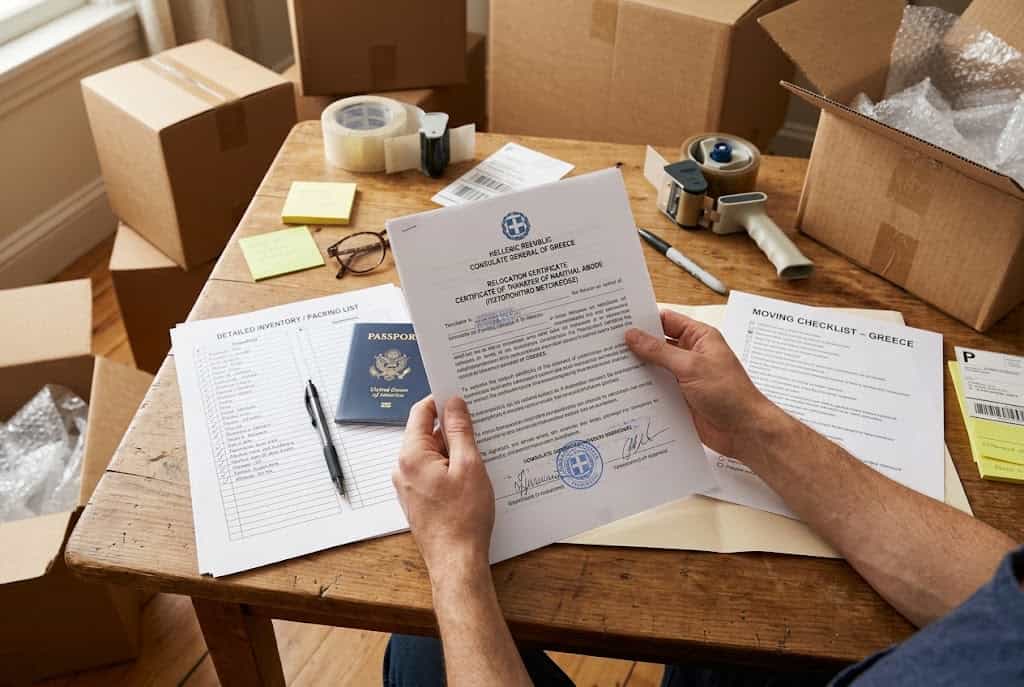
The PIBK filing itself requires specific supporting documents: a copy of the relocating person’s travel document, proof the goods meet the household-goods requirements, proof of compliance with any prohibited or restricted item rules, and a detailed inventory listing the type, quantity, value, and condition of every item. If we’re filing on your behalf rather than you filing directly, a signed power of attorney (Surat Kuasa) has to accompany the submission. Beyond the PIBK-specific paperwork, expect to provide a valid passport, your KITAS or ITAS, evidence of your arrival date, and the Bill of Lading or Air Waybill. Our packing service prepares the room-by-room inventory that satisfies both the PIBK filing and the physical inspection at the port.
Primary Ports and Final Delivery
Most household containers destined for Java route through Tanjung Priok in Jakarta. Surabaya’s Tanjung Perak serves East Java and eastern Indonesia, Tanjung Emas in Semarang supports Central Java, Belawan is the typical gateway on Sumatra, and Makassar’s Soekarno-Hatta port serves Sulawesi. After customs release, we arrange inland delivery, including shuttle trucks where road access is narrow or weight-restricted.
Typical Timeframes Door to Door
FCL shipments commonly run seven to nine weeks door-to-door from most US origins. LCL adds several days on each end for consolidation and deconsolidation, putting most LCL moves at nine to eleven weeks. Air consignments generally arrive in one and a half to two and a half weeks. Port congestion and holiday closures can extend these windows, and we’ll confirm a lane-specific estimate with your quote, one that accounts for your PIBK filing timeline, not just transit time.
Common Mistakes That Delay Clearance
The most frequent hold-up we see is a shipment scheduled without regard to the 90-day window, either sailing too early relative to a not-yet-finalized entry date, or arriving so late that the relocation facility no longer applies. A second, less obvious issue: customs reviews aren’t limited to checking your documents against your goods, they also weigh whether the type and quantity of what you’re importing is reasonable given how many people are actually relocating and moving into the household. A large shipment filed under a single person’s PIBK can draw closer scrutiny than the same shipment filed for a family of four. Listing every relocating household member on the filing, keeping proof of prior ownership for higher-value goods, and confirming your KITAS validity period before we lock in a sailing date, avoids most of what causes delays at this stage.
Request a free quote and we’ll confirm the right freight mode, a realistic timeline built around your KITAS status and arrival date, and the documentation your PIBK filing will need.