
Moving to Singapore: Shipping & Customs Guide
Moving to Singapore from the U.S. means navigating one of Asia’s stricter customs and vehicle import regimes, on top of standard household goods shipping. As a licensed household goods shipping company, we handle these Singapore-bound moves regularly, and there are a few things worth knowing before you book.
Shipping Your Household Goods
Most households moving to Singapore ship by ocean freight, either in a shared consolidated container (LCL) or a dedicated full container (FCL) if there’s enough volume to justify one. FCL gives you more predictable timing since there’s no wait to consolidate with other shipments; LCL is the better value for smaller households. Whichever method fits, our export packing services use double-walled cartons, moisture-resistant wrapping, and custom crating for anything fragile, since your shipment will spend weeks in transit and multiple port handoffs before it reaches you.
If your Singapore housing won’t be ready by the time your container arrives, storage can bridge the gap at either end rather than forcing a rushed delivery date. We recommend starting the booking process at least 8 to 12 weeks before your target ship date, since that gives enough room for packing, documentation, and any scheduling conflicts at the origin or destination port, without leaving you scrambling in the final weeks before the move.
Duty-Free Import of Household Goods
Personal household goods generally qualify for duty-free entry into Singapore when a few conditions are met: you’re establishing residency in Singapore, the items were in your personal use before the move rather than purchased for resale, and the shipment arrives within a reasonable window after you do. Because these criteria get applied case by case, we confirm current requirements with you directly as part of your documentation checklist rather than relying on a generic list. It’s also worth protecting the shipment itself with international moving insurance matched to your inventory value.
Shipping a Vehicle to Singapore
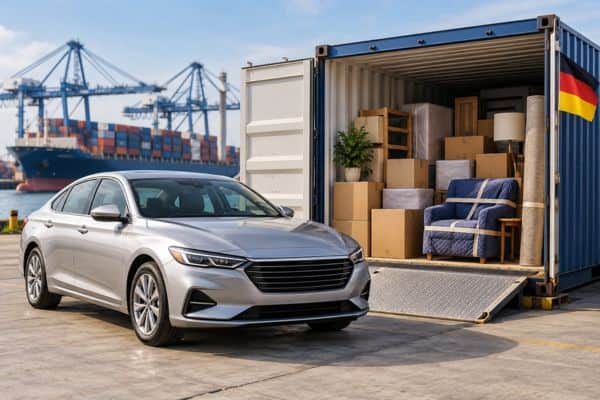
Vehicle shipping to Singapore comes with real limitations worth knowing about before you commit to bringing a car. Left-hand-drive vehicles generally aren’t permitted for road use, and registration-related costs are high enough that many clients decide it isn’t worth it once they see the numbers. If you do want to bring a vehicle, our policy is to ship it only inside a container alongside your household goods, secured with proper blocking and bracing; we don’t offer stand-alone car shipments or RoRo (roll-on/roll-off) service to Singapore.
If you decide to move forward with a vehicle, expect to provide documentation along these lines: an Exhaust Emission Control Standard Certificate, the original bill of sale, insurance papers, your vehicle registration certificate, an Inward Declaration Permit, a Temporary Certificate of Entitlement, and a letter from the manufacturer confirming the date of manufacture. We’ll review feasibility with you up front, including whether your household volume allows the vehicle to be properly blocked and braced in a shared container or whether it needs a dedicated one.
Specialty and High-Value Items
Pianos, artwork, antiques, and safes need handling beyond standard export packing: custom crating, shock-mitigating materials, and humidity-aware wrapping for anything sensitive to Singapore’s climate on arrival. If you’re shipping something in this category, mention it early so we can schedule the right crating and materials rather than trying to fit it in at the last minute.
Where American Expats Settle in Singapore
Singapore is compact enough that commute times rarely dictate where people choose to live the way they might in a larger city. Central neighborhoods like the Singapore River area put you close to work and dining but come at a premium; areas like Queenstown, Novena, and Clementi offer more space and a quieter residential feel while still being a short ride from the center. Sentosa is its own category entirely: mostly resort-style and condo living, popular with families who want beach access and amenities on-site.
Wherever you land, we coordinate delivery around your building’s move-in requirements, since many Singapore condos and apartment blocks have specific loading dock hours, elevator booking windows, and advance notice requirements that can hold up delivery if they aren’t planned for ahead of time.
Frequently Asked Questions
Can I ship my car to Singapore on its own, without household goods?
No. We only ship vehicles inside a container together with household goods, and we don’t offer RoRo service for this route.
Can I drive a left-hand-drive car in Singapore?
Generally no. Left-hand-drive vehicles aren’t permitted for road use in Singapore, which is a major reason many clients choose not to ship a car at all for this move.
How long does shipping to Singapore typically take?
Ocean freight transit time depends on whether you’re using a shared (LCL) or dedicated (FCL) container, with FCL generally offering more predictable timing since there’s no consolidation wait.
What documents do I need for household goods, separate from a vehicle?
Requirements are confirmed case by case, but expect to provide a passport copy, a complete goods inventory, and proof that you’re establishing residency in Singapore. We’ll walk through the current checklist with you directly once your move is booked.
Call 877-339-0267 to talk through your move to Singapore, or reach out through our website so we can put together a shipping timeline based on your target dates.