
What Documents Do I Need to Ship Household Goods to Germany?
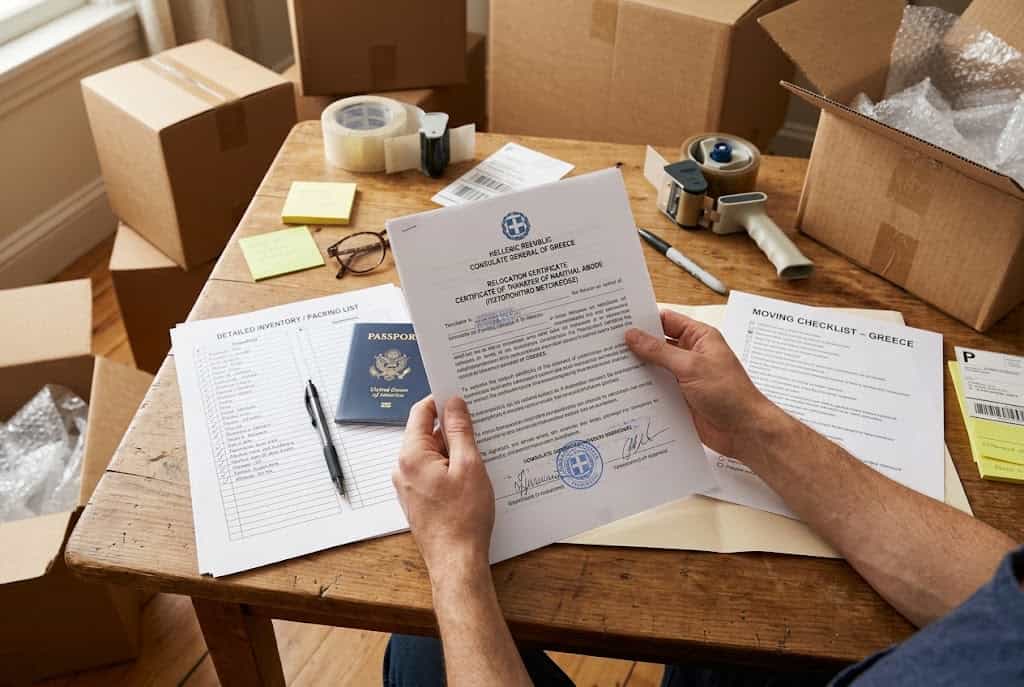
Shipping household goods to Germany is less about how much you’re sending and more about how well your paperwork tells your story. German customs is thorough and procedural. When documents are clear and consistent, clearance is usually smooth. When they’re incomplete or contradictory, shipments slow down quickly.
If you’re comparing international movers and want a clear door-to-door process, start with our international moving company overview to understand how documentation fits into the full move.
Why Germany cares so much about documents
Germany treats household moves as a legal change of residence, not a casual shipment. Customs officers are verifying three things at once: that you actually lived outside the EU, that you are now establishing your home in Germany, and that the items you’re importing are personal belongings rather than commercial goods.
Your documents don’t just prove facts, they connect the dots. When those dots line up, your shipment is far more likely to qualify for duty-free entry and timely release.
The core documents German customs expects
Every household goods shipment to Germany relies on a small set of core documents. These form the backbone of your customs file and are reviewed together, not individually.
Your passport is used to confirm identity and travel history. In most cases, customs also needs proof of your legal right to live in Germany, such as a visa, residence permit, or confirmation of registration once you arrive. These documents establish that the move is legitimate and long term.
Equally important is proof that you lived outside the European Union before the move. This might be a deregistration certificate, a letter from an employer, or other official confirmation showing you resided abroad for the required period.
Finally, German customs expects a signed declaration confirming that the goods are used, owned by you, and not intended for sale. This declaration reinforces that your shipment qualifies as household goods rather than an import for resale.
The inventory, where most problems begin or end
Your inventory, sometimes called a packing list, is one of the most scrutinized documents in the entire process. It should describe what you’re shipping in clear, everyday language. “Kitchenware,” “books,” or “used clothing” are acceptable descriptions. Vague phrases like “miscellaneous items” invite questions.
High-value items and electronics should be listed clearly, and quantities should make sense for a normal household. An accurate inventory supports duty-free treatment and speeds up inspection decisions. A rushed or sloppy one often does the opposite.
This is why professional packing services are so valuable for international moves. Experienced packers know how to prepare inventories that satisfy customs expectations rather than trigger extra checks.
Timing documents and arrival documents must match
One of the most common causes of delay is when documents exist, but the timing doesn’t line up. German customs wants to see that your household goods arrive within an acceptable window around your relocation. Shipping too early, before residency paperwork exists, or too late, long after you’ve settled, can complicate clearance.
If your documents are still in progress when the shipment arrives, customs may place the container into storage until everything is complete. Coordinating documentation and shipping schedules is just as important as having the documents themselves.
This is where working with an experienced international household movers team makes a real difference, because they help align paperwork with transit planning rather than treating them as separate tasks.
What about duty-free entry paperwork?
When the move qualifies as a change of residence, German customs allows used household goods to enter duty-free. To apply this relief, customs relies on your residency documents, proof of time spent outside the EU, and your signed declarations. There is no shortcut or workaround if these pieces are missing.
If duty-free relief does not apply, the shipment can still be cleared, but import VAT or other charges may be assessed. Understanding which category you fall into before shipping lets you make informed decisions about timing, shipment size, or storage.
Documents related to shipping and insurance
Beyond customs paperwork, there are transport documents that support the physical movement of your goods. The bill of lading or air waybill identifies the shipment itself and ties it to your name and destination address. These documents are issued as part of the shipping process and must match your personal paperwork exactly.
Many movers also recommend international moving insurance for household goods. Insurance documentation does not affect customs clearance, but it protects you financially if items are damaged or lost in transit, which is especially important for long-distance sea freight moves.
Common documentation mistakes to avoid
Delays are rarely caused by missing everything. More often, they’re caused by small inconsistencies. A name spelled differently across documents, an address that doesn’t match, or an inventory that contradicts declarations can slow the process. Including restricted items without declaring them is another frequent issue that leads to inspections.
These problems are preventable when documentation is reviewed as a complete package rather than a checklist.
How documentation fits into the overall move
For most households, the document process begins weeks before packing day. Information is gathered, declarations are prepared, and inventories are drafted alongside your shipping plan. Once the shipment leaves the United States, customs clearance in Germany relies almost entirely on the accuracy of that preparation.
That’s why documentation should never be an afterthought. It is part of the move itself.
Final takeaway
Shipping household goods to Germany is not complicated, but it is precise. German customs expects clear proof of residency change, accurate inventories, and consistent documentation across every stage of the move. When those elements are handled properly, clearance is usually straightforward.
If you want a door-to-door approach that manages packing, sea freight, documentation, and customs as one coordinated process, our nationwide international moving services are designed to guide you through every step with clarity and confidence.