Understanding U.S. Customs When Moving from India
When most people think about moving from India to the United States, their minds go straight to the shipping container, the moving boxes, or the flight itinerary. But in between your departure and your arrival lies a critical checkpoint that can make or break the experience: U.S. customs.
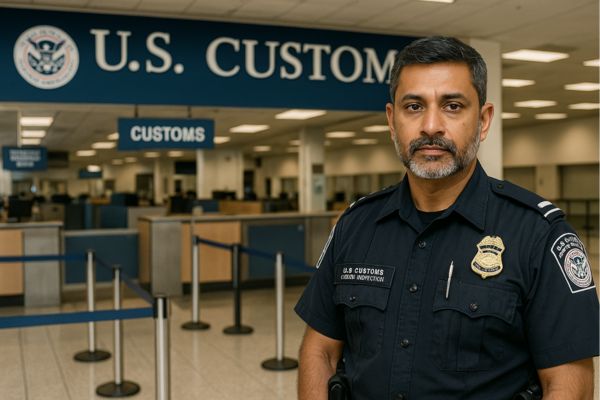
Every item you bring into the U.S.—from your furniture to your pressure cooker to your child’s favorite toy—is subject to inspection and regulation. U.S. Customs and Border Protection (CBP) is tasked with making sure that nothing illegal, hazardous, or improperly documented enters the country. It’s not personal—it’s protocol. And if you’re not prepared for it, your shipment could be delayed, opened for inspection, or even held indefinitely.
Customs clearance isn’t just a box to check—it’s a structured legal process. If you’re moving internationally for the first time, the terminology and paperwork can feel foreign. You may not be sure what documents you need, how detailed your inventory should be, or what items could raise red flags. That’s exactly why SDC International Shipping offers customs coordination as part of our full-service moves—because we believe the paperwork shouldn’t be harder than the packing.
We’ve helped hundreds of families successfully clear customs without delays by building detailed, accurate documentation and preparing each shipment according to U.S. import regulations. From the Bill of Lading to your inventory, we double-check every detail before your container ever leaves India.
So if you’re feeling unsure about this step—know that you’re not alone. And with the right preparation, it doesn’t have to be stressful. Think of customs as a gateway, not a barrier. Our job is to help you walk through it with ease.
Required Documentation for U.S. Customs Clearance
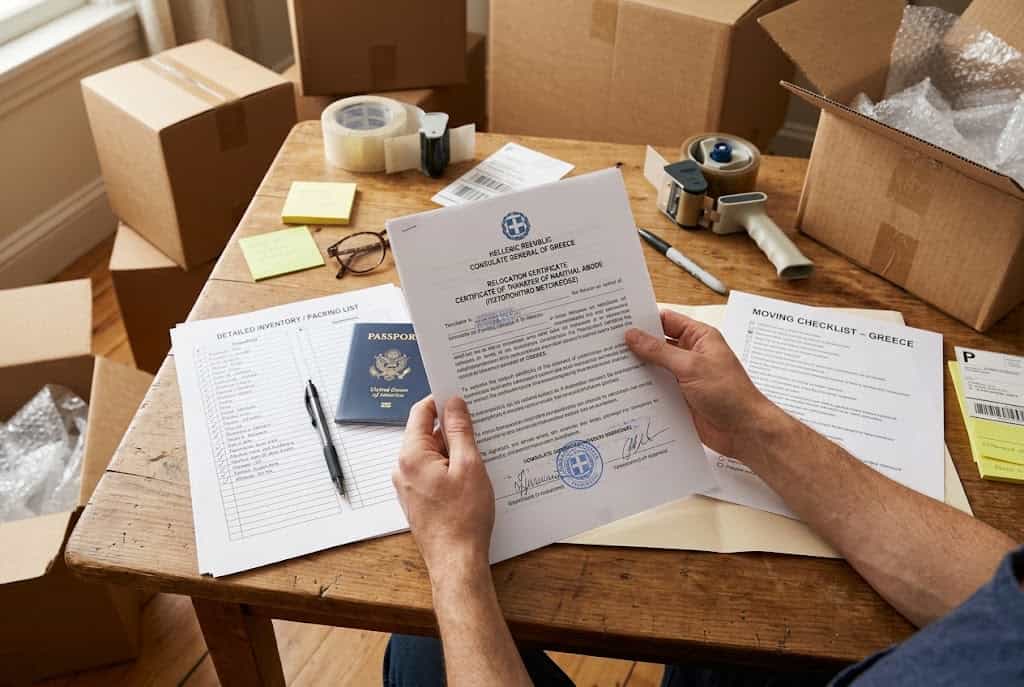
To successfully clear customs in the U.S., your shipment must be accompanied by specific, fully completed documents. These aren’t optional or flexible—CBP needs them to process your entry and confirm that your goods are legally entering the country.
Here’s what you’ll need:
- A clear copy of your passport, including the photo page
- Proof of legal residency or visa documentation
- A detailed inventory (also known as a packing list) with descriptions, quantities, and estimated values in U.S. dollars
- Your Bill of Lading or Air Waybill—this is your shipment’s official transport record, which we provide
- A declaration of unaccompanied personal effects, confirming these are your household items and not commercial goods
- A U.S. address, even if temporary, for delivery and inspection purposes
This is where our team at SDC steps in to guide you through every form and requirement. If you’re using our packing services, your inventory will be created as we pack—labeling each box, itemizing contents, and assigning values to meet customs and insurance standards.
One thing many people don’t realize is that the inventory must reflect exactly what is inside your container. If customs officials open your shipment and find discrepancies—like undeclared electronics or vague descriptions—they can hold it, issue penalties, or even reject it. We avoid that by working closely with you to build a customs-compliant inventory list that’s clear, accurate, and complete.
Even the format of your paperwork matters. Typed, organized documents with matching references are processed more efficiently than handwritten lists or mismatched forms. That’s why we use digital inventory systems and provide templates that meet CBP’s formatting preferences.
If you’re planning to ship on your own or use a non-specialized mover, be cautious: missing or incorrect paperwork is one of the leading causes of customs delays. With SDC, you won’t have to worry—we’ve prepared these files hundreds of times before and will walk you through the process line by line.
Restricted and Prohibited Items: What You Can’t (or Shouldn’t) Ship
When preparing your household goods for shipment from India to the United States, one of the most important things to consider is what not to pack. U.S. customs has a strict list of restricted and prohibited items—and bringing them could result in delays, fines, or even confiscation of your entire shipment.
Some items are completely banned. Others are allowed only with special permits or declarations. Understanding the difference between the two categories is essential.
Prohibited items are not allowed under any circumstance. These include:
- Fresh fruits and vegetables
- Meat and animal byproducts
- Soil or plants in soil
- Firearms and ammunition (unless you have special clearance)
- Counterfeit goods
- Pirated media or copyrighted material
Restricted items, on the other hand, are allowed but come with conditions. For example:
- Medications must be declared and accompanied by prescriptions
- Religious idols, especially made of stone or wood, may require inspection
- Wooden furniture must be ISPM 15 certified (heat-treated or fumigated) to prevent pest contamination
- Electronics may need to comply with U.S. voltage standards or FCC regulations
One common mistake we see is clients unknowingly packing food, spices, or homemade snacks—items they’d never expect to be a problem. Unfortunately, any organic material can raise concerns with customs and may require inspection or destruction. The safest path? Leave perishable food behind and plan to buy fresh once you arrive in the U.S.
Our packing specialists are trained to identify potential red flags as we prepare your shipment. If you’re unsure about an item, just ask—we’ll tell you whether it’s safe to include or recommend a workaround.
Avoiding restricted and prohibited items doesn’t just help your goods get through customs faster—it also protects your investment and prevents unnecessary stress.
Duty-Free Allowances for Indian Citizens Moving to the USA
One of the most common questions we receive from clients is, “Will I have to pay customs duties on my household goods?” The answer, for most people moving for personal reasons, is reassuring: your used household goods are typically allowed into the U.S. duty-free.
U.S. Customs and Border Protection allows individuals moving into the country to bring personal effects without paying import duties—as long as the items meet certain conditions:
- They must be for personal use, not for resale
- They must have been owned and used by you for at least 12 months prior to shipment
- They must be clearly listed on your inventory list, with values assigned
- You must be moving to the U.S. on a valid visa, green card, or other long-term entry status
This means your furniture, cookware, clothing, décor, and electronics (if used) are generally safe from taxation—as long as they are properly declared and packaged for personal use. However, anything brand new or in original packaging may be flagged by customs as a commercial import and could be subject to duties.
Additionally, if you’re sending luxury goods—such as designer handbags, artwork, or large quantities of high-value electronics—CBP may request proof of use or purchase history. In those cases, international moving insurance can help validate your declared values and protect against loss or damage during the inspection process.
We help you maximize your duty-free eligibility by structuring your shipment properly, preparing a compliant inventory, and clearly labeling each item as used household goods.
And if there’s any doubt about eligibility, our customs experts will review your inventory before the container leaves India, so we can address concerns before they become problems at the port.
What to Expect During a U.S. Customs Inspection
Even with perfect paperwork and properly packed boxes, customs inspections still happen—and they’re not necessarily a sign that anything is wrong. In fact, U.S. Customs and Border Protection (CBP) randomly selects shipments for inspection every day. Sometimes it’s a brief check. Other times, it involves opening boxes and verifying contents against your inventory.
The important thing to remember is this: an inspection doesn’t mean you’ve done something wrong. It’s part of the standard customs enforcement process designed to keep illegal goods out of the country and ensure that shipments match their declared documents.
Here’s how it typically works:
Once your shipment arrives at the U.S. port of entry—such as New York, Los Angeles, or Houston—customs officers may flag it for inspection. If so, they’ll open select boxes or crates to check that the contents match your packing list and declaration. If they find inconsistencies, prohibited items, or undeclared valuables, they can hold or reject the shipment and may issue fines.
This is one reason why we take documentation so seriously at SDC. A well-organized shipment, with professionally prepared paperwork and clearly labeled boxes, has a much higher chance of clearing quickly—even if it’s inspected.
If your shipment is selected, our team is notified by the freight carrier or port agent. We stay in close communication with U.S. customs brokers to monitor the inspection process and respond to any requests. In most cases, inspections are resolved in a few days, after which your goods are released for final delivery.
And if anything goes wrong—like minor damage from opening a box or a delay caused by re-packing—your international moving insurance can help cover the cost or loss, assuming coverage was properly selected beforehand.
How SDC Makes the Customs Process Easy
At SDC International Shipping, we believe that customs clearance should be the smoothest part of your move, not the most stressful. That’s why our relocation model is built to manage the complexity of customs for you.
From the moment you request your moving quote, we begin preparing your documentation. Your relocation specialist works with our packing crew, insurance coordinator, and customs compliance team to build a shipment file that’s accurate, complete, and fully aligned with CBP’s expectations.
Here’s what we handle for you:
- Creating a compliant inventory during the packing process
- Submitting your shipping documents (Bill of Lading, declaration forms, visa verification)
- Coordinating with licensed customs brokers in the United States
- Monitoring port clearance updates and inspection statuses
- Communicating directly with you about any issues, delays, or delivery changes
Our door-to-door international moving service includes customs coordination at no extra cost. We don’t believe in leaving you to figure things out on your own once your shipment arrives. Instead, we proactively guide your goods through inspection and approval, and we stay in touch every step of the way.
Customs doesn’t have to be a black box. With SDC, it’s simply another part of your well-managed move.
Make U.S. Customs One Less Thing to Worry About
You’ve already made a major decision—relocating from India to the United States. Now it’s time to make sure your shipment crosses the border just as smoothly as you do. With SDC International Shipping, customs clearance doesn’t have to be confusing, risky, or stressful. We handle the paperwork, track your shipment, communicate with customs agents, and make sure everything is in place before your container ever leaves the port.
Our goal is simple: to help you focus on your new life—not the red tape that comes before it.
📞 Call us today at 877-339-0267 or
📝 Request your free international moving quote
Let’s clear customs the right way—together.