
Moving from Boston to Germany
A household move from Boston to Germany is one of the more document-intensive corridors SDC handles, not because of the freight itself, but because German customs requires a specific set of paperwork that needs to be assembled correctly before your shipment arrives. SDC International Shipping is a door-to-door overseas moving company that coordinates these moves end to end, from your Boston neighborhood to your German address. This guide covers the logistics, the customs process, and what Boston-based clients specifically need to plan for.
Getting Your Shipment Out of Boston
Boston is an active origin city for international household moves, but it comes with operational considerations that affect your planning. Historic neighborhoods including Beacon Hill, the South End, Back Bay, and much of Cambridge have narrow streets, buildings with limited elevator access, and move restrictions that require advance coordination. Your coordinator confirms building requirements during the survey and builds the access plan into your packing schedule.
Most containerized shipments from Boston route through Conley Terminal at the Port of Boston for direct sailings to northern Europe. Hamburg and Bremen are the primary entry ports for US containerized shipments arriving in Germany. Depending on your destination in Germany and your timeline, your coordinator may route through the Port of New York for more frequent departure options.
Ocean transit from the US East Coast to Hamburg typically runs 12 to 18 days. Door-to-door timelines, including packing, ocean transit, customs clearance, and delivery inside Germany, typically run 8 to 14 weeks for FCL and 10 to 18 weeks for LCL. If you are still securing housing when your shipment departs, goods can be held in bonded storage at Hamburg or Bremen, but storage costs accumulate and this is worth building into your budget from the start.
German Customs: Umzugsgut and What Qualifies
Germany’s duty-free import category for household goods is called Umzugsgut, or removal goods. Qualifying for Umzugsgut relief requires meeting several conditions. You must have lived outside the EU for more than 12 months. Your household goods and any vehicles must have been owned and used for at least six months prior to the vessel departure date. The shipment must be imported within one year of your establishing permanent residence in Germany. The goods must be used for the same purpose in Germany as they were abroad, and they must remain in your possession for at least 12 months after importation.
One detail that catches some clients: duty-free status under Umzugsgut is granted by German Customs Authorities at clearance, not assumed in advance. The documentation you submit determines whether the classification is accepted.
Documents Required for a Germany Move
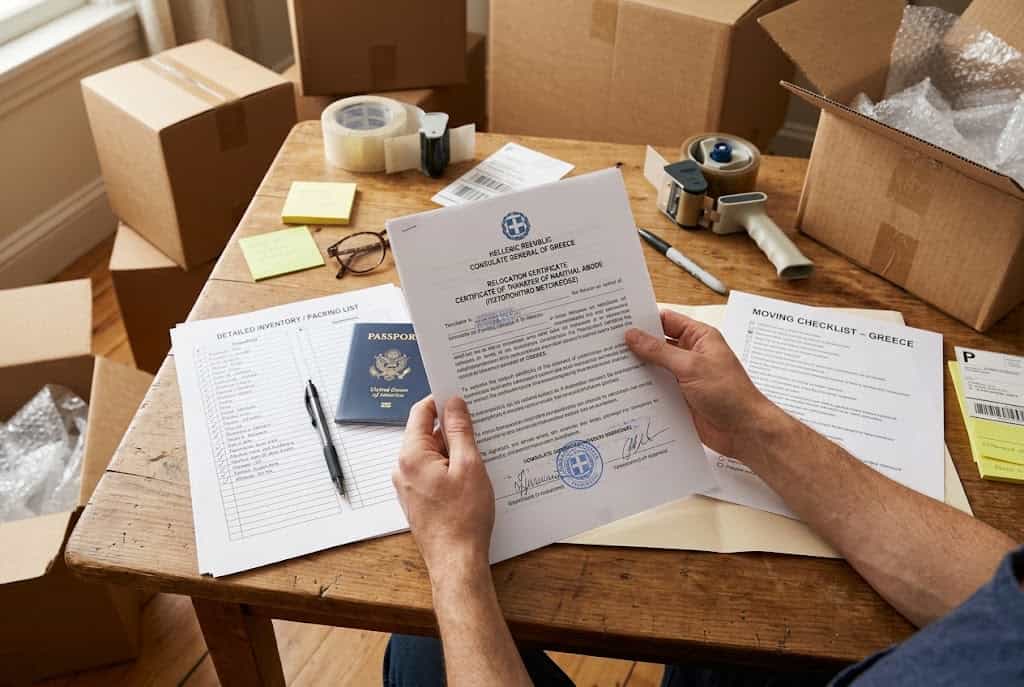
The German customs document set is specific. You will need Customs Registration Form 0350, which is the non-resale declaration, your passport copy, a visa copy, an Abmeldebestaetigung or a letter from your employer or the German Embassy confirming you lived outside the EU for more than 12 months, a goods inventory list, and a contract of employment or rental agreement if available.
You will also need the Anmeldbestaetigung, the German residency registration confirmation from your local town hall, but this can only be obtained after you arrive in Germany. Effective November 2015, a Wohngeberbescheinigung from your German landlord confirming you will live at the registered address is also required to complete registration. SDC provides document templates and checklists during onboarding to make this manageable, and your coordinator sequences document submission to accommodate what can only be obtained after arrival.
A letter signed by you confirming that firearms, alcohol, tobacco, cigarettes, tea, and coffee are not part of the shipment is strongly recommended. It simplifies the clearance process and is standard practice on this corridor.
Packing and Inventory for German Customs
German customs requires a detailed packing list and goods inventory. For any single item valued at more than EUR 5,000, the individual value must be specified. Electronics, jewelry, instruments, and artwork need to be inventoried with declared values, not grouped into general categories. Professional export packing produces this inventory as a standard output of the packing process, creating the documentation your German customs agent needs without requiring you to build it separately.
Spirits, wine, tobacco, meat products, and raw food items are either prohibited or subject to duties and are generally not worth including in a household goods container. Your coordinator will advise on any items that raise questions before packing day.
Delivery Inside Germany
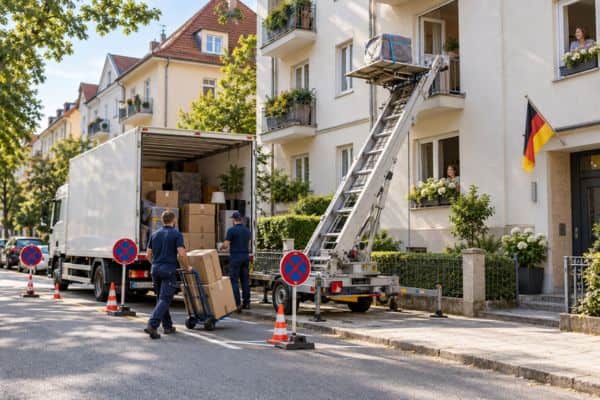
SDC delivers to major cities and regional destinations throughout Germany, including Berlin, Munich, Hamburg, Frankfurt, Cologne, Stuttgart, Dusseldorf, Leipzig, Dresden, and surrounding areas. German cities vary in their urban access conditions. Many older city centers and residential neighborhoods have parking restrictions and delivery windows that require advance coordination with local authorities. Your destination coordinator handles this planning on the German side.
FAQs: Moving from Boston to Germany
What does Umzugsgut mean and how do I qualify?
Umzugsgut is the German customs classification for removal goods, meaning used household items that belonged to your previous residence abroad. To qualify for duty-free import, you need to have lived outside the EU for more than 12 months, owned and used the goods for at least six months before shipment, and ship within one year of establishing residence in Germany. Qualifying is not automatic. German Customs reviews your documentation at clearance and makes the final determination.
Do I need the Anmeldbestaetigung before I ship?
No. The Anmeldbestaetigung can only be obtained after you register your address in Germany, which requires you to physically be there. It is typically submitted as a follow-up document to customs clearance. Your coordinator will sequence the document submission to accommodate this.
Can I ship wine or alcohol in my container?
Alcohol is subject to duties in Germany and cannot be included in the duty-free Umzugsgut classification. Spirits, wine, tobacco, and cigarettes should be excluded from the container when possible. If you intend to include alcohol, discuss this with your coordinator before packing day, as it must be inventoried separately and duty assessed at clearance.
How long does the move take?
From first contact through final delivery in Germany, plan for 8 to 14 weeks for FCL and 10 to 18 weeks for LCL. The customs clearance step in Germany varies depending on documentation completeness and port volumes. Having clean, complete paperwork is the single most reliable way to avoid delays at this stage.
To start planning your Boston to Germany move, contact SDC at 877-339-0267 or request a quote online.