Moving from Boston to Italy
Boston has one of the oldest and most deeply rooted Italian-American communities in the United States. The North End, which has been home to Italian immigrants and their descendants since the late 1800s, is as much a part of Boston’s identity as Fenway Park. East Boston, Somerville, Watertown, and the surrounding suburbs all have significant Italian-American populations that trace their origins to the same regions of southern Italy that sent millions of emigrants to the United States at the turn of the last century.

Today, some of those families are making the move in the other direction. Whether it’s a retirement to Tuscany, a remote work relocation to Rome, a family returning to an ancestral village in Calabria or Abruzzo, or a professional move to Milan, Boston is one of the most active origin cities for household moves to Italy. This article covers how the shipping process works from Boston, what Italy’s customs rules require, and what to prepare before your goods leave.
SDC International Shipping handles door-to-door household moves from Boston to Italy. As a licensed overseas moving company serving all 50 states, we coordinate everything from Boston metro pickup and export packing through ocean freight, Italian customs clearance, and final delivery anywhere in Italy.
The Shipping Route from Boston to Italy
Container shipments from Boston to Italy move through the Port of Boston’s Conley Terminal or route through the Port of New York and New Jersey depending on vessel scheduling and the specific Italian destination port. The primary Italian entry ports for household goods are Genoa on the northwest coast, Livorno in Tuscany which serves central Italy and Rome, and Naples for southern Italy, Campania, Calabria, and Sicily.
Port routing for your shipment is confirmed after the survey, based on your Italian delivery address and available sailing schedules. Ocean transit from the East Coast to Italian ports runs approximately 14 to 22 days depending on the vessel routing and destination port. Direct sailings run closer to the shorter end; vessels making intermediate port calls add time.
Door-to-Door Timelines from Boston to Italy
Full Container Load (FCL)
An exclusive 20-foot or 40-foot container loaded at your Boston address and moved directly to the port. Door-to-door from the Boston metro to most Italian cities typically runs 8 to 13 weeks. The right option for larger households, moves that include a vehicle, or clients who want direct control over departure timing.
Shared Container (LCL / Groupage)
Your goods share container space with other households heading to Italy. The more cost-effective option for smaller moves, one and two-bedroom apartments, or households shipping selectively rather than moving everything at once. Door-to-door timelines typically run 10 to 16 weeks, reflecting consolidation at origin and deconsolidation at the Italian port before final delivery.
Air Freight
Priority items can move by air from Boston Logan Airport to Rome Fiumicino or Milan Malpensa in approximately 7 to 14 days door-to-door including customs handling. Most Boston clients send a small essentials shipment by air while the main household travels by sea.
Italian Customs: Qualifying for Duty-Free Import
Italy generally allows used household goods to be imported duty-free when you are establishing legal residence, subject to specific qualifying conditions. The framework is similar in structure to other EU member states but has Italy-specific documentation requirements that are worth preparing carefully before your move begins.
The Qualifying Conditions
To qualify for duty-free import of household goods into Italy, you must be transferring your normal place of residence to Italy. The goods must have been owned and in personal use for at least six months prior to the move. The shipment must occur within twelve months of establishing your residence in Italy. The goods must be intended for continued personal use and not for resale. And they must remain in your possession for at least twelve months after importation.
The six-month ownership and use condition is the one that most commonly creates problems for clients who purchase new furniture or appliances shortly before their move. New items do not qualify for duty-free treatment and will be assessed at Italian rates. Items with significant individual value should be inventoried with accurate declared values, as Italian customs may request supporting documentation for high-value pieces.
Documents Required
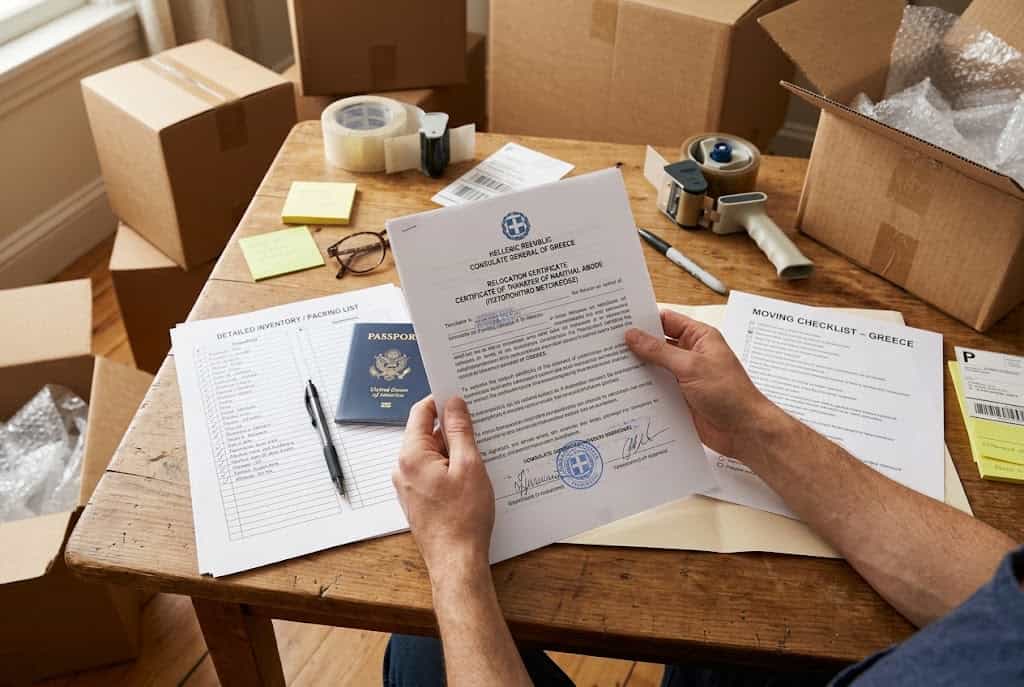
The documentation required for Italian customs clearance typically includes a copy of your passport, proof of your new Italian residence such as a lease or property purchase agreement, a detailed valued inventory of all items in the shipment, proof of prior U.S. residence for at least twelve months, and where applicable, documentation of your Italian visa or residence permit. For Boston clients who have obtained Italian citizenship by descent, citizenship documentation is also part of the customs file and your coordinator will confirm exactly what is required for your specific situation.
SDC coordinates documentation preparation with our Italian destination partners well before packing day and provides inventory templates formatted to Italian customs standards. Getting the documentation right at the outset is what keeps clearance moving without delays at the port.
Items That Cannot Enter Duty-Free
Alcohol and tobacco must be declared separately and are subject to duties and taxes regardless of residency status. New items purchased within six months of the move do not qualify. Commercial quantities of any goods and anything under Italian or EU prohibited categories must be declared accurately and handled separately. Firearms require prior authorization and cannot be included in a standard household goods shipment.
Boston Building Access and Packing
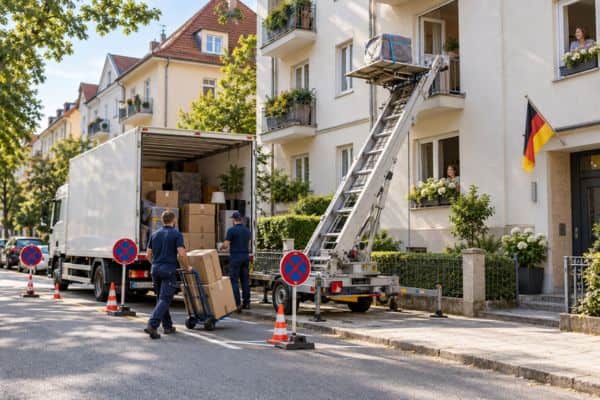
Boston’s historic neighborhoods require advance coordination that isn’t necessary in most U.S. cities. Buildings in Beacon Hill, the North End, Back Bay, Cambridge, East Boston, and Somerville frequently require elevator reservations, certificates of insurance from the moving company, and approved move windows. Narrow streets in the North End and parts of East Boston — the same neighborhoods with the deepest Italian-American roots — can require shuttle vehicles when a standard moving truck cannot park directly at the building entrance. SDC confirms all building requirements during the survey and handles access coordination, parking permits, and insurance certificates before move day.
SDC’s professional packing service produces a piece-level inventory during the pack that serves as both the Italian customs document and the moving insurance record. Export-grade materials are used throughout. Custom crating is available for artwork, antiques, religious objects, instruments, and fragile items — including heirloom pieces that have been in Italian-American households for generations and deserve specific attention during the packing survey.
A note on appliances: Italy uses 230V/50Hz current with Type F and Type L sockets. Most U.S. appliances run on 120V and are not compatible without a transformer. Many large appliances are not worth shipping and are better replaced locally. Your coordinator will review this during the survey, which also keeps shipment volume and cost in the right range.
Delivery in Italy
SDC’s Italian destination partners handle customs clearance at the arrival port and final delivery to your address. Delivery logistics vary considerably by Italian destination. Rome and Milan deliveries in historic districts involve ZTL restricted traffic zones, narrow streets, and building access conditions that require advance planning and often shuttle vehicles. Deliveries to smaller cities, hill towns, and rural addresses in Tuscany, Umbria, Abruzzo, Calabria, and Sicily are handled through our regional partner network.
For Boston families moving to ancestral villages in southern Italy — a journey that is the reverse of what their great-grandparents made when they arrived in East Boston or the North End — delivery logistics can be genuinely challenging. Some of these towns have streets that predate automobiles by centuries. SDC’s partners have experience with these environments and assess access conditions for your specific address before the shipment departs Boston.
Boston’s Academic Calendar and Booking Timing
Boston’s universities create demand peaks in May and August that affect Italian corridor moves as much as any other. Faculty appointments, research postings, and academic relocations to Rome, Florence, and Bologna are a meaningful share of the Boston-to-Italy volume. Booking 8 to 10 weeks ahead during these windows rather than the standard 6 to 8 weeks is the practical advice based on how these periods play out on crew and container availability.
Frequently Asked Questions
How long does shipping from Boston to Italy take?
Door-to-door, plan for 8 to 13 weeks for a full container and 10 to 16 weeks for a shared container. Ocean transit from the East Coast to Italian ports runs approximately 14 to 22 days. The remainder is packing and loading at origin, port processing, Italian customs clearance, and final delivery scheduling.
Does Italian citizenship by descent affect my customs eligibility?
Italian citizenship status is relevant to your residency documentation and visa category, which affects your customs file. If you have obtained or are in the process of obtaining Italian citizenship by descent, discuss this with your SDC coordinator during the initial consultation so the documentation is prepared correctly for your specific situation.
Can I ship heirloom furniture and antiques from Boston to Italy?
Yes. Antiques and heirloom pieces ship well when properly packed — export-grade materials, custom crating where appropriate, and accurate declared values on the inventory. Italian customs may request documentation for high-value antiques. Flag any pieces of significant value or sentimental importance during your survey so they receive the right packing plan and documentation treatment.
Do you pick up from East Boston, Somerville, and other neighborhoods?
Yes. SDC dispatches packing crews to all Boston neighborhoods and throughout the metro area including Cambridge, Somerville, East Boston, Watertown, Medford, Newton, Brookline, Quincy, and points across Massachusetts. You do not need to transport your goods to a depot or terminal.
How far in advance should I contact SDC?
For sea freight moves, contact us 6 to 8 weeks before your planned pack date. For moves during Boston’s May and August peak periods, 8 to 10 weeks is the practical minimum. Italian customs documentation benefits from early preparation, particularly if your residency situation involves citizenship by descent or a visa category with additional paperwork requirements.