
Moving with Children from India to the USA — A Parent’s Guide to a Smooth Transition
Preparing Emotionally for the Move — For You and Your Children
Every international move comes with big feelings—but when you’re moving with children, the emotional terrain expands. As a parent, you’re not just managing paperwork and packing. You’re helping your kids navigate change, fear, excitement, and the unknown, all at once.
For many Indian families, this is more than a relocation—it’s a redefinition of home, routine, and identity. Children may feel confused about leaving their school, friends, grandparents, or the only home they’ve ever known. Even if they’re excited, there’s often an undercurrent of anxiety: What will my new school be like? Will I make friends? Will I belong?

The way you talk about the move sets the tone for the entire transition. Start early. Use clear, age-appropriate language to explain why you’re moving and what it will mean. Emphasize the positive opportunities ahead—new places to explore, new friends to make, and a new school system that encourages creativity and independence.
Let them ask questions—even hard ones. Validate their concerns. Children don’t need a perfect plan; they need to know they’re being heard. And they need to know you’re going together—as a team.
One powerful strategy is to involve them in the process. Show them photos of your new city. Let them choose which toys go in their suitcase. If they’re old enough, give them a special “moving day role”—like packing their own backpack with snacks, games, and a journal. Ownership reduces fear.
And don’t forget about yourself. Children feed off their parents’ emotional energy. If you’re frazzled and overwhelmed, they will be too. That’s why we handle the logistics—so you can focus on showing up emotionally for your family, not scrambling with paperwork.
At SDC International Shipping, we understand that a successful family relocation is part logistics, part psychology. And we’re here to help with both.
What Life Looks Like for Kids in the U.S. vs. India
One of the biggest cultural shifts your child may experience after arriving in the U.S. is the difference in how childhood is lived. Life for kids in America can feel both incredibly freeing and strangely unfamiliar to those coming from India’s more structured, family-centered environment.
In India, school life is typically rigorous. Children wear uniforms, follow a strict curriculum, and attend after-school tuitions. Many children grow up surrounded by extended family, in multigenerational homes with deep-rooted cultural customs. Socializing is often supervised, and schedules are tightly controlled.
In contrast, American childhood emphasizes independence and personal expression. Classrooms are often more relaxed, focusing on participation, problem-solving, and project-based learning. Students may address teachers by first names. Homework might be lighter, and extracurriculars are encouraged as part of a well-rounded experience—not just academic performance.
Free time is different, too. Children in the U.S. may spend more time outdoors, in organized sports, or on screens—phones, gaming consoles, tablets—depending on the household. Parents often allow kids more freedom to express opinions and make choices about their daily lives.
This contrast can be jarring. Indian parents may worry about losing structure or feel surprised by how casually children in the U.S. interact with adults. Kids might initially struggle to adjust to cultural cues, humor, or new social norms.
But over time, many children flourish in this environment. They learn to become independent thinkers, pick up conversational English quickly, and adapt to a more egalitarian classroom. What they need most during the early weeks is reassurance that it’s okay to feel unsure—and that you, as a family, are figuring it out together.
Pro tip: Talk with your children about what will be different—not just what to expect, but how to adapt. Visit the school website together. If possible, connect with Indian expat families already living in your new area. And always remind them: they’re not losing their identity. They’re adding to it.
What to Bring, What to Leave — Packing with Kids in Mind
When you’re moving internationally with children, packing becomes more than just logistics—it’s about prioritizing comfort, continuity, and familiarity. The suitcase you pack for your child may be their emotional anchor during those first uncertain weeks in a new country.
Here’s the trick: don’t overdo it. What children need isn’t everything—they just need the right things.
Start with the essentials: clothing, school supplies, hygiene items, and anything medically necessary. But just as important are the comfort objects—a favorite stuffed animal, a worn-out bedtime book, a pillow, or even a familiar blanket. These small items provide stability during big changes.
Toys and games? Yes—but choose wisely. Think about what will actually be used in a new setting, especially if you’re moving into an apartment or rental. A few versatile favorites (Lego sets, a beloved doll, travel-friendly board games) are worth their weight in gold. Pack portable, non-breakable entertainment for the flight and early days in temporary housing.
Books are another important category. Bring a few favorites in your native language along with some English storybooks—especially if your child is still strengthening their reading skills.
Electronics deserve their own thought process. A tablet loaded with familiar shows, school apps, and books can be a lifeline during the transition. Just be mindful of charging compatibility—you may need adapters or voltage converters when bringing devices from India.
That said, don’t pack the entire playroom. Shipping costs are calculated based on volume, and it’s often more cost-effective to replace large toys or furniture items once you arrive in the U.S. Rather than hauling everything, use the move as a time to declutter—donate unused items, and involve your child in choosing what stays and what goes.
Our team at SDC International Shipping can also help you decide what’s practical to include in your international household shipment and what’s best left behind. With the right planning, you can keep the essentials, avoid overpacking, and make the move a lot more manageable for the whole family.
Documents, Details, and Essentials — Getting the Logistics Right
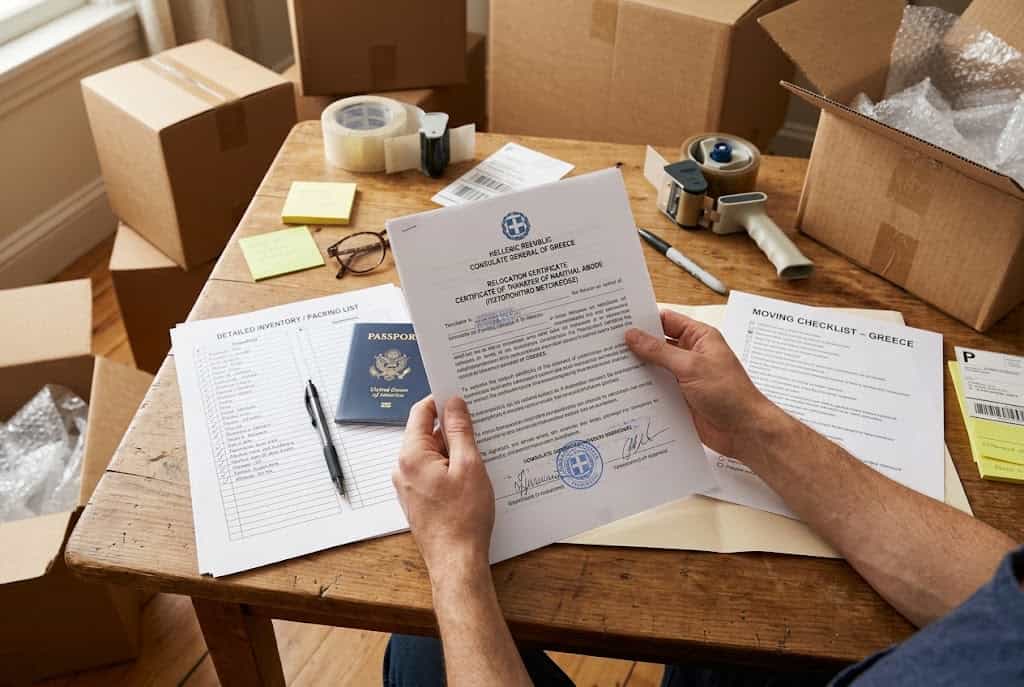
If you’ve ever packed school bags the night before an exam, you already know this truth: it’s not the big things that trip you up—it’s the overlooked ones. When you’re moving internationally with children, the same logic applies. Your container may be perfectly packed, but if you don’t have the right paperwork, the school year—and your sanity—can start on shaky ground.
One of the most important steps in preparing your child for life in the U.S. is ensuring they’re ready to enroll in school. Every U.S. state has its own requirements, but most will ask for:
- A copy of your child’s birth certificate or passport
- Proof of legal residency (visa, green card, or dependent documentation)
- Immunization records translated into English
- Prior school transcripts or report cards
- Special education records, if applicable
It’s a good idea to request multiple official copies of academic records and vaccination documentation before you leave India, and keep scanned versions in your cloud drive. Many public and private schools now use online registration portals, and being ready to upload everything digitally will speed up enrollment and reduce stress.
Beyond school paperwork, don’t forget other kid-specific essentials. Carry original prescriptions if your child takes regular medication. Pack a travel-sized medical kit in your luggage. And be sure to bring several passport-size photos—they’re often requested for school IDs, medical files, and visa renewals.
You’ll also want to plan for the transition period—the time between arrival and the delivery of your full shipment. That means packing a “landing kit” with:
- At least one week’s worth of clothes for each child
- Snacks and comfort food
- School supplies (notebooks, pens, backpack)
- Chargers and electronics
- Their favorite toys or bedtime items
And yes, don’t forget adapters or plug converters for any electronics coming from India. U.S. voltage and plug shapes are different, and fried electronics are a terrible welcome gift.
If all of this sounds overwhelming, it doesn’t have to be. At SDC International Shipping, our relocation specialists walk you through every stage, helping you prepare a checklist tailored to your family’s needs. We’re not just movers—we’re your logistics safety net.
Helping Kids Settle In — Routines, Reassurance, and a Fresh Start
The first few days after landing in the U.S. can feel like emotional whiplash for you and your children. One moment you’re boarding a plane in India, and the next, you’re trying to figure out which drawer holds the forks in your Airbnb. The key to helping kids adjust is not perfection—it’s consistency and connection.
Start by establishing a simple routine as soon as possible. Regular mealtimes, consistent wake-up and sleep schedules, and even a basic “what we’ll do today” calendar can anchor kids in a new place. Routines create stability, and after a major life change, stability is the most valuable gift you can give your child.
Explore your neighborhood together. Find the nearest park, library, or school playground. If your child is shy or hesitant, don’t force social interactions—but do create opportunities. Even just walking around and noticing familiar things (a swing, a cat, a bakery) can help build a sense of belonging.
Encourage them to decorate their new room, even if it’s temporary housing. Hang up their drawings. Let them choose a new bedspread. Ownership helps ease the sting of loss from leaving their old home behind.
Watch for signs of homesickness, especially in the first month. This might show up as clinginess, irritability, or regressive behavior like bed-wetting or thumb-sucking. These aren’t cause for alarm—they’re signs your child is adjusting and needs extra reassurance. Respond with patience, and keep the lines of communication open.
And most importantly, don’t put too much pressure on the “big moments.” Milestones like the first day of school may not go perfectly. That’s okay. What matters is that your child knows they’re supported and safe.
Our team at SDC doesn’t disappear after your container ships. We coordinate your final delivery, ensure your goods arrive safely, and stay available if you need help with last-mile logistics. You’re not just moving into a new country—you’re building a new life. We’re here to help you land softly.
Your Family’s New Chapter Starts with a Confident Move
Moving internationally with children isn’t easy—but it’s not impossible. It’s a season of questions, excitement, and change. And when you have the right support behind you, it becomes more than a challenge—it becomes an opportunity to grow stronger as a family.
At SDC International Shipping, we don’t just handle containers and customs. We support parents. We guide transitions. And we make sure the logistics are covered so you can stay focused on what matters most: helping your children feel safe, grounded, and excited about what’s ahead.
From professionally packed shipments to customs compliance, real-time tracking, and delivery coordination, we’ve moved thousands of families across borders with peace of mind and purpose. And we’re ready to do the same for yours.
📞 Call us today at 877-339-0267 to speak with a relocation expert who understands family moves
📝 Or request your personalized international moving quote to get started
Let’s make your move not just smooth—but meaningful. Your next chapter is waiting—and we’re honored to help you get there.