
Malaysia Household Goods Shipping: The K1 Form and Duty-Free Timing
Shipping household goods to Malaysia comes with one requirement that catches people off guard more than any customs form: you generally need to be physically in the country when your shipment arrives to claim duty-free clearance. As a licensed overseas moving company serving all 50 states, we build shipment timing around your actual arrival date, not just your work permit approval, because the two aren’t the same thing and Malaysian customs treats them differently.
The K1 Form: Malaysia’s Mandatory Customs Declaration
Every shipment entering Malaysia needs a K1 form (Borang Kastam No. 1) filed with the Royal Malaysian Customs Department, known locally as JKDM. This applies whether your goods qualify for duty exemption or not; the K1 is Malaysia’s official record of what’s entering the country and its declared value, and it’s mandatory regardless of exemption status. Skipping or mishandling this step doesn’t just risk duty charges, it holds your cargo at the port entirely until it’s filed correctly.
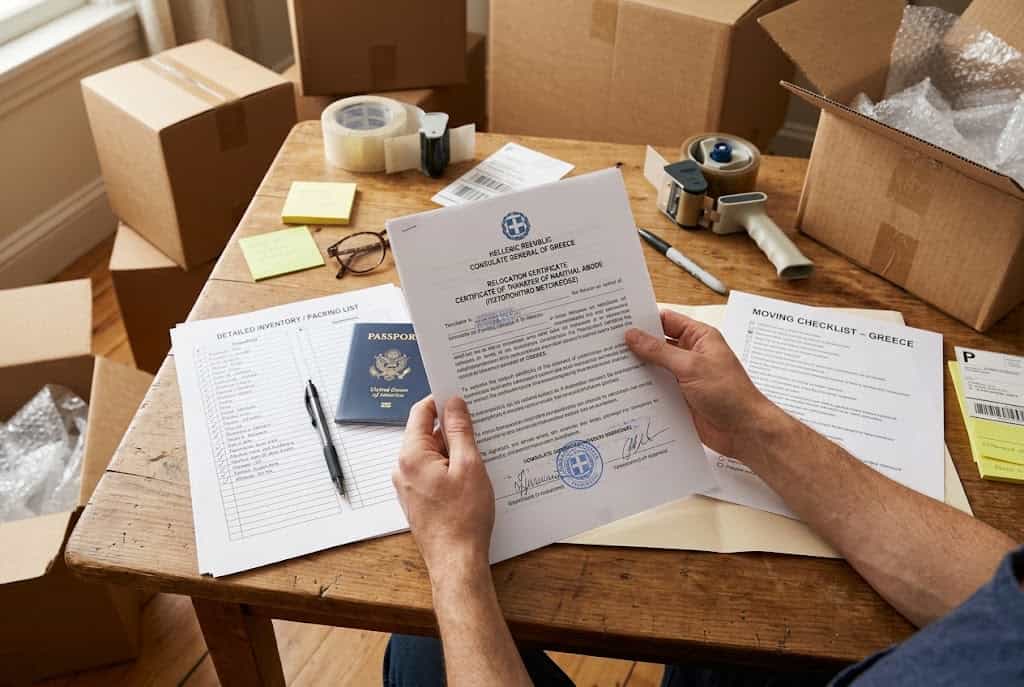
Filing a complete K1 depends on having the right supporting documents ready: a copy of your passport, your work permit or employment pass, and the Bill of Lading or Air Waybill for the shipment, along with a detailed inventory that matches the shipment’s actual contents item for item. Our packing service prepares that inventory during export packing, so the list your K1 filing depends on is accurate before the container ever leaves the US, rather than reconstructed under pressure once the shipment is already at a Malaysian port.
Why You Need to Be There When It Arrives
Malaysia’s duty-free allowance for used household effects is available to returning Malaysians and to foreigners who’ve been granted permission to take up residence, but the exemption is tied to the owner being present in Malaysia when the shipment lands, since claiming it requires signing documents and, in most cases, being present for inspection. If your work permit is still processing and you haven’t relocated yet, but your container has already sailed, you can end up in a position where your goods arrive before you do, and duty-free status becomes difficult to claim without you there. Timing the shipment’s departure against your confirmed arrival date, not your moving timeline in the abstract, is the single biggest lever for avoiding this.
All Household Shipments Get Physically Inspected
Unlike destinations with selective or random inspection, Malaysian customs subjects household goods shipments to a full physical examination as standard practice, not the exception. This makes an accurate, honest inventory more important here than in many other corridors: items that look new draw scrutiny, and the inspection is where that scrutiny happens, not before. With complete documentation and no flagged items, clearance typically resolves in 1 to 5 working days; the shipments that stretch beyond that are almost always ones where the paperwork didn’t match what was physically in the container.
The 6-Month Rule for Used vs. New Items
To qualify as duty-free “used household effects,” items generally need to have been owned and used for at least 6 months. Anything younger than that is treated as new and becomes dutiable, unless you can produce a purchase receipt and evidence of use covering that period. This is worth checking against your own inventory before packing, particularly for larger appliances or furniture bought specifically ahead of the move, since those are exactly the items customs flags first. The stakes are concrete: import duties on non-exempt goods range from 0% to 50% depending on category, and a separate 10% Sales and Service Tax applies to most imported items on top of any duty owed.
Electrical Goods Need Their Own Permit, Except at Port Klang
Electrical items in your shipment typically require a separate Electrical Board Permit, along with a detailed list covering brand, model, serial number, year of purchase, voltage, and amperage for each item. There’s a genuinely useful exception worth knowing about: this permit generally isn’t required at Port Klang, one of the main entry points for household shipments into Malaysia. Routing through Port Klang when it’s a viable option for your shipment can remove a documentation step other entry ports still require.
Vehicles Are a Separate, Slower Process
Vehicles are treated entirely apart from household goods in Malaysia. Import of motor vehicles is discouraged by policy, always dutiable, and requires an Import Permit that must be granted before the vehicle ships, not after it arrives. SDC ships vehicles only when containerized with household goods, never as a standalone shipment, so if a vehicle is part of your relocation, it needs its own permit timeline sorted out well ahead of your household goods departure, since the two processes don’t move at the same speed.
What’s Restricted Regardless of Timing
Some categories draw duty and heavy scrutiny no matter how long you’ve owned them or how well-timed your arrival is. Alcohol and tobacco attract high import duties and intensive inspection, and are generally worth excluding from a household shipment rather than risking the delay. Firearms, ammunition, and narcotics aren’t a duty question at all; they’re prohibited outright, with serious legal consequences attached. If you’re unsure whether something in your inventory falls into a restricted category, flagging it to us before packing is far simpler than resolving it at a Malaysian port.
Request a free quote and we’ll help you time your shipment against your confirmed arrival date so duty-free clearance isn’t left to chance.