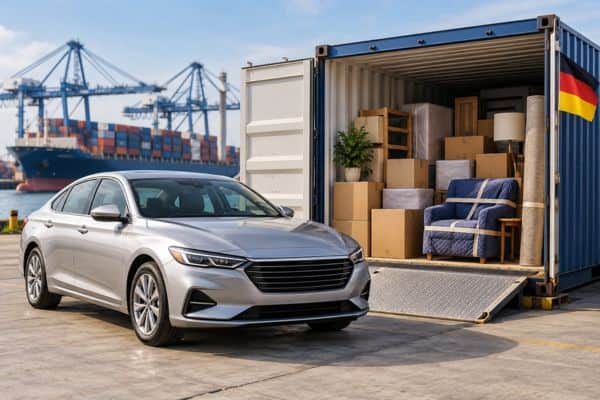


Your Complete Guide to Moving Abroad from Miami
Miami is one of the most internationally active cities in the United States. Residents move to Latin America, Europe, Asia, and the Caribbean at a rate few other U.S. cities match, and the Port of Miami and Miami International Airport give the city freight infrastructure that supports that volume. SDC International Shipping is an FMC-licensed door-to-door moving company serving Miami-Dade County and all 50 states. Its household goods shipping runs under one coordinator from your Miami address to your front door overseas.
To start planning your move, call 877-339-0267 or request a free quote.
Where Miami Residents Are Moving, and What That Means for Your Shipment
Miami’s international relocation profile is shaped by the city’s demographics, its position as a gateway to Latin America, and its large communities of European and Caribbean expats moving back to home countries. The result is a destination mix that differs significantly from West Coast cities or East Coast metros like New York or Boston.
Moving from Miami to Latin America
Brazil, Colombia, Argentina, and Mexico are among the most active corridors from Miami. Many clients are returning to home countries after years in the U.S., which affects how customs documentation is prepared. Returning residents often qualify for different import duty treatment than first-time arrivals, and understanding which category applies to your situation from the start prevents surprises at the destination port. Brazil in particular has a detailed customs declaration process that requires a thorough, itemized inventory prepared before packing day.
Moving from Miami to Europe
Germany, Spain, Italy, Portugal, and the UK are common European destinations for Miami residents. Most EU countries offer Transfer of Residence (ToR) relief, which lets used household goods enter duty-free when you move your primary residence, but only when the documentation is right. The inventory must be itemized and consistent, and the supporting documents must reach the destination agent before the vessel arrives. Expect roughly two to four weeks on the water to European ports; door to door, 6 to 12 weeks is common, and shared containers to Europe more often run 8 to 16 weeks.
Moving from Miami to the Caribbean
The Caribbean is a natural corridor from Miami given the Port of Miami’s direct shipping routes to the region. The Dominican Republic, Jamaica, and Trinidad are common destinations, each with their own customs requirements and import restrictions. Shipment timing and documentation standards vary significantly by island, and your coordinator addresses the specifics for your destination at the planning stage.
Moving from Miami to Asia
Japan, Singapore, South Korea, and the Philippines are frequent Asian destinations from Miami, particularly among professionals in finance, tech, and international business. Japan has specific handling requirements for certain household goods categories and a customs inspection process that rewards precise inventory preparation. Singapore’s customs procedures are efficient but require complete documentation, including accurate valuations for high-value items such as artwork, jewelry, and electronics. Sailings to Asia from Miami may be direct or connect through a transshipment port, so allow more time than for Europe.
Miami Pickup: Port of Miami and Local Access
Miami has real freight infrastructure behind it. PortMiami, on Dodge Island, trades with Latin America, the Caribbean, Europe and the Mediterranean, Asia and Africa, and trucks reach the island through the Port of Miami Tunnel, which keeps container traffic off downtown streets. Miami International Airport handles air freight for time-sensitive shipments or for partial moves where essentials need to arrive quickly while the main household shipment travels by sea.
Local pickup logistics vary by neighborhood. High-rise buildings in Brickell, Downtown, and Sunny Isles Beach typically require a Certificate of Insurance from the building management office, elevator reservations coordinated in advance, and compliance with specific loading window restrictions. These should be confirmed three to four weeks before your pack date. Properties in Coral Gables, Pinecrest, and Palmetto Bay are generally more accessible but may involve gated community coordination or HOA requirements. Key Biscayne is reached by the Rickenbacker Causeway, a toll road, so truck routing and tolls are settled during planning. On the Venetian Causeway islands between Miami and Miami Beach, bridges have carried a 15-ton limit aimed at heavy trucks, so confirm the current rule before assuming a full-size moving truck can cross.
How an International Move from Miami Works
Consultation and shipment planning
Your coordinator reviews your destination, timeline, estimated shipment volume, access conditions at your origin, and whether a vehicle or storage is part of the plan. The right shipping method, shared container space or a dedicated container, sea freight or air freight for essentials, is chosen here before any commitments are made.
Packing and inventory preparation
Items are packed to export standards using approved materials. A detailed, itemized inventory is created at the same time. That inventory drives customs clearance at your destination. Vague descriptions, inconsistent categories, or documentation that does not match what is physically in the shipment are the most common causes of holds at the port. Getting the inventory right at packing day eliminates the most avoidable delays. The packing service builds that inventory as the crew packs.
Export and port coordination
Miami shipments route through the Port of Miami for ocean freight to Latin America, the Caribbean, and Europe, or through Miami International Airport for air freight. Your coordinator confirms the routing, vessel schedule, and container loading based on your destination and timeline.
Ocean or air freight transit
Ocean freight is the standard choice for full household relocations. On the water, Miami to Latin America and the Caribbean typically takes one to three weeks and Miami to Europe two to four. Door to door, the full move usually takes longer, and these are planning ranges, not guarantees. Air freight is available for smaller, time-sensitive shipments where the priority is getting essentials to your destination quickly while the main shipment travels by sea.
Destination customs clearance
When the shipment arrives, customs reviews the inventory and supporting documents. Accurate, consistent, and complete documentation prepared before packing day is what allows clearance to move smoothly. Your coordinator prepares destination-specific paperwork based on your country, your residency status, and whether you qualify for duty-free import relief.
Final delivery and optional storage
Delivery logistics vary by country and city. If your new residence is not ready when the shipment arrives, destination storage keeps your timeline flexible without forcing a rushed delivery.
Shipping Options from Miami
Full Container Load (FCL)
FCL means your household goods occupy a dedicated 20-foot or 40-foot container with no shared space. This is the right choice for larger households, family relocations, and moves that include a vehicle alongside household goods. FCL also simplifies customs documentation because everything in the container belongs to one shipment.
Less Than Container Load (LCL)
LCL uses shared container space and is well-suited for apartments, partial households, and smaller relocations. Departures to Latin America and the Caribbean are frequent from Miami, which tends to make shared-container space easier to schedule on those lanes.
Air freight for essentials
A common plan from Miami is a small air shipment of documents, work equipment, and immediate-need items while the main household shipment moves by sea. Miami International Airport’s routes to Latin America make air freight especially quick on those corridors.
Vehicle Shipping from Miami
SDC ships vehicles only when they are containerized with a household goods shipment. It does not offer vehicle-only shipping. Containerized shipping provides significantly better protection than roll-on/roll-off for most destinations and simplifies the customs process by keeping everything under one shipment documentation package.
Destination rules vary by country. Brazil requires specific vehicle import authorization and compliance documentation. European countries require the vehicle to have been owned and used by the importer for at least six months to qualify for duty-free Transfer of Residence import. Caribbean islands have varying import duty structures and compliance requirements that differ significantly from one country to the next. All eligibility and documentation requirements should be confirmed during the consultation, well before packing is scheduled. The car shipping guide covers the full process.
Moving Insurance
International transit involves more handling, longer distances, and more environmental exposure than a domestic move. Standard carrier liability is typically insufficient for full household values. Marine cargo insurance provides broader, more appropriate coverage for international shipments. The right time to review your options is before the shipment leaves, not after something goes wrong in transit. Coverage options are explained here.
Areas We Serve in Miami-Dade County
SDC coordinates international moves from across Miami-Dade County, including Brickell, Downtown Miami, Coral Gables, Coconut Grove, Key Biscayne, Pinecrest, Palmetto Bay, Richmond West, Kendall, Miami Lakes, Hialeah, Miami Beach, Surfside, Sunny Isles Beach, Bay Harbor Islands, North Bay Village, and Aventura. If your area is not listed, call: SDC covers all of Miami-Dade and can coordinate pickups throughout South Florida.
Frequently Asked Questions
How long does ocean freight from Miami take?
On the water, one to three weeks to Latin America and the Caribbean and two to four weeks to Europe. Door to door, 6 to 12 weeks is common for Europe, and shared containers to Europe often run 8 to 16 weeks. These are planning ranges, and your coordinator confirms the vessel schedule at the planning stage.
Does my shipment route through the Port of Miami?
Often, but not always. PortMiami serves Latin America, the Caribbean, Europe and the Mediterranean, Asia and Africa, and the carrier and destination decide whether your container sails from Miami directly or connects elsewhere. The routing is confirmed before booking.
Can SDC handle moves to Brazil?
Yes. SDC ships household goods to Brazil. Brazilian customs requires a detailed, itemized inventory and specific import documentation that varies depending on your residency status and how long you have been living outside Brazil. Your coordinator walks through the specific requirements for your situation at the initial consultation.
My building requires a COI. Can SDC provide one?
Yes. SDC can provide a Certificate of Insurance to meet building management requirements. Confirm the COI requirement with your building and pass the details to your coordinator three to four weeks before your pack date so it can be arranged in advance.
What are the most common causes of delays?
Incomplete or inconsistent inventory documentation, restricted items in the shipment without prior clearance, and missing customs forms are the most common causes. All three are avoidable with proper preparation before packing day. Your coordinator reviews destination-specific requirements at the consultation stage so nothing is discovered at the port.
Start Planning Your International Move from Miami
Miami’s freight infrastructure, Latin America corridor volume, and diverse international community make it one of the most active origins for international household goods moves in the country. The move goes better when the plan is built around your specific destination, your timeline, your documentation requirements, and the real access conditions at your origin.
Call 877-339-0267 or request a free moving quote to start building your plan.