
Moving Household Goods to France: Change of Residence Explained
France offers generous duty-free treatment for household goods, but only when a move clearly qualifies as a genuine change of residence and is properly documented. French customs does not often reject shipments outright, but it does hold them, challenge documentation, and in some cases assess duties the shipper wasn’t expecting. Understanding what qualifies you for duty-free entry, what triggers a hold, and what your options are if it happens, is useful preparation for a US-to-France move. Most problems are recoverable. The preparation to avoid them entirely is a lot cheaper and less stressful than recovering from them.

SDC International Shipping is a door-to-door international shipping company serving all 50 US states. Our destination partners in France manage customs clearance on behalf of SDC clients and handle the full range of issues that arise at Le Havre and Marseille. For a full overview of how we handle France moves door to door, see our France moving guide. Here is what you need to know.
What Duty-Free Entry Actually Requires
Duty-free entry applies to used household goods and personal effects imported as part of a permanent relocation. Customs isn’t focused on the value of your belongings, it’s focused on whether the shipment represents a real move rather than an import. Your goods need to have been owned and used before the move and intended for personal use in your new French residence. New items, resale goods, or shipments that look commercial can be assessed duties even if the rest of the move qualifies.
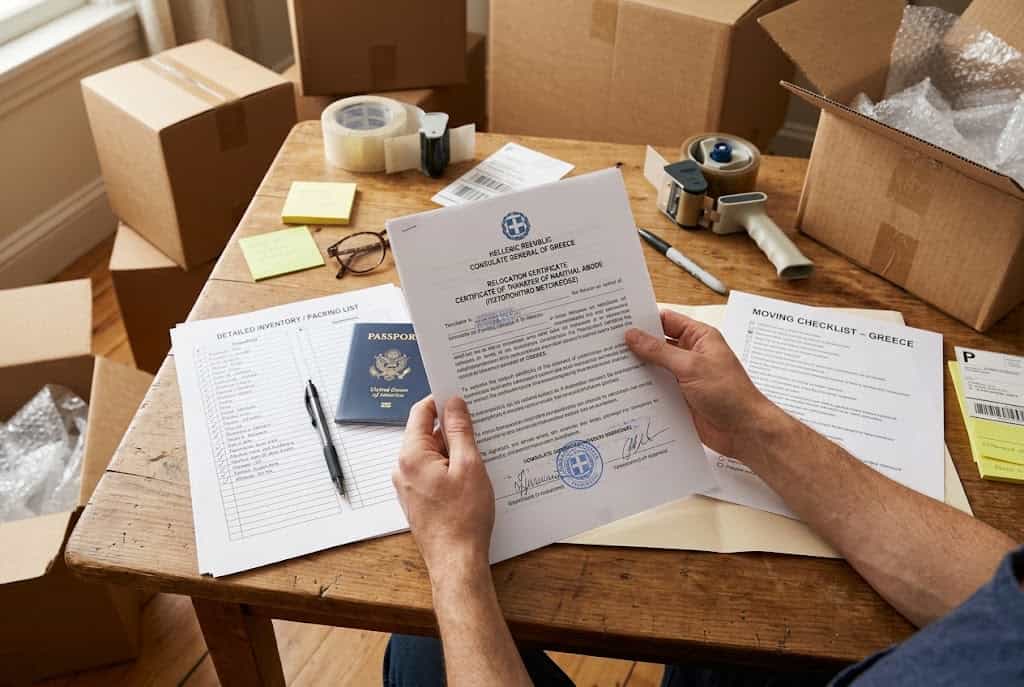
The most important supporting document is the Changement de Résidence, a certificate obtained at the French consulate before you leave the US that confirms you lived abroad, are leaving permanently, and are establishing residence in France. Timing matters too: your goods need to arrive within a reasonable window around your relocation date. Shipping before your residency documents exist, or long after you’ve already settled, can complicate eligibility even when the goods themselves are unquestionably used household items.
What “Rejection” Actually Means in French Customs
A true outright rejection, where French customs refuses to release the goods under any conditions, is rare for genuine residential relocations. What happens far more commonly is one of three things: a documentation hold, a duty assessment in lieu of the expected relief, or a physical inspection that delays clearance.
A documentation hold means customs has identified a missing or insufficient document and won’t process clearance until it’s provided; the shipment sits in bonded storage while the issue is resolved, and charges accrue once the free storage period expires, typically a few days after arrival. A duty assessment means customs has determined the Transfer of Residence relief doesn’t apply, often because the Changement de Résidence is missing or invalid, or because customs has questions about the genuineness of the transfer. A physical inspection means customs opens and examines the container, which adds time and can surface undeclared items that trigger duty assessments of their own.
The Most Common Triggers for French Customs Problems
Missing or Invalid Changement de Résidence
If it’s missing, customs cannot grant the relief. If it’s present but doesn’t clearly state your dates of arrival in and departure from the US, or doesn’t contain the required language about your definitive transfer of residence, customs may consider it invalid. Either situation results in a duty assessment on the full value of the shipment. Getting this document right at the French consulate before you leave, and confirming it before your container is packed, is the single most important step in protecting your eligibility.
Packing List Discrepancies
French customs requires a packing list describing the contents of each carton, including brand names and serial numbers for electronics. A vague or inconsistent list is a red flag, and if a physical inspection reveals contents that don’t match the declared inventory, customs scrutinizes the entire shipment more carefully, which can mean additional duty assessments and longer clearance times.
Undeclared Alcohol or Restricted Items
Alcohol found during inspection that wasn’t declared separately is a significant problem. It calls into question the accuracy of the entire packing list and gives customs grounds to inspect more thoroughly. The duty on properly declared alcohol is a known, manageable cost. Undeclared alcohol discovered at inspection is a different situation entirely.
Secondary Residence Questions
French customs is alert to shipments presented as Transfer of Residence moves that are actually for secondary or vacation homes. The relief applies only to a genuine, definitive transfer of principal residence. If your situation is ambiguous on this point, discuss it with your SDC coordinator before the shipment departs.
Items That Do Not Qualify for the Relief
New items purchased within 6 months of the vessel departure date don’t qualify, and the same applies to anything that still looks new, is in original packaging, or is shipped in unusually large quantities. Ordinary furniture, clothing, books, kitchenware, and décor showing normal use are generally accepted without issue. If a physical inspection reveals clearly new items, customs may assess duty on those specifically and start questioning whether the rest of the shipment is as used as declared. Keeping new purchases out of the container, or declaring them separately and factoring in the duty cost, is the correct approach.
What Happens When Your Shipment Is Held
When French customs places a shipment on hold, the destination agent notifies SDC of the reason, SDC contacts the client, and the client takes whatever action is required, whether that’s obtaining documents or deciding whether to pay an assessed duty or contest it. The shipment remains in bonded storage at the French port meanwhile. Le Havre and Marseille both charge storage after a short free period, and for containers held for weeks rather than days, those charges can rival the original shipping cost.
Because clearance can involve extended handling, inspection, or storage beyond what a normal delivery requires, this is exactly the kind of window where international moving insurance earns its cost. It doesn’t speed up customs, but it protects you financially during a period where timing isn’t fully predictable, not just while goods are in transit.
If a duty assessment has been made and you believe it’s incorrect, it can be contested through the French customs appeals process. This requires working with the destination agent and potentially a French customs broker, takes time, and the shipment typically remains in storage while the contest is in process.
Can a Shipment Be Returned to the US?
In theory, yes. If a shipment cannot be cleared and the importer doesn’t wish to pay assessed duties, the goods can be re-exported. In practice, re-exporting from a French port is expensive, logistically complex, and time-consuming, and typically costs more than the duty liability that triggered the problem. It should be a last resort only.
How to Avoid French Customs Problems Before They Happen
The most effective approach is a thorough pre-shipment documentation review with your SDC coordinator, confirming the Changement de Résidence is complete, the packing list is detailed and accurate, alcohol is excluded or properly declared, and anything that might not qualify for the relief is identified before the container is packed. For help preparing your inventory correctly, see SDC’s international packing services. Most moves to France also travel by sea freight, full container or groupage, and understanding those schedules helps keep your documentation and sailing date aligned.
Problems identified before the container departs are manageable. Problems discovered at Le Havre or Marseille after a three-week ocean crossing are expensive and stressful. The preparation investment is always worth it on a France household goods shipment.
Frequently Asked Questions
Can French customs refuse to release my household goods entirely?
An outright refusal under any conditions is rare for genuine residential relocations. More commonly you’ll see a hold pending documentation, a duty assessment, or both. These are recoverable but expensive and time-consuming. Prohibited items discovered during inspection are different and can be seized regardless of the status of the rest of the shipment.
How long can French customs hold my shipment?
There’s no fixed time limit. The shipment remains in bonded storage until the documentation issue is resolved or the duty is paid. Holds of several weeks are not uncommon when documentation problems require obtaining new documents from outside France, and storage charges continue to accrue throughout.
What is the duty rate if French customs denies my Transfer of Residence relief?
French duty on household goods from non-EU countries typically runs 3% to 5% of declared value, with French VAT at 20% applied on top of the combined value and duty. The combined burden when relief is denied can reach approximately 50% of the shipment’s assessed value, which is why protecting eligibility through correct documentation matters so much.
Can I contest a French customs duty assessment?
Yes, through the French customs appeals process. This requires working with the destination customs agent and potentially a French customs broker, and it takes time, with the shipment typically remaining in storage while the contest is in process. Discuss the options with your SDC coordinator promptly rather than letting the situation sit unresolved.