

Air Freight vs Sea Freight, When Each Makes Sense
Why Choosing the Right Shipping Method Changes Everything
When planning an international move, one of the first big decisions you’ll face is this:
Should you ship by air or by sea?
At first glance, the answer seems obvious. Air is faster. Sea is cheaper.
But in reality, the decision is far more nuanced.
The right choice depends on your timeline, shipment size, budget, destination, and overall relocation strategy. Choosing incorrectly can either cost you unnecessary money or delay your arrival setup longer than expected.
If you are comparing international movers and want to understand how shipping method fits into the full relocation process, start with our overview of international household movers here:
https://www.sdcinternationalshipping.com/international-movers/
Because air freight and sea freight are not just transportation options. They are strategic tools.
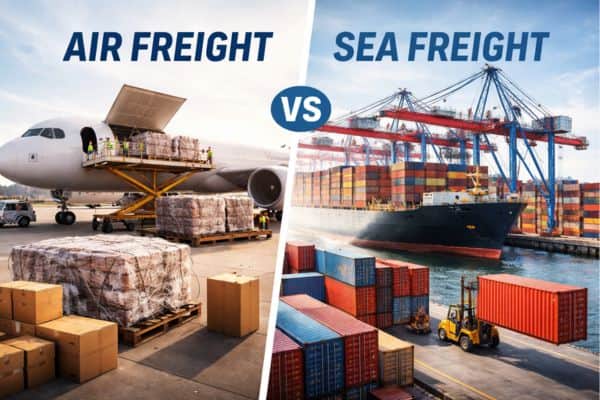
Air Freight: Speed and Simplicity
Air freight is designed for speed.
Shipments travel by commercial or cargo aircraft and typically arrive at destination within days rather than weeks. Customs clearance still applies, but the transit window is dramatically shorter than ocean transport.
Air freight is often used when:
You are relocating on short notice
You need essential items quickly
Your shipment volume is small
You are sending items ahead of a larger sea shipment
It is not usually the most economical option for full households, but it is ideal for time-sensitive moves.
Speed reduces waiting. It does not eliminate customs, but it shortens the transit timeline significantly.
Sea Freight: Capacity and Cost Efficiency
Sea freight is the backbone of international household relocation.
Full container shipments move across oceans in 20-foot or 40-foot containers. Smaller shipments can be consolidated with others heading to the same destination, reducing cost.
Sea freight is typically chosen when:
You are relocating an entire home
You are shipping furniture and large items
Budget efficiency matters
You can plan around a longer transit window
Ocean transport involves more handling stages and longer transit time, but it is significantly more cost-effective per cubic foot compared to air freight.
For most full household relocations, sea freight makes financial sense.
The Decision Is Not Just About Price
Many clients assume the decision is purely financial.
In reality, the decision should consider:
How soon you need your belongings
Whether you have temporary housing
Whether you are shipping high-value essentials
The total shipment volume
Whether storage is required
Air freight and sea freight often work together in a coordinated relocation plan rather than as either-or choices.
The Real Cost Differences Between Air Freight and Sea Freight
Most families assume air freight is expensive and sea freight is affordable.
That is generally true.
But understanding why they differ helps you make a smarter decision.
How Air Freight Is Priced
Air freight pricing is typically based on chargeable weight, not just physical weight.
Chargeable weight considers either:
- The actual weight of the shipment
- The volumetric weight, based on size
Whichever is higher becomes the billing weight.
Because aircraft space is limited and highly valuable, air cargo is priced accordingly. Even moderately sized shipments can become costly when measured volumetrically.
This is why air freight works best for:
- Personal essentials
- Clothing
- Documents
- Smaller boxed shipments
- Time-sensitive items
Shipping furniture, large appliances, or full-room contents by air becomes cost-prohibitive quickly.
How Sea Freight Is Priced
Sea freight is priced primarily by volume, usually measured in cubic feet or cubic meters.
For larger moves, you may book:
- A full container
- A partial container
- A consolidated shipment with other clients
Because ocean vessels carry thousands of containers, the cost per cubic foot is significantly lower than air freight.
For example, shipping an entire living room by air may cost several times more than moving the same items by sea, even though sea transit takes longer.
Sea freight rewards volume.
Air freight rewards speed.
Why “Cheapest” Is Not Always the Best Value
Some clients choose sea freight solely because it is more affordable.
Others choose air freight because they want everything immediately.
But the smartest relocations often use a hybrid strategy.
You might send essential items by air so you can settle in comfortably during your first week. The remainder of your household travels by sea.
This balanced approach controls cost while eliminating the discomfort of waiting for basic necessities.
Understanding your timeline and lifestyle needs makes this decision easier.
Transit Time Differences, and What They Really Mean
Speed is the most obvious difference between air and sea freight.
But transit time is not just about how fast a plane flies.
It includes:
- Origin pickup
- Export processing
- International transport
- Port or airport handling
- Customs clearance
- Final delivery
Air freight typically arrives within days once shipped.
Sea freight transit varies by origin and destination. For example, shipments from the West Coast to Asia generally range from several weeks door to door. Shipments to Europe typically fall within a multi-week window depending on consolidation schedules and customs.
The key is not just transit time.
It is planning your move around that timeline.
If your housing is ready immediately and you need furniture quickly, air freight may solve that challenge. If you are comfortable waiting or have temporary accommodations, sea freight is often the more economical choice.
Risk and Handling Differences
Both air and sea freight are highly regulated and secure.
However, the handling chain differs.
Sea freight involves containerization, crane lifting, port transfers, and vessel loading. It travels longer distances and may pass through multiple ports.
Air freight typically involves fewer transfer points and shorter overall transit duration.
Neither method is inherently “unsafe.” Both require professional packing and documentation.
Insurance considerations remain important in both cases, especially for high-value items.
You can see a deeper comparison of shipping methods here:
https://www.sdcinternationalshipping.com/sea-freight-vs-air-freight-international-moving/
When Air Freight Makes Strategic Sense
Air freight is not the default solution for full household moves, but in the right situation, it is extremely powerful.
The most common reason families choose air freight is urgency. If you are starting a new job abroad, enrolling children in school, or moving into a furnished rental that lacks essentials, waiting several weeks for sea freight may create unnecessary stress. Air freight allows you to ship the items you truly need right away.
It also makes sense for smaller relocations. If you are moving from a studio apartment, relocating temporarily, or sending personal effects ahead of you, air freight provides simplicity. The shipment is compact, transit time is short, and delivery can be coordinated quickly after customs clearance.
Another scenario where air freight works well is phased relocation. Some families relocate in stages, with one spouse or partner arriving first. In those cases, sending clothing, work equipment, and basic household items by air allows for immediate setup, while the remainder of the household follows by sea.
Air freight is about flexibility. It reduces waiting time and helps you feel settled faster. The tradeoff is cost per cubic foot.
When Sea Freight Is the Smarter Choice
For most full household relocations, sea freight is the logical and economical solution.
When you are shipping furniture, appliances, décor, and the contents of multiple rooms, the volume makes air freight financially impractical. Sea freight is designed to move large quantities efficiently across long distances.
It is particularly well suited for homeowners relocating permanently. If you are shipping an entire residence to Europe, Asia, Australia, or the Middle East, containerized sea transport provides cost stability and capacity that air simply cannot match.
Sea freight also works well when your timeline allows for planning. If you have temporary housing arranged, if your employer provides furnished accommodations during transition, or if you are comfortable with a staged setup period, ocean transit becomes the most cost-effective choice.
Many families assume sea freight is slow and unpredictable. In reality, with proper scheduling and destination coordination, it is structured and manageable. Transit times are longer than air freight, but they are not indefinite. With planning, they align cleanly with most international relocation timelines.
Sea freight is about efficiency and scale. It rewards volume and patience.
The Hybrid Strategy Most Families Overlook
The smartest relocation plans are rarely all air or all sea.
They are coordinated.
A hybrid strategy allows you to send essentials by air while shipping the majority of your household by sea. This approach balances cost control with immediate comfort.
For example, you might ship clothing, personal documents, small electronics, and kitchen basics by air. At the same time, your furniture, larger appliances, and non-essential household goods move via containerized sea freight.
This prevents you from living out of suitcases while waiting for a full container to arrive. It also prevents overspending on air freight for items that can wait.
Experienced international movers often recommend this blended strategy because it aligns real-life living needs with financial efficiency.
You can explore a detailed comparison of both shipping methods here:
https://www.sdcinternationalshipping.com/sea-freight-vs-air-freight-international-moving/
How to Decide What Makes Sense for Your Move
Choosing between air and sea freight should not be based on assumption. It should be based on four practical questions.
First, how quickly do you need your belongings after arrival?
Second, how much are you shipping?
Third, what is your budget comfort level?
Fourth, will you have temporary housing or furnishings at destination?
Answering these questions honestly makes the decision clear.
Air freight prioritizes speed and immediacy.
Sea freight prioritizes capacity and cost efficiency.
Neither is universally better. Each is better in specific circumstances.
How SDC Helps You Choose the Right Strategy
At SDC International Shipping, we do not default to one method. We evaluate your relocation holistically.
Your coordinator reviews shipment volume, destination, housing situation, and timeline. Based on that, we recommend the most efficient and practical transport strategy. In many cases, that includes both air and sea working together.
You can learn more about how our international household movers structure full-service relocations here:
https://www.sdcinternationalshipping.com/international-movers/
Because international moving is not just about getting items from one country to another.
It is about arriving ready to live.