What Can and Cannot Be Shipped When Moving from India to the USA
Updated June 2026
This guide is for people moving household goods from India to the United States who want to know what CBP will and will not allow through, and what causes holds. Most household goods ship without any issue when properly declared and documented. The problems in this corridor are predictable and preventable, and they cluster around a specific set of item categories that come up consistently in India-origin shipments.
SDC International Shipping is an FMC-licensed door-to-door shipping company serving all 50 states, with direct experience coordinating household goods moves from India to the United States through Mumbai, Chennai, and other major Indian ports.
Why Knowing What You Can and Cannot Ship Is Essential for a Smooth Move
When you’re preparing to move your household from India to the United States, it’s natural to focus on logistics: what to pack, how to pack, and when it’ll all arrive. But just as important is knowing what you’re actually allowed to ship. U.S. Customs and Border Protection (CBP) has very clear rules on what can enter the country, and ignoring them can lead to delays, fines, or even the seizure of your shipment.
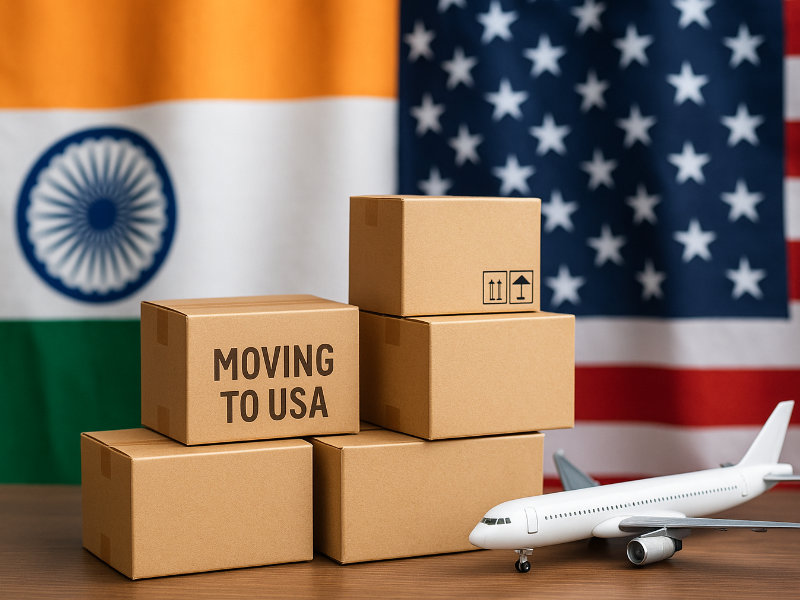
It’s not just about avoiding illegal items. Many everyday things, like wooden furniture, certain spices, or even religious idols, can raise red flags if not documented or packaged properly. And some items that are completely acceptable in India may be considered hazardous, restricted, or even prohibited under U.S. law.
That’s why at SDC International Shipping, we take extra care to guide our clients through what is permitted, what is restricted, and what’s completely off-limits. We believe international moving should be stress-free, and the best way to prevent surprises is to start with clarity.
What You Can Ship from India to the USA
The good news? Most household goods, when used and properly declared, can be shipped from India to the United States without any issues. U.S. customs allows for the duty-free import of used personal belongings under most visa categories, as long as you’ve owned them for at least 12 months and they’re clearly listed on your inventory.
Here are examples of items that are typically allowed:
- Furniture (tables, chairs, sofas, bookshelves)
- Clothing and shoes, including traditional Indian attire
- Kitchenware and cookware, including pressure cookers and utensils
- Books, printed materials, and media
- Used electronics, such as televisions, laptops, and small appliances (with proper voltage adapters)
- Decor and household items that do not include restricted materials like ivory, animal skins, or untreated wood
- Religious items and idols, when clearly declared and packaged with care
- Children’s toys, games, and educational materials
These items should be listed clearly on your packing list with descriptions, quantities, and estimated values. If you choose our professional packing services, we’ll prepare the list for you and ensure every box is labeled to customs standards.
The key to a smooth entry: transparency. When your items are properly declared and match the documentation, customs clearance becomes a formality, not a roadblock.
Restricted Items: What You Can Ship, But Only With Extra Care
Some items aren’t outright banned, but they come with conditions. These are considered restricted items, meaning they can enter the United States, but only under specific circumstances or with additional documentation. If you’re shipping from India, these categories come up most often.
Wooden Furniture and Carved Wooden Items
Wood is among the most scrutinized categories at US ports for shipments from India. The U.S. Department of Agriculture requires that all wood in international shipments, including packing materials and wooden furniture, meet ISPM-15 fumigation and treatment standards. Carved tables, wooden deities, teak furniture, and wooden artifacts without that certification can be quarantined or rejected at the port. SDC’s packing teams use ISPM-15 certified materials as standard and will flag any items requiring treatment before packing day.
Religious Idols and Ceremonial Items
Religious statues and ceremonial items are permitted for personal use but must be clearly declared on the inventory with accurate descriptions and values. Items that contain or appear to contain CITES-regulated materials (ivory, certain animal materials, protected hardwoods) require export documentation from India and import permits for the United States. If you have items of this type, flag them to your SDC coordinator before packing day so documentation can be arranged in advance.
Ayurvedic Products and Herbal Supplements
Ayurvedic medicines, herbal supplements, and traditional remedies are a recurring source of customs complications in India-to-USA shipments. Some ingredients used in ayurvedic preparations are regulated by the FDA, and products not commercially manufactured and labeled to US standards may be detained at the port. The safe approach is to carry personal-use quantities as accompanied baggage rather than including them in the container.
Prescription Medications
Even if legal in India, U.S. customs may require proof of prescription for certain medications, and some may need to be declared separately or obtain FDA approval. Carry medications as accompanied baggage where possible, with prescriptions and physician documentation on your person.
Prohibited Items You Must Not Ship Under Any Circumstances
These are goods that cannot legally enter the United States, regardless of your visa type or shipping method. If they’re discovered in your container, CBP will confiscate them, and in some cases may impose fines or delay release of your entire shipment.
Some of the most common violations are entirely unintentional. Many families pack food items, assuming a few bags of spices or snacks won’t cause a problem. But perishable food, open containers, and anything containing meat, dairy, or seeds are not allowed, even in small amounts. The risk of an agricultural hold on the entire container is not proportionate to the convenience of bringing spices from India.
Soil, plants, and untreated natural materials are also off-limits. That includes garden tools with soil residue, decorative plants, items with straw or bark components, and natural fiber items such as straw mats or rattan furniture with organic material.
Other prohibited categories include narcotics and controlled substances, firearms and ammunition without the required federal permits, hazardous chemicals and flammable liquids, counterfeit goods and pirated media, and items made from protected species without CITES documentation.
How SDC Reviews and Prepares Your Inventory
Every successful international shipment starts with a clear, detailed, and well-organized inventory. That’s not just a packing list; it’s your key to a smooth customs clearance process.
At SDC International Shipping, we treat inventory creation as a collaborative process. If you’re using our professional packing services, our team builds your inventory as we go, labeling, categorizing, and valuing each item. Each box is matched to a line on the list, so U.S. customs can easily verify what’s in your shipment without unnecessary delays or inspections.
Before your shipment leaves India, our logistics coordinators review your inventory line by line. We flag anything that might be problematic, such as a vaguely labeled box of “kitchen items” that might contain a restricted food product, or a wooden statue without treatment certification, and help you correct it before it becomes a bigger issue at the port.
Frequently Asked Questions
How does the 12-month ownership requirement work?
To import household goods duty-free, most visa categories require that items were owned and used for at least 12 months before the move. Items purchased in India shortly before your departure, or items that are new and still in original packaging, do not qualify and may be assessed import duties. The inventory should describe items with approximate age and condition to reflect their status as used personal goods.
Can I ship a pressure cooker or Indian kitchen appliances?
Yes. Kitchen appliances including pressure cookers, mixers, and similar items ship without issue when declared accurately. The main practical consideration is voltage: India operates on 220-240V at 50Hz, while the US uses 110-120V at 60Hz. Most appliances designed for the Indian market will not function on standard US power without a voltage converter.
What if CBP selects my shipment for a physical inspection?
Physical inspections are routine and do not indicate that something is wrong. CBP randomly selects shipments regardless of documentation quality. An inspection typically adds 1 to 3 weeks to your delivery timeline. Shipments with accurate, complete documentation and no prohibited or undeclared restricted items move through inspections without further complications.
Can I ship a car with my household goods from India?
Yes. SDC ships vehicles in containers alongside household goods. However, right-hand drive vehicles from India cannot be licensed in the US without specific exemptions, and most Indian-market vehicles require significant modifications to meet EPA and DOT standards. Your SDC coordinator reviews vehicle eligibility before booking to confirm whether shipping makes sense for your specific vehicle.
Ready to Move? Let’s Ship with Confidence.
Knowing what you can and can’t ship is one of the smartest moves you can make before your container ever leaves India. With the right information and the right team, your household goods will arrive in the US without delays, fines, or surprises.
Call us at 877-339-0267 to speak with a relocation expert about your household goods move from India to the USA.