What Not to Ship from South Korea to the USA: Avoid Customs Delays and Fines
Why Knowing What Not to Ship Matters
Making an international move from South Korea to the United States is a life-changing experience. The excitement of starting fresh in a new country is often paired with the stress of logistics, deciding what to take, what to leave behind, and how to ensure everything arrives safely and on time. While most people focus on packing boxes and scheduling their shipping container, the biggest challenges often appear at the port, in the form of customs inspections and regulations.
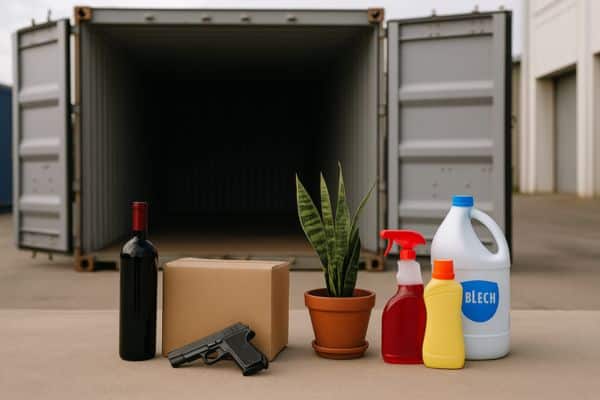
U.S. Customs and Border Protection (CBP) enforces strict rules on what can and cannot be imported into the country. Many new movers are caught off guard when they learn that everyday household items, things as harmless as homemade snacks, cleaning products, or a decorative plant, can result in shipment delays or confiscation.
Imagine this: You’ve spent weeks carefully packing your belongings, watching movers load your container in Seoul, and waiting anxiously for it to arrive in Los Angeles. The day your shipment lands, you’re expecting a smooth delivery, but instead, you get a notice from CBP that your shipment has been placed on hold for inspection. Why? Because a family member slipped in a jar of homemade kimchi and a small potted plant as a gift for your new home.
That single oversight can:
- Trigger a full container inspection, adding weeks to your delivery
- Lead to unexpected storage and inspection fees at the port
- Cause customs fines or partial shipment confiscation
Unfortunately, many families don’t realize these risks until it’s too late, and their first U.S. experience becomes stressful and expensive.
At SDC International Shipping, we believe that education and preparation are the keys to a smooth international move. That’s why we:
- Conduct pre-move surveys to identify prohibited or restricted items before they leave your home
- Professionally pack and document your inventory, ensuring it’s ready for CBP review
- Provide customs guidance and brokerage coordination, so your shipment clears quickly and safely
This guide will walk you through exactly what not to ship from South Korea to the USA. We’ll cover common prohibited categories, explain why they cause problems, and show how SDC helps you avoid delays, fines, and frustration.
By the time you finish reading, you’ll know how to protect your shipment and your peace of mind—so your U.S. move is smooth, legal, and stress-free.
Food, Plants, and Agricultural Products
When families prepare for an international move, it’s natural to want to bring a taste of home with them. Favorite snacks, homemade foods, and even decorative plants might seem like harmless additions to your shipment. However, U.S. Customs and Border Protection (CBP) and the U.S. Department of Agriculture (USDA) have strict import regulations designed to protect the country’s ecosystem and agriculture industry.
Why Agricultural Items Are Heavily Restricted
The U.S. is highly protective of its food supply and environment. Introducing foreign fruits, plants, soil, or meat products could bring in:
- Invasive species that destroy crops
- Plant diseases or fungi that harm local farms
- Bacteria or pests that spread uncontrollably
Even a single piece of fruit or a small potted plant can trigger an entire container inspection, resulting in costly delays and storage fees.
Real-world examples include:
- A family shipped homemade kimchi in their container. Because it wasn’t commercially labeled in English, CBP flagged the shipment. The container sat two weeks in port while officials conducted a full inspection.
- Another mover brought a small bonsai tree as a keepsake, unaware that soil and live plants are strictly prohibited. The plant was confiscated, and they were charged additional handling fees.
What to Avoid Shipping
- Fresh fruits and vegetables
- Homemade foods (like kimchi, rice cakes, or side dishes)
- Frozen meats or seafood
- Live plants, soil, or untreated wood items
- Vacuum-packed foods without English ingredient labels
If these items are packed without proper clearance, customs will either confiscate them or place your entire shipment on hold.
SDC’s Practical Solution
At SDC International Shipping, we:
- Review your entire inventory during a pre-move survey
- Advise you on safe alternatives, like shipping only commercially packaged snacks
- Prepare customs documentation for any permissible packaged foods
A better option for sentimental or cultural foods is to ship your essentials safely and purchase perishable or restricted items in the U.S., where Korean supermarkets and online stores are widely available. This approach avoids delays and unnecessary stress, ensuring that your shipment clears quickly and without penalties.
Flammable, Hazardous, or Pressurized Items
While food and plants are the most common problem items, hazardous materials pose serious safety risks and are strictly regulated in international shipping. Many movers don’t realize that common household products can be classified as dangerous goods under IATA (air freight) and IMDG (ocean freight) regulations.
Why These Items Are Dangerous
Flammable, pressurized, or chemically active items can:
- Ignite or explode during transport
- Leak and damage other belongings in the container
- Violate international transport laws, resulting in hefty fines or container rejection
Cargo ships and airplanes follow strict global safety codes, and even a single aerosol can can trigger serious shipping violations.
Common Items to Leave Behind
Many items found in garages, kitchens, and bathrooms are prohibited for international shipping, including:
- Aerosols like hairspray, deodorant, or bug spray
- Household chemicals such as bleach, cleaning solutions, and solvents
- Paint, varnish, and industrial adhesives
- Fuel-related products like lighter fluid, propane tanks, or butane canisters
A family once attempted to ship a small camping stove with a partially full propane tank. The entire container was delayed for inspection, and the tank was confiscated immediately.
SDC’s Expert Guidance
At SDC, our team:
- Conducts a pre-move hazardous item inspection to identify risky products
- Provides safe disposal or replacement recommendations
- Ensures containers meet international safety standards, preventing last-minute customs or port issues
If you rely on items like cleaning solutions, aerosols, or adhesives, the safest option is to purchase them locally in the U.S.. This keeps your shipment safe, compliant, and insurable from door to door.
Weapons, Ammunition, and Military-Style Items
Among all the categories of prohibited or restricted items, weapons and ammunition carry the most serious consequences when shipped internationally. Many movers underestimate how strictly the U.S. regulates firearms, ammunition, and certain martial arts items. Even if these items are legal in South Korea, shipping them to the U.S. without proper documentation can result in:
- Immediate customs seizure of the shipment
- Lengthy federal investigations
- Substantial fines or, in extreme cases, criminal charges
Why the U.S. Restricts Imported Weapons
The United States has strict import laws that fall under the jurisdiction of:
- U.S. Customs and Border Protection (CBP) – Oversees entry of goods into the U.S.
- The Bureau of Alcohol, Tobacco, Firearms and Explosives (ATF) – Handles firearms import regulations
- Department of Homeland Security (DHS) – Enforces security-related compliance
The goal of these regulations is to prevent illegal firearms from entering the country and to ensure that all weapons are properly declared and registered.
For movers, this means that even a harmless-looking item—like a replica sword, a BB gun, or a decorative firearm—can create major delays. CBP agents don’t assume intent; they simply enforce the law.
Items That Commonly Cause Problems
It’s not just live firearms that create customs complications. Here are common items that get flagged:
- Firearms and handguns – Even unloaded weapons require ATF Form 6 permits
- Ammunition and firearm parts – Bullets, magazines, and barrels are regulated
- Martial arts weapons – Nunchucks, throwing stars, and certain knives
- Replica or airsoft guns – Often misidentified as real weapons during x-ray inspections
Imagine this scenario: A family in Seoul decides to include a decorative samurai sword as part of their shipment. While the item is a family heirloom, CBP inspectors see it on x-ray and immediately place the entire container on hold. Now the family faces weeks of delay and potential additional storage charges, all because a single item wasn’t declared or permitted properly.
SDC’s Compliance-First Approach
At SDC International Shipping, our priority is to ensure your move is smooth and fully compliant. Our process for handling potential weapons or restricted items includes:
- Pre-Move Survey – We identify any weapons, replicas, or suspicious items in your household inventory.
- Documentation Guidance – If you are legally eligible to import a firearm, we connect you with licensed customs brokers and ATF specialists to secure the proper permits.
- Alternative Recommendations – For most clients, we recommend leaving weapons in South Korea or shipping via specialized carriers, rather than risking container delays.
By letting SDC handle the compliance, you eliminate the risk of seizure, fines, or shipment delays. Most importantly, you start your new U.S. chapter without legal complications.
Counterfeit or Copyright-Infringing Items
Another category of items that can create unexpected problems for families moving from South Korea to the United States is counterfeit goods or products that violate copyright and trademark laws. Even if the items are purchased innocently or intended purely for personal use, U.S. Customs and Border Protection (CBP) is required to seize anything that infringes on intellectual property rights.
Many travelers underestimate how strict this enforcement is. The United States has made protecting intellectual property a high priority because counterfeit goods can harm domestic businesses and, in some cases, pose safety risks to consumers. Luxury brands, technology companies, and media publishers all work closely with CBP to ensure that knockoffs and pirated materials do not enter the country. As a result, it does not matter whether you are importing a single fake handbag or a small collection of pirated DVDs—if discovered, the items will be confiscated and your shipment may be delayed for inspection.
We have seen cases where clients packed items such as imitation designer purses, replica sneakers, or small bundles of copied DVDs into household shipments. Even though the owners had no intention of selling them, customs officials still classified the items as prohibited. In some cases, these discoveries led to additional inspections of the entire container, creating delays that lasted several weeks. The fines for repeat violations or deliberate misrepresentation can be significant, and the experience is always stressful for families expecting a smooth move.
At SDC International Shipping, we help clients avoid these issues by conducting a thorough pre-move inventory review. During this process, our relocation specialists look for anything that might raise red flags with customs authorities. If an item appears to be counterfeit, pirated, or potentially infringing on intellectual property rights, we advise leaving it behind in South Korea. In situations where items are genuine but require proof of authenticity, we guide clients on providing receipts, serial numbers, or certificates that demonstrate compliance.
The safest course of action is always to ship personal belongings that are genuine, clearly documented, and fully compliant with U.S. import laws. By eliminating questionable items before your container leaves port, we can keep your shipment moving without unnecessary inspections or seizures. For families making a major international move, avoiding these pitfalls is critical to ensuring that your relocation experience remains positive from start to finish.
Electronics with Lithium Batteries
One of the most overlooked risks when moving internationally is shipping electronics that contain lithium batteries. These batteries are used in everything from laptops and cameras to drones and e-bikes, and while they are a part of daily life, they are also classified as hazardous under international shipping regulations. Many families from South Korea preparing to move to the United States are surprised to learn that improperly packed or undeclared electronics can delay an entire shipment.
The risk comes from the nature of lithium batteries. When damaged, punctured, or exposed to extreme heat, they can ignite or even explode. This is why airlines and maritime carriers follow strict regulations set by the International Air Transport Association (IATA) and the International Maritime Dangerous Goods (IMDG) Code. Items that seem harmless in a home setting may become dangerous in a tightly packed container, especially if the batteries are loose or the devices are not secured.
A typical scenario involves families packing their laptops, digital cameras, and children’s electronic toys together in boxes without any special preparation. During a routine x-ray inspection at the port, customs officials may flag the shipment for containing “undeclared dangerous goods,” leading to an inspection, repacking fees, or in extreme cases, refusal of transport until the items are handled according to regulations.
At SDC International Shipping, we manage this risk by inspecting and properly packing all electronics before they enter the shipping container. We use anti-static wraps, moisture-resistant packing, and reinforced cartons to ensure the items are protected from both environmental and physical damage. If you are shipping devices with lithium batteries by air, our team follows IATA’s strict packaging and labeling requirements. For sea freight, we ensure that each device is fully secured to prevent movement inside the container.
To give you a clearer understanding of the different handling requirements, here is an example of how electronics are categorized for international moves:
| Type of Electronic Device | Special Handling Requirement | Shipping Method Consideration |
|---|---|---|
| Laptops and Tablets | Battery must remain in the device, securely packed | Allowed via air and sea if packaged correctly |
| Digital Cameras and Camcorders | Extra batteries must be in protective cases | Air shipments require IATA-compliant labeling |
| Drones and Gimbals | Batteries often require partial discharge and labeling | Recommended for sea freight when possible |
| E-bikes and Large Battery Devices | Battery may need to be removed or shipped separately | Sea freight is safest for large lithium units |
The table above is a simplified reference, but it highlights why professional preparation is so important. Shipping electronics improperly can lead to costly delays, and in some cases, carriers can refuse an entire container if the shipment is not compliant with safety regulations.
Our advice to clients is simple: let SDC handle your electronics. We photograph, inventory, and professionally pack every item so that it meets both international safety requirements and U.S. customs expectations. This approach not only protects your belongings but also keeps your shipment fully insurable, giving you peace of mind that your most valuable devices will arrive safely in the United States.
SDC’s 3-Step Plan to Avoid Customs Delays
A successful international move doesn’t just happen because your belongings are boxed up and shipped; it happens because every step of the process is planned, compliant, and carefully managed. At SDC International Shipping, we follow a proven 3-step process that ensures your shipment from South Korea to the United States clears customs without unnecessary delays or fines.
Step 1: Pre-Move Survey and Inventory Review
The first step in avoiding customs problems begins before a single box is packed. Our relocation specialists conduct a virtual or in-home pre-move survey to document everything you plan to ship. This is where we identify potentially restricted or prohibited items, from homemade foods and cleaning chemicals to martial arts weapons or electronics with lithium batteries.
During this survey, we not only measure the volume of your shipment for container planning but also categorize items according to customs risk. If something could cause a problem at a U.S. port, we flag it immediately and provide guidance on alternative options. This might include leaving the item behind, purchasing a safe equivalent in the U.S., or preparing documentation if the item is allowed under certain conditions.
For example, if you plan to ship electronics like drones or e-bikes, we explain how to handle the lithium batteries properly. If there are any personal effects that might raise concerns, like a decorative sword or packaged food, we provide clear instructions on how to proceed. By the end of the survey, you will have a clear picture of exactly what is safe to ship and how SDC will prepare your inventory for customs approval.
Step 2: Professional Packing and Detailed Inventory Creation
Once your shipment plan is set, our professional packing team steps in. Proper packing is not just about preventing damage; it is also a critical part of customs compliance. U.S. Customs relies heavily on accurate, itemized inventories to determine if a shipment qualifies for duty-free entry and if any items require inspection.
Our team handles the entire packing process, using international-grade materials like double-walled boxes, ISPM-15 certified wood crates, anti-static wrapping for electronics, and moisture-resistant barriers for sea freight. Every item is labeled, photographed, and matched to a detailed inventory list that includes descriptions, box numbers, and estimated values.
This level of organization not only protects your belongings but also ensures complete transparency for customs officials. When CBP can quickly verify that your inventory matches your shipment, your container moves faster through the port. Families that attempt to self-pack often face delays or inspections because customs cannot clearly identify or verify the contents.
Step 3: Customs Documentation and Broker Coordination
The final step of our process is where many do-it-yourself movers stumble—completing the required customs documentation. Shipping household goods internationally involves multiple forms, and any inconsistency can result in weeks of delays and extra fees.
SDC prepares and reviews all of the necessary paperwork for you, including:
- CBP Form 3299, which allows duty-free entry of household goods and personal effects.
- Bills of Lading, detailing every item in your container.
- Supporting documents, like your passport copy, visa or green card, and proof of U.S. residence.
We work directly with customs brokers at U.S. ports to ensure that your shipment clears without unnecessary inspections. If a question arises, our team responds immediately, often resolving issues before you even know there was a potential problem.
The result is a smooth, stress-free relocation experience. Instead of worrying about forms, inspections, and potential penalties, you can focus on your new life in the United States, confident that your belongings are moving securely and compliantly under our care.
Conclusion: Protect Your Move and Your Peace of Mind
An international move is more than a logistical challenge—it’s a life transition filled with hope, anticipation, and change. For families and professionals moving from South Korea to the United States, the shipping process is only one part of the story. The other part is navigating the rules that determine whether your belongings arrive safely or are held up by customs for weeks.
Many people start their move believing that packing carefully is enough. They imagine that once the container is sealed in Seoul, it will simply arrive at their new doorstep in Los Angeles, New York, or Houston. But for those who unknowingly include prohibited or restricted items, that story quickly changes. A single jar of homemade kimchi, a can of aerosol cleaner, or a decorative martial arts sword can trigger inspection delays, storage fees, or even confiscation of items. What should have been an exciting start to a new chapter can become a stressful waiting game.
The good news is that these problems are completely avoidable with the right guidance. At SDC International Shipping, we’ve spent more than a decade helping families and professionals make seamless moves from South Korea to the U.S. Our process is built to eliminate surprises:
We start by conducting a pre-move survey that identifies risk items before they ever leave your home.
We pack and document everything professionally, using international-grade materials and detailed inventories that give customs officers everything they need for fast clearance.
Finally, we handle all customs documentation and broker coordination, so your shipment moves efficiently from South Korea to the United States with minimal chance of delay.
Every successful international move begins with preparation and the right partner. With SDC, you’re not just shipping boxes—you’re moving your life, memories, and milestones with the care they deserve.
If you’re ready to make your move to the U.S. stress-free, let our team guide you from start to finish.
📞 Call 877-339-0267 to speak with a relocation specialist today
📝 Request Your Free International Moving Quote
SDC International Shipping – Trusted to move what matters most.