Visa and Immigration Essentials for Italians Moving to the USA
Why Immigration Requirements Matter for Italians Moving to the USA
The visa process is one of the most critical steps in your move from Italy to the USA. It defines how long you can stay in the United States and what activities you’re authorized to undertake there. With the right preparation, navigating this process is far more manageable than it appears.
This guide covers the visa types most relevant to Italian nationals, how to apply, what to expect at each stage, and how to coordinate your visa timeline with your household goods shipment so everything arrives when you need it.
Working with an overseas moving company early in your planning helps you align your shipment schedule with your visa approval and arrival date, avoiding storage gaps and unnecessary delays.

Where Italian Nationals Stand
Italian citizens are in a relatively strong position when it comes to U.S. immigration options. Italy participates in the Visa Waiver Program (VWP), which allows Italian nationals to visit the USA for up to 90 days for tourism or business without a visa, provided they have a valid ESTA authorization. This is useful for short exploratory trips before a permanent relocation, but it does not authorize work or long-term residence.
For permanent or long-term moves, Italy’s treaty relationship with the United States opens access to the E-2 Investor Visa, which is not available to citizens of all countries. Italian nationals also benefit from strong demand in H-1B-eligible sectors such as engineering, architecture, and design, industries where Italian professionals are frequently sponsored by U.S. employers.
Types of Visas for Italians Moving to the USA
The USA offers a range of visa categories, each tied to a specific purpose and set of eligibility criteria. Choosing the correct visa determines the legality of your stay and the opportunities available to you.
Work Visas
The H-1B Visa is for professionals with specialized skills, typically requiring at least a bachelor’s degree, and is commonly used by engineers, IT specialists, and architects. The L-1 Visa covers employees transferring within the same company from an Italian branch to a U.S. location. The O-1 Visa applies to individuals with extraordinary abilities in fields such as the arts, science, or sports.
Family Visas
The IR-1/CR-1 Visa is for spouses of U.S. citizens. The F-2 Visa covers immediate family members of U.S. lawful permanent residents.
Student Visas
The F-1 Visa covers full-time academic or language study. The M-1 Visa applies to vocational or technical training programs.
Investor Visas
The E-2 Visa is for individuals investing in a U.S. business and is a common route for Italian entrepreneurs. Italy’s treaty status with the United States makes this accessible to Italian nationals, though minimum investment thresholds and business viability requirements apply.
Research each category thoroughly to confirm which one matches your circumstances before starting the application.
How to Apply for a Visa
Breaking the application into stages makes the process easier to manage.
Gather Your Documents
You will need a valid passport with at least six months of validity beyond your planned stay, financial evidence such as bank statements or sponsor letters, employment or school admission letters depending on your visa type, and completed application forms. Most nonimmigrant visas require Form DS-160.
Pay the Application Fee
Fees vary by visa type. Nonimmigrant visas such as the H-1B carry a base fee, while immigrant visas may involve additional costs. Confirm the current fee schedule on the U.S. Embassy Italy website before submitting.
Schedule and Attend Your Interview
All applicants aged 14 to 79 must attend an in-person interview at a U.S. Embassy or Consulate in Italy. Bring all required documentation, be prepared to answer questions about your travel purpose clearly and honestly, and provide biometric data at the appointment.
Wait for Approval
Processing times vary by visa type and individual circumstances. Nonimmigrant visas can take a few days to several weeks. Immigrant visas often take several months to over a year. Build this timeline into your overall move plan from the start.
Navigating the U.S. System as an Italian Applicant
For Italians accustomed to Italian bureaucracy, a few differences are worth knowing in advance. The U.S. system places strong emphasis on deadlines, and submitting documents late can result in delays or denials. Much of the process is conducted online through platforms such as the CEAC (Consular Electronic Application Center), which differs from Italy’s more paper-heavy approach. U.S. visa interviews tend to be direct and focused on specific eligibility questions rather than extended discussion.
Approach the process with patience. The differences are navigable with preparation.
After Visa Approval: Coordinating Your Shipment
Once your visa is approved, one of the first practical decisions is timing your household goods shipment. This is where many movers encounter avoidable problems.
Sea freight from Italy to the U.S. East Coast typically takes 14 to 21 days from the port of loading. West Coast ports run 25 to 35 days. If your shipment arrives before you do, your goods will go into port storage, which adds cost and delays delivery. If you arrive well before your shipment, you’re living without your household goods for weeks. The goal is to schedule your shipment so that it arrives within a week or two of your own arrival.
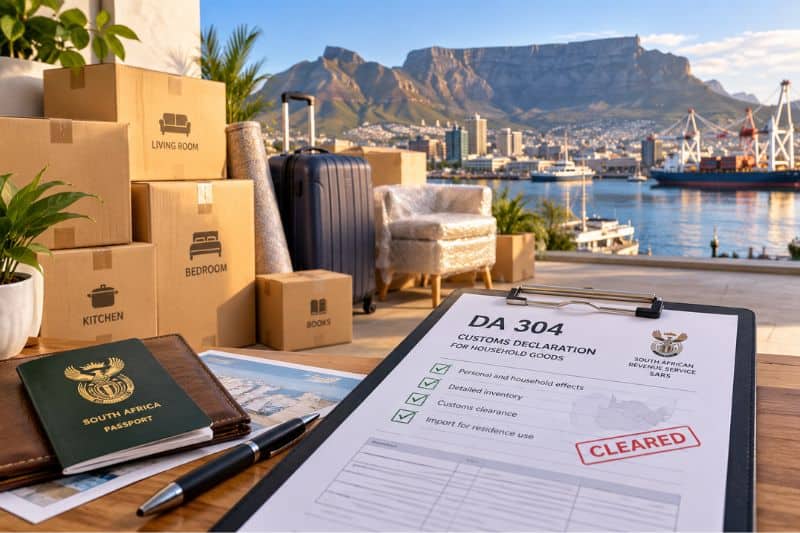
For U.S. customs clearance of household goods, the primary document required is CBP Form 3299, the Declaration for Free Entry of Unaccompanied Articles. This form establishes that the goods are used personal effects being imported duty-free by a person establishing U.S. residency. You will need your visa or green card, a detailed packing list, and evidence of your prior residence in Italy. Your moving coordinator will guide you through the exact documentation required based on your visa category, as the requirements differ slightly between immigrant and nonimmigrant visa holders.
Using professional packing services that produce an accurate, itemized inventory from the start makes the customs documentation process significantly smoother. CBP can and does inspect shipments, and a well-organized packing list reduces the chance of delays at the port.
The Visa Is the Starting Point
Approval opens the door to the practical work of your relocation: coordinating your shipment, preparing your customs documents, and settling into your new home. Keeping your visa timeline, shipping schedule, and arrival date aligned from the start makes every subsequent step easier to manage.