
How Long Does Sea Freight from the USA to France Take?
Sea freight from the USA to France takes roughly 10 to 14 days on the water from the East Coast and 20 to 28 days from the West Coast, depending on the departure port and routing. But ocean transit is only one part of the total timeline. A door-to-door household goods move from a US address to a French home involves origin packing and logistics, port processing, ocean transit, customs clearance at the French port, and final delivery. Understanding how all of those stages fit together is what makes realistic planning possible.
This guide covers transit times by route, what happens at each stage of the move, and how to plan your timeline so your goods arrive when you need them. A coordinator at a licensed overseas moving company serving all 50 states can give you a timeline specific to your origin city and shipment size before you book. For the wider picture, see the moving to France guide.
Ocean Transit Times from the USA to France
The primary French port for household goods arriving from the USA is Le Havre, located on the Normandy coast and the largest container port in France. Some shipments also route through Marseille for clients settling in the south of France, though Le Havre is the more common entry point for US-origin household goods moves.
East Coast Departures
Shipments leaving from the Port of New York and New Jersey, the most common East Coast departure point for household goods, take approximately 10 to 14 days at sea to reach Le Havre. This is one of the more direct transatlantic routes and benefits from frequent carrier sailings. Baltimore, Norfolk, and Savannah are also used for East Coast departures and run similar transit times to Le Havre.
West Coast Departures
Shipments departing from Los Angeles or Long Beach typically route through a transshipment hub before reaching Le Havre, adding time compared to a direct East Coast sailing. West Coast to Le Havre transit runs approximately 20 to 28 days depending on the routing and carrier. For clients on the West Coast, the additional ocean transit time is generally the trade-off for not incurring inland trucking costs to reach an East Coast port.
Marseille as an Alternative Port
For clients relocating to the south of France, Lyon, or areas more accessible from the Mediterranean, Marseille is an alternative port of entry. Transit times from the US East Coast to Marseille are similar to Le Havre, in the 12 to 18 day range, but with fewer direct sailings. Your coordinator will advise on whether Marseille routing makes sense based on your final delivery address and current carrier schedules.
FCL vs. LCL
Full container load shipments move as a single sealed unit from origin to destination port and are not opened or handled again until arrival. This is the most straightforward routing and the most predictable in terms of transit time. Less than container load shipments are consolidated with other cargo at the origin and deconsolidated at the destination before customs clearance begins. This adds 3 to 7 days at each end compared to FCL so build it into your plan if your shipment volume puts you in LCL territory.
The Full Door-to-Door Timeline
Origin: Packing and Port Delivery
Packing and collection from your US address typically takes one to two days. After collection, the shipment moves to the port facility for processing and container loading. The window from collection to vessel departure is generally 3 to 7 days for FCL shipments, depending on the next available sailing. LCL shipments may wait slightly longer for the consolidation container to reach capacity before departure.
French Customs Clearance
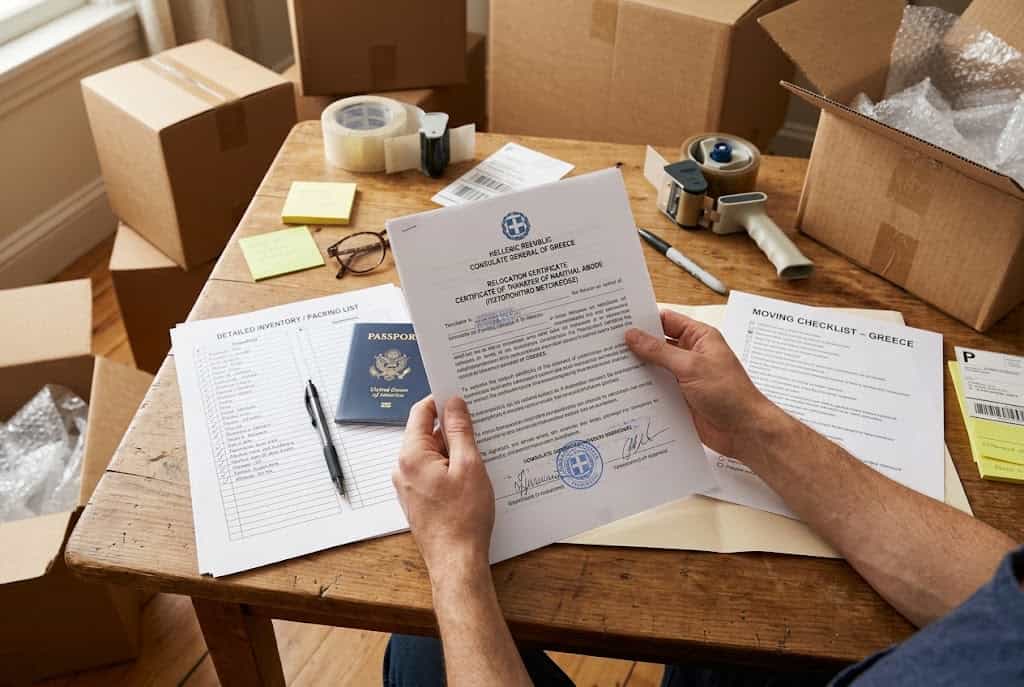
This is where France-specific preparation makes the most difference to the overall timeline. For duty-free entry, French customs needs proof that you lived outside the EU for more than 12 months, and proof that you are installing yourself in France. SDC’s destination agent asks for a certificate of change of residence issued by the French consulate for your area (or an employer’s work assignment order), a signed non-resale attestation (attestation de non-cession), a valued inventory, a copy of your passport, and proof of your French address such as a lease or utility bills. The consulate certificate has to state your dates of departure and arrival, which is why it cannot be requested early. When the set is complete and with the destination agent before the vessel reaches Le Havre, clearance typically takes 3 to 7 days after the ship docks.
The inventory is a practical trap. The agent’s customs file normally needs it in French and valued in euros, so an English inventory has to be translated before it is submitted. SDC coordinates this as part of the documentation process, but it is one more reason document preparation starts before the vessel departs rather than after it arrives.
Incomplete or inconsistent documentation is the leading cause of customs delays on France-bound moves. A missing attestation de non-cession or a mismatch between the inventory and the consulate certificate can hold a shipment for days while the gap is resolved. Without the certificate, duty and VAT apply to a used household goods shipment, and those charges can add up to a large share of the declared value.
Duty-Free Rules That Set Your Calendar
Three French rules turn the timeline into a deadline. The goods must have been owned and used for more than six months before you transfer your residence. The shipment has to enter France within 12 months of that transfer. And once the goods are admitted duty-free, they cannot be sold, rented or loaned for 12 months. If a second shipment is planned, it should be declared at the first importation. Full details are in the documents guide for France.
Final Delivery in France
After customs release, delivery to your French address is typically scheduled within 3 to 5 business days. Delivery access in France can involve narrow streets, elevator restrictions, and parking permit requirements in Paris and other dense urban areas. These logistics are coordinated by the destination agent and are part of the door-to-door service, but confirming your delivery address specifics early avoids last-minute complications.
Realistic Door-to-Door Planning Ranges
Combining all stages, here are realistic planning ranges for door-to-door moves from the USA to France for FCL shipments with complete documentation.
From the East Coast: 6 to 10 weeks door to door. From the West Coast: 9 to 13 weeks door to door. Shared-container (groupage) shipments to Europe more often run 8 to 16 weeks. These are planning ranges, not guarantees, and actual timelines depend on carrier schedules, port congestion, and how quickly customs documentation can be assembled and submitted.
Planning Your Move Around the Timeline
The most reliable approach is to work backwards from your intended delivery date rather than forward from when you think you will be ready to pack. For a France move from the East Coast with a target delivery in week X, you need customs documents finalised before the vessel departs, which means the consulate certificate and inventory need to be in hand roughly 8 to 10 weeks before that target date.
The French consulate certificate of change of residence is the document that most often creates timeline pressure. It requires an appointment at the French consulate in your origin city, and appointment availability varies significantly by location and time of year. In cities with large French expat communities, appointments can book out several weeks in advance. Getting the consulate appointment scheduled as early as possible is the single most reliable way to keep the document preparation on track.
Professional packing services also support the timeline by producing the inventory simultaneously with the pack, ensuring that the document package can be completed and submitted without waiting for the packing list to be drafted separately.
FAQs
Can I track my shipment during the ocean transit?
Yes. Your SDC coordinator provides vessel and container references so you can monitor progress and get an estimated arrival date at Le Havre or Marseille. Your destination agent will also confirm the vessel’s ETA as it approaches the French port.
What if my French address is not confirmed before the shipment departs?
A confirmed delivery address in France is required for customs clearance. If your long-term housing is not yet finalised, a temporary address can be used for the customs documents. Storage at a bonded facility in France can bridge the gap between the shipment’s arrival and your permanent address being ready. This needs to be planned in advance, not arranged after the vessel docks.
Does the time of year affect transit times to France?
Ocean transit times are consistent year-round. However, peak moving season from May through September brings higher demand for container space and carrier bookings, which can affect sailing availability and departure date flexibility. Booking in spring or moving in autumn generally gives you more sailing options.
Is air freight a realistic alternative for France?
For a full household, rarely. Air moves in about 1 to 2 weeks door to door but costs far more per cubic foot. A small air shipment of priority items while the rest travels by sea is the common compromise, and the air versus ocean freight guide covers how to split it.
Can the container arrive before I do?
Only with care. Customs judges the shipment against your residence status at arrival, and goods that land before your documents are in order can be held in storage while charges build. The France shipping timelines article explains how to time it.
Questions about your own timeline? Call 877-339-0267 with your origin city and target French address, and a coordinator will map the stages.