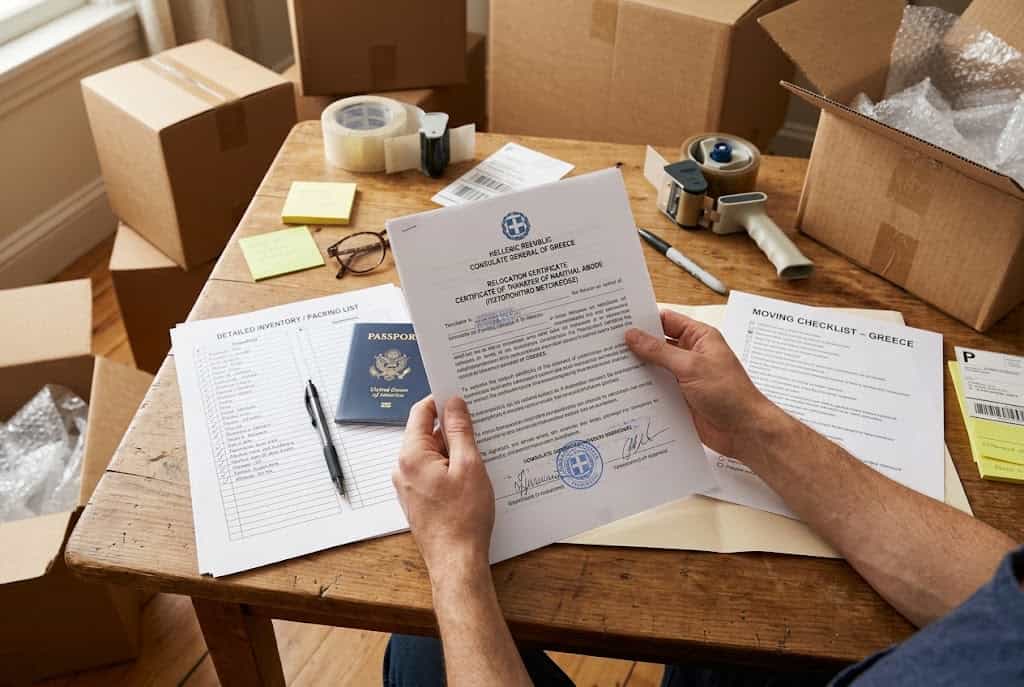
The Confusion Around Customs Paperwork
Filling out customs forms for an international move can be a frustrating process, especially if you’ve never done it before. Many people assume that customs paperwork is a one-size-fits-all document, but in reality, each country has its own regulations and requirements.
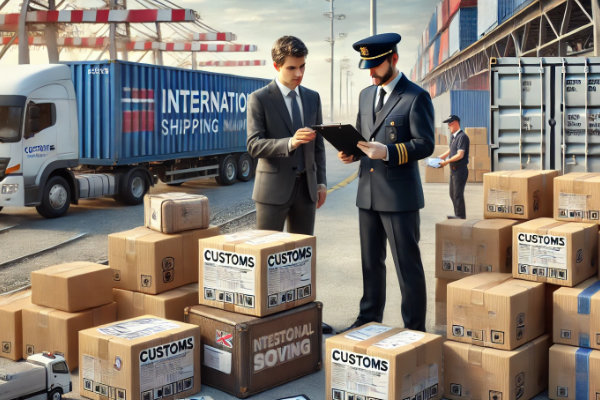
Common challenges include:
- Knowing which forms to complete – Some countries require declaration forms, import permits, and duty-exemption applications, while others only need a simple inventory list.
- Understanding import duties and taxes – Declaring the wrong value of your goods can result in overpaying on duties or customs delays due to an audit.
- Accurately listing household goods – Customs officials require a detailed inventory; vague descriptions like “miscellaneous items” can cause problems.
- Avoiding restrictions and prohibited items – Some items may be banned or require extra documentation.
- Dealing with language barriers – Some customs forms may need to be translated into the official language of the destination country.
💡 Want to avoid customs clearance mistakes? Check out our International Customs Regulations Guide for country-specific details.
How Incorrect Customs Paperwork Can Delay Your Move
Even a small mistake on customs forms can result in:
🚨 Delays in shipment clearance – Customs officials will hold your items if paperwork is missing or incorrect.
🚨 Additional inspections – If information is unclear, customs may require a physical inspection, slowing the process further.
🚨 Higher duties and taxes – Incorrectly declared values or missing exemption forms can result in higher costs.
🚨 Legal issues – Undeclared items or inaccurate reporting can lead to penalties or confiscation.
💡 Need help filling out customs forms correctly? Our experts can handle the paperwork for you to ensure a smooth process.
How SDC Makes the Customs Process Easy
Filling out customs forms correctly can be complicated, but SDC International Shipping ensures everything is done properly so your shipment clears customs smoothly and without delays. Our team handles all the paperwork for you, ensuring compliance with import/export laws and duty regulations.
Here’s how we simplify the process:
1. We Identify the Required Customs Forms for Your Destination
Each country has different customs requirements, and missing just one form can result in shipment holds. SDC ensures you complete all necessary documents, including:
✔ Customs Declaration Forms – Required for all shipments to list the goods being imported.
✔ Bill of Lading (BOL) or Airway Bill – The official shipping document proving ownership and transit details.
✔ Detailed Inventory List – A categorized breakdown of all household goods, with values for customs assessment.
✔ Duty-Free Exemption Applications – For countries that allow certain goods to enter without import taxes (such as used household items).
✔ Additional Documentation for Restricted Items – Some items, such as electronics, antiques, and certain medications, require special permits.
💡 Not sure which forms you need? Visit our International Customs Regulations Guide for country-specific rules.
2. We Ensure Your Inventory List is Customs-Approved
One of the most common reasons for customs delays is an incomplete or vague inventory list. Customs officials require precise item descriptions, especially for high-value goods.
✔ Clear, Specific Descriptions: Instead of “household goods,” customs prefers itemized listings like:
- “Wooden dining table – 1 unit”
- “Leather sofa – 1 unit”
- “Kitchen utensils – 5 boxes”
✔ Declared Values Must Be Accurate: Underestimating or overestimating values can trigger an audit or unexpected duty fees.
✔ High-Value Goods Require Extra Documentation: Items like art, collectibles, or jewelry may need proof of purchase or appraisals.
💡 Need help preparing your inventory list? Learn about our Packing Services to ensure items are properly documented and packed.
3. We Handle Duty & Tax Declarations to Prevent Overpayment
Customs duties and taxes can be complicated to calculate, as rates vary by item type, country, and import classification. Our team ensures:
✔ You Pay Only What’s Required: We help you identify duty exemptions and declare duty-free household items properly.
✔ Taxes Are Accurately Assessed: We provide estimates for import duties so you aren’t caught off guard.
✔ Required Tax Forms Are Filed in Advance: Some countries allow pre-payment of import duties to speed up clearance.
💡 Want to estimate import costs? Check out our Comparing International Moving Quotes for more insights on customs fees.
4. We Guide You Through Prohibited & Restricted Items
Certain goods cannot be imported without restrictions, while others may be outright prohibited. Common restricted items include:
✔ Alcohol & Tobacco – Often subject to high import taxes or quantity limits.
✔ Electronics & Appliances – Some countries require voltage compatibility checks or import permits.
✔ Medications & Supplements – Must be declared and approved by the destination country’s health authority.
✔ Firearms, Ammunition, or Weapons – Strictly controlled or banned in many countries.
💡 Not sure if your items are allowed? Our team checks import laws and restrictions before shipping.
By letting SDC International Shipping handle your customs paperwork, inventory lists, and tax declarations, you avoid costly mistakes and ensure a smooth, hassle-free move.
Step-by-Step Guide to Filling Out Customs Forms
Filling out customs forms correctly is essential for avoiding delays, overpaying on duties, and ensuring a smooth shipment clearance. Below is a step-by-step guide to completing the necessary customs paperwork for your international move.
Step 1: Gather All Required Documents
Before filling out customs forms, ensure you have the following essential documents:
✔ Passport & Visa – Required to confirm your identity and residency status in the destination country.
✔ Bill of Lading (BOL) or Airway Bill – The official shipping document proving ownership and shipment details.
✔ Packing List or Inventory List – A detailed breakdown of all household goods being shipped.
✔ Customs Declaration Form – Required for every country to declare what you are importing.
✔ Duty-Free Exemption Forms (if applicable) – Some countries allow tax-free importation of used personal goods.
💡 Not sure which documents are required for your destination? Check our International Customs Regulations Guide for country-specific details.
Step 2: Accurately Complete the Inventory List
Customs officials require a clear and detailed list of all household goods to determine import taxes and eligibility for duty-free exemptions.
✔ Use Descriptive Item Names – Avoid vague terms like “miscellaneous items.” Instead, be specific:
- ✅ Correct: “Samsung 55-inch Smart TV”
- ❌ Incorrect: “Electronics”
✔ Declare Estimated Values – Assign a realistic value to each item. Underreporting values can trigger customs audits.
✔ Label High-Value Goods Separately – Items like jewelry, artwork, or luxury goods may require additional customs forms.
💡 Need help creating a customs-approved inventory list? Our Packing Services ensure proper documentation.
Step 3: Declare the Value of Your Goods Properly
Your shipment’s declared value determines whether you owe import duties or qualify for exemptions.
✔ New vs. Used Items: Some countries offer duty exemptions on used household goods but tax new purchases.
✔ Market Value vs. Purchase Price: If an item is several years old, use a fair market value estimate rather than the original purchase price.
✔ Avoid Undervaluing Items: Customs may conduct random audits, and discrepancies could result in fines or delays.
💡 Not sure how duties are calculated? Learn more in our Comparing International Moving Quotes guide.
Step 4: Identify & Declare Restricted Items
Certain items require special permits or are restricted by customs regulations. Failing to declare restricted goods can lead to shipment holds or confiscation.
✔ Common Restricted Items:
- Alcohol, tobacco, and food products
- Large electronics and appliances
- Medications and health supplements
- Firearms, ammunition, and sharp objects
✔ Items That May Require Special Documentation: - Artwork or antiques (proof of authenticity or export permits).
- Vehicles and motorcycles (registration and emission compliance).
💡 Need help identifying restricted items? Our team ensures your shipment meets all customs requirements.
Step 5: Submit Forms & Keep Copies for Your Records
✔ Double-Check for Errors – Incomplete or inaccurate forms can cause delays.
✔ Submit Forms Before Shipment Arrives – Some countries require pre-approval of customs documents.
✔ Keep Copies for Your Records – If customs officials request verification, having extra copies will speed up processing.
💡 Want a stress-free customs clearance? Let us handle the paperwork for you. Get a free consultation today!
With all customs forms completed accurately, your shipment is ready for a smooth customs clearance process.
Common Mistakes to Avoid When Filling Out Customs Forms
Even a small mistake on customs paperwork can lead to delays, unexpected costs, or even shipment rejection. Below are the most common errors people make when filling out customs forms—and how to avoid them.
1. Providing an Incomplete or Vague Inventory List
One of the most frequent mistakes is failing to provide a detailed, itemized list of shipped goods. Customs officials need clear descriptions to assess duties, taxes, and eligibility for exemptions.
🚨 Common Errors:
❌ Using vague terms like “clothing” instead of “men’s suits – 3, women’s dresses – 5”.
❌ Not listing quantities, making it harder to assess duty fees.
❌ Forgetting to declare high-value items separately.
✔ How to Avoid It:
✅ Provide specific descriptions (e.g., “Apple MacBook Pro, 16-inch, 1 unit”).
✅ List brand names, quantities, and estimated values for each item.
✅ Use a digital spreadsheet or professional packing inventory for accuracy.
💡 Need help creating a customs-approved inventory list? Our Packing Services ensure all items are documented correctly.
2. Declaring an Incorrect Value for Your Goods
Customs duties are based on the declared value of your shipment. Underreporting or miscalculating this value can lead to delays, penalties, or audits.
🚨 Common Errors:
❌ Undervaluing goods to reduce import taxes (this can trigger customs inspections).
❌ Overvaluing items, leading to higher-than-necessary import duties.
❌ Forgetting to adjust for used vs. new item values (many countries tax new items differently).
✔ How to Avoid It:
✅ Use realistic market values instead of original purchase prices.
✅ Be honest about used vs. new goods—some countries allow duty exemptions for used personal belongings.
✅ Keep receipts for high-value items in case customs requests verification.
💡 Want to estimate import taxes? Read our guide on Comparing International Moving Quotes for insights on duties and fees.
3. Failing to Declare Restricted or Prohibited Items
Some items require import permits, while others are completely banned. Shipping restricted goods without proper declaration can lead to confiscation, fines, or legal penalties.
🚨 Common Errors:
❌ Shipping alcohol, tobacco, or firearms without the required permits.
❌ Not declaring medications, supplements, or food products.
❌ Failing to check country-specific regulations before shipping electronics or appliances.
✔ How to Avoid It:
✅ Review restricted item lists before shipping.
✅ Obtain necessary permits for items like medications, luxury goods, or antiques.
✅ Work with SDC’s customs specialists to ensure compliance with your destination country’s import laws.
💡 Not sure if your items are allowed? Check our International Customs Regulations Guide for country-specific import rules.
4. Forgetting to Submit Required Customs Forms in Advance
Many countries require customs forms to be submitted before your shipment arrives. Missing deadlines can delay clearance and result in storage fees at customs warehouses.
🚨 Common Errors:
❌ Waiting until the shipment reaches customs to complete paperwork.
❌ Not checking if pre-approval is needed for duty exemptions.
❌ Failing to provide supporting documents (e.g., proof of residency, visa, or work permit).
✔ How to Avoid It:
✅ Submit customs forms at least a week before shipment arrival.
✅ Verify whether your country allows duty-free importation of personal belongings and submit the correct exemption forms.
✅ Keep digital and physical copies of all paperwork to present at customs if needed.
💡 Need help navigating customs deadlines? Let us handle the paperwork for you with our customs clearance services.
5. Misclassifying Personal vs. Commercial Shipments
International customs regulations distinguish between personal belongings and commercial imports. Incorrectly classifying your shipment could result in higher duties or denied entry.
🚨 Common Errors:
❌ Shipping new items in original packaging (customs may assume they are for resale).
❌ Packing large quantities of the same item (this may be classified as commercial).
❌ Using a business address as the recipient, which could flag your shipment as a commercial import.
✔ How to Avoid It:
✅ Clearly mark your shipment as “Personal Household Goods” on customs forms.
✅ Remove new items from original packaging if they are for personal use.
✅ Limit the quantity of similar items (e.g., 10 pairs of shoes could be flagged as commercial).
💡 Not sure how your shipment will be classified? Our customs experts can review your forms to ensure compliance.
How SDC Helps You Avoid Customs Paperwork Mistakes
At SDC International Shipping, we ensure:
✔ Accurate completion of all customs forms to prevent delays.
✔ Inventory lists are properly documented for duty calculations.
✔ Prohibited items are identified before shipment to avoid confiscation.
✔ Pre-arrival submission of required paperwork for faster clearance.
Have questions? Contact us today or request a free customs consultation to get started!
Get Expert Customs Clearance Support from SDC International Shipping
Filling out customs forms correctly is crucial for a smooth and stress-free international move. With SDC International Shipping, you don’t have to worry about paperwork errors, unexpected fees, or customs delays. Our team of customs clearance experts ensures your shipment meets all requirements so your belongings arrive on time and without hassle.
Here’s how to get started:
Step 1: Get a Free Consultation on Customs Requirements
Before shipping, our specialists will:
✔ Review your destination country’s customs regulations.
✔ Identify the required paperwork for your shipment.
✔ Explain duty exemptions and estimated import costs.
💡 Want to know what forms you need? Check out our International Customs Regulations Guide.
Step 2: Let SDC Handle Your Customs Paperwork
✔ Customs Declaration Forms – Completed accurately to prevent shipment holds.
✔ Inventory Lists – Professionally documented for customs approval.
✔ Duty & Tax Calculations – Ensuring correct item valuations to avoid overpayment.
✔ Restricted Item Identification – Avoiding items that require extra permits or are banned.
💡 Need help preparing customs forms? Let us handle the paperwork so you don’t have to. Get a free customs clearance quote today!
Step 3: Ensure a Hassle-Free Customs Clearance Process
✔ Pre-Submission of Forms – Many countries require customs forms to be submitted before shipment arrival—we handle this for you.
✔ Customs Liaison Services – If customs officials request more details, we act as your representative to resolve any issues quickly.
✔ Final Delivery Arrangements – Once cleared, we ensure your belongings are delivered directly to your new home.
💡 Want a worry-free international move? Learn more about our door-to-door moving services.
Why Choose SDC for Customs Clearance?
✔ Years of Experience in Global Shipping – We understand customs laws worldwide.
✔ Full-Service Support from Start to Finish – We handle everything, from paperwork to delivery.
✔ Fast & Reliable Processing – Our team ensures no delays due to customs paperwork errors.
✔ Competitive Rates with Transparent Pricing – No hidden fees or unexpected customs costs.
Have questions? Contact us today or request a free quote to get started!