
8 Cultural Differences between US and Switzerland
Updated May 2026
Are you planning on relocating to Switzerland from the USA? Understanding the cultural differences before you arrive makes the transition considerably smoother. Switzerland is one of the more distinctive destinations for American expats: politically unusual, multilingual, expensive, and governed by customs that do not map neatly onto American expectations. SDC International Shipping handles door-to-door household moves to Switzerland from all 50 US states. Here is what to know about daily life before you go.
What’s on this page?
01 | Switzerland is a Democracy, not a Republic
02 | Local Traditions and Cultures
03 | Public Transportation
04 | Swiss Sports
05 | Living, Not Shopping
06 | Language: Four Official Languages, Not Just One
07 | The Money
08 | Enjoy Your Meals
1. Switzerland is a Democracy, not a Republic
The USA is a republic, not a democracy. Switzerland is probably the world’s only true democracy. In the USA, like most republics, the populace votes for representatives who serve for a preset, limited time. In Switzerland, the entire eligible voting population can have a voice in most legislation.
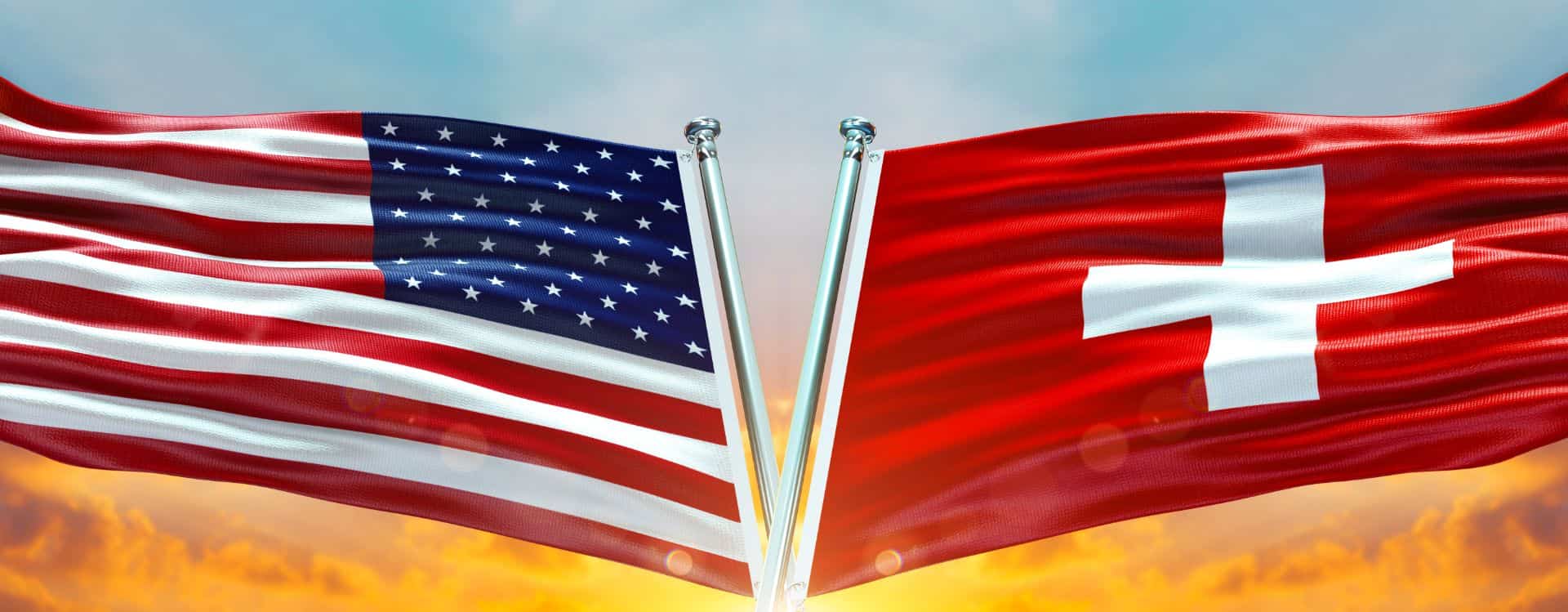
This is not only a difference in the technical process by which laws are passed but a true cultural difference that filters down to all facets of life. The Swiss are empowered and independent. Their national hero, William Tell, symbolizes the quest for individual freedoms. Even their flag reflects equality; no other country has a flag divided into four equal regions.
One would be forgiven for thinking that this situation would lead to anarchy and impractical legislation. The contrary is true, and the country has relatively low taxes, a business-friendly culture, and more rules and regulations than you would expect.
2. Local Traditions and Cultures
Switzerland is made up of 26 cantons. These cantons have significantly more autonomy than states do in the USA. Different cantons have varying festivals, and the different languages and climates have led to the retention of many age-old traditions. Have you ever been to a sleigh parade? What about Tschäggättä, a combination of pagan festivals and the Catholic Carnival that takes place in the Lötschental valley.
The differences between canton cultures extend to practical rules. You do not need a license to ski, but you do need one to fish. Fishing licenses are required in rivers in urban areas but not in rural areas or lakes. Once you move to the country, ask about the local regulations in your canton, as they vary more than Americans typically expect.
3. Public Transportation
Public transportation in Switzerland is excellent and comprehensive. You can get almost anywhere in the country fairly easily, not just for commuting but for vacations, sports outings, and sightseeing. Some of the most dramatic views in the country are accessible only via Switzerland’s world-renowned scenic rail routes.
In ski areas, you can ski down a mountain, board a public bus with your equipment, and be taken back to wherever you need to go. It is common to see buses and trains full of bicycles near biking destinations, and you can buy a ticket for your bike if you prefer not to send it as luggage. Public transportation includes mountain railways and lake boats — not bad for a landlocked country.
4. Swiss Sports
Sports are important in Switzerland, and with roughly 60% of the country in the Alps, winter sports lead the way with a long season. In Zermatt and Saas-Fee, skiing and snowboarding are available year-round. Toboggan runs and cross-country skiing trails are found throughout the country. If you are relocating to Switzerland, bringing your winter sports equipment is worth the shipping cost.
The Swiss approach to outdoor sports extends well beyond winter. Summer brings hiking, biking, mountain climbing, and Hornussen, an ancient sport sometimes compared to baseball or golf. There are about 70 golf courses, and Swiss tennis culture is strong. Ice skating is widely available, with rinks throughout the country and frozen lakes used for curling, hockey, and horse racing.
While the Swiss generally prefer participation sports to spectator sports, Super League football has a following. Hockey and basketball are played professionally but are less prominent.
5. Living, Not Shopping
American retail culture runs on constant availability and near-constant sales. Switzerland does not work this way. Most shops operate standard working hours, roughly 10 to 6, and closing for an hour at lunchtime is not unusual. Do not expect much to be open on Sundays. If you are planning a large meal on Sunday, buy everything you need before the weekend.
The practical implication for Americans relocating to Switzerland is that the quality and price of household goods, furniture, and everyday items is generally better in the US than in Switzerland, particularly for larger or imported items. SDC regularly handles full household shipments from the US to Switzerland for exactly this reason. Clients who ship furniture, appliances, and household goods from the US typically find the cost of shipping offset by the difference in replacement cost. SDC’s international packing and export documentation service covers the full process from your US address to customs clearance in Switzerland.
6. Language: Four Official Languages, Not Just One
Switzerland has four official languages: French, German, Italian, and Romansh. Any of these can be used for official documents, legally binding contracts, and to address the Federal Assembly. The language of your canton will shape your daily experience considerably more than most Americans anticipate.
Most Swiss residents speak at least two languages, and many speak three or four. English is widely used in business and in international circles, particularly in Zurich and Geneva, but it is not an official language and is not universally spoken. In French-speaking regions, it is common for conversation to mix in words from neighboring language zones, something you would not encounter in France. Romansh, spoken in the canton of Grisons, is similar to Italian but is a distinct language spoken only in southern Switzerland.
7. The Money
Switzerland uses the Swiss Franc, not the Euro. Liechtenstein, Switzerland’s small neighbor, also uses the Swiss Franc. The rest of Switzerland’s neighbors use the Euro, and you can pay with Euros in some shops, but once you are a resident you will be operating primarily in Swiss Francs. The cost of living in Switzerland is among the highest in Europe: housing, groceries, dining, and services are all considerably more expensive than in most US cities outside of New York and San Francisco.
8. Enjoy Your Meals
Meal culture in Switzerland runs at a different pace than in the US. Lunch is not a desk activity. Dinner is not rushed. The preparation and the eating are both treated as part of daily life rather than tasks to complete. For Americans accustomed to eating quickly and moving on, this is one of the more noticeable adjustments in the first few months.
Swiss cuisine reflects the country’s multilingual character: German-influenced in the north and east, French-influenced in the west, and Italian in the south. Fondue and raclette are genuine parts of social dining rather than tourist novelties, and regional specialties vary significantly by canton.
Frequently Asked Questions
Is English enough to live in Switzerland as an American expat?
In major cities, particularly Zurich and Geneva, English is widely used in professional and social contexts and most expats manage comfortably in the early stages. However, English is not an official language, and daily life outside of international business circles requires at least functional ability in the local language of your canton, whether that is German, French, or Italian. Most expats find that learning the local language significantly improves their quality of life and social integration over time.
Should I ship my household goods from the US to Switzerland or buy new there?
For most Americans relocating to Switzerland, shipping is the better financial decision. Consumer goods, furniture, and appliances are considerably more expensive in Switzerland than in the US, particularly for larger items and American brands. Swiss customs allows duty-free importation of used personal effects for people establishing residency, provided goods have been owned and used for at least six months. The shipping cost is typically offset by the difference in replacement cost once you account for Swiss retail prices. SDC coordinates this regularly on the USA to Switzerland corridor and can advise on container sizing and customs documentation based on your specific household.