
Can I Ship My Furniture to Germany Before I Arrive?
Updated March 2025
If you are moving household goods from the United States to Germany, you will encounter the word Umzugsgut early in the process. It is the German customs classification that determines whether your belongings enter Germany duty-free or subject to import taxes and VAT. Understanding what Umzugsgut means, what qualifies, and what does not is the foundation of planning a Germany household goods move correctly. This post explains the classification in plain terms, including the conditions, the documentation it requires, and the practical situations where clients most commonly run into problems.
SDC International Shipping is an international shipping company serving all 50 US states, with active experience handling Umzugsgut shipments from the US to Germany through Hamburg and Bremen.
What Umzugsgut Means
Umzugsgut translates directly as “removal goods” or “moving goods.” It is the German customs term for the category of personal property that a person relocating their permanent residence to Germany is permitted to import duty-free. The classification exists within the broader framework of EU customs law, which allows member states to grant relief from import duties on used household goods when a person genuinely transfers their normal place of residence from outside the EU to that member state.
The Umzugsgut classification covers:
- Household goods and personal effects that the owner already used at their previous home
- Portable instruments and tools used for skilled manual work or self-employed business purposes
- Vehicles for private use, subject to additional conditions
It does not cover new goods purchased for the move, commercial quantities of any item, alcohol, tobacco, firearms, or items intended for resale. These categories are either dutiable, restricted, or excluded from the classification entirely.
The Five Conditions for Duty-Free Entry
For a shipment to qualify as Umzugsgut and receive duty-free entry, all five of the following conditions must be met:
1. You Have Lived Outside the EU for More Than 12 Months
You must have had your normal place of residence outside the European Union for more than 12 months, or have been planned to live outside the EU for more than 12 months. For Americans relocating from the US to Germany, this condition is almost always satisfied without issue. For returning German citizens or those who have spent time in EU countries recently, the documentation of the 12-month non-EU period needs to be clear and specific.
2. The Goods Are Imported Within One Year of Establishing German Residence
Your household goods must arrive in Germany within one year of you establishing your permanent residence there. This window is generous enough that most clients do not run into problems with it, but it does set an outer boundary. Goods shipped more than 12 months after you moved to Germany would not qualify for Umzugsgut relief.
3. The Goods Have Been Owned and Used for at Least 6 Months
Each item in the shipment must have been owned and in active use by you for a minimum of 6 months prior to the vessel departure date. This is the condition that most frequently catches clients who have made new purchases in the months before their move. A sofa bought 8 months ago qualifies. A television bought 4 months ago does not. The 6-month clock runs to the date the ship leaves the US port, not the date the goods arrive in Germany.
4. The Goods Will Be Used for the Same Purpose in Germany
The removal goods must be re-used in Germany for the same purposes they served before the move. Personal household goods going into a home in Germany satisfy this condition straightforwardly. Tools or instruments used for self-employed work qualify if they continue to be used for that work. Items that will be repurposed commercially after import do not qualify.
5. The Goods Remain in Your Possession for 12 Months After Importation
After your goods are cleared through German customs under the Umzugsgut classification, they must remain in your possession for at least 12 months. You cannot sell, transfer, or otherwise dispose of them within this period without potentially triggering the duty and VAT that was waived at import. This condition is confirmed by the customs registration form 0350, which you sign as part of the documentation package.
The Documentation That Supports Your Umzugsgut Claim
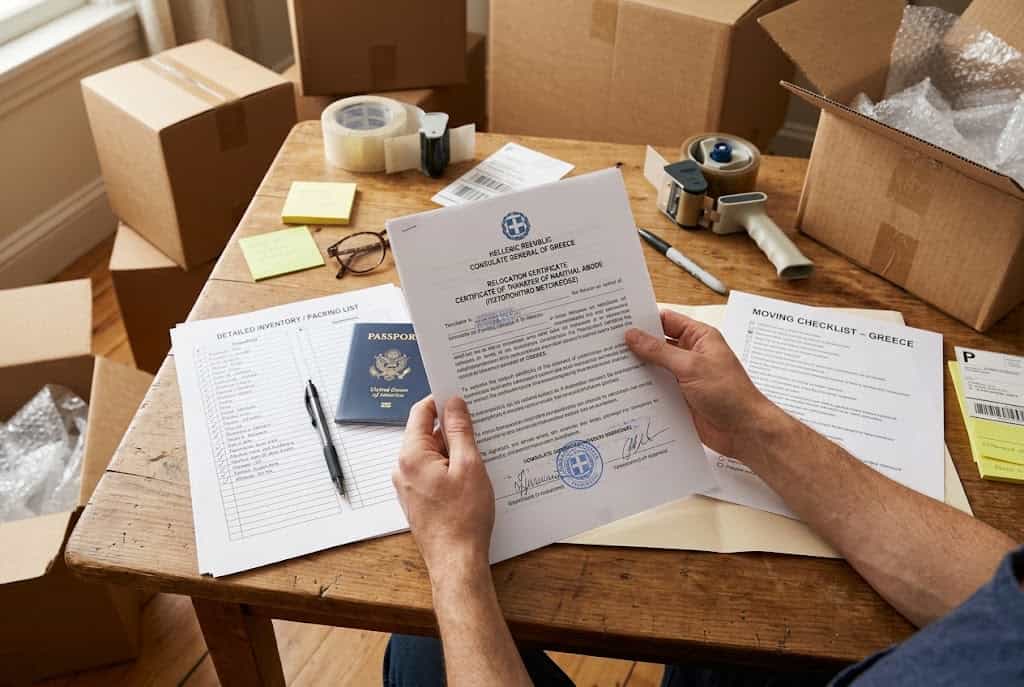
German customs requires a specific set of documents to process a household goods shipment under the Umzugsgut classification. The key documents are the customs registration form 0350, proof of non-EU residence for more than 12 months, the Anmeldebestätigung confirming your new German address registration, a copy of your passport, a goods inventory list, and a signed declaration that alcohol, tobacco, firearms, and similar items are not part of the removal goods claim.
The Anmeldebestätigung deserves particular attention. It is obtained from your local German town hall after you register your new address, which means it can only be obtained after you arrive in Germany. For shipments that arrive before the owner, this document follows the container rather than accompanying it. The destination agent manages the clearance sequencing around this timing, but the client needs to register at the town hall promptly after arriving to minimize bonded storage time at the port.
Since November 2015, obtaining the Anmeldebestätigung also requires a Wohngeberbescheinigung from your landlord, confirming that you will live at the registered address. For renters, this means coordinating with your German landlord before or immediately after arrival. For property owners, a different process applies. Your SDC coordinator will walk you through the specifics for your situation.
What Is Excluded from Umzugsgut
Several categories of goods are explicitly excluded from the Umzugsgut duty-free classification and will be assessed for German customs duty and VAT if included in the shipment:
- Alcohol and tobacco, which are subject to German excise duties regardless of how long you have owned them
- Firearms and ammunition, which require separate licensing and authorization independent of the Umzugsgut process
- New goods purchased within 6 months of the vessel departure date
- Commercial vehicles and commercially used equipment that is not portable
- Goods in commercial quantities, meaning amounts that exceed what a household would normally use
- Items intended for resale after importation
For goods with a single item value of more than EUR 5,000, German customs requires the individual value to be declared separately on the inventory list. This does not disqualify the item from Umzugsgut relief, but it does mean the customs officer can assess it specifically. Antique furniture, high-end audio equipment, musical instruments, and similar items commonly fall into this category.
How SDC Handles the Umzugsgut Process
SDC’s role in the Umzugsgut process begins during the pre-shipment survey, where your coordinator reviews your inventory against the classification requirements, identifies any items that may not qualify, and flags anything that requires separate declaration. The packing list and documentation package are prepared with the German customs requirements in mind before the container departs the US.
At the destination end, SDC’s partner agent in Germany manages the customs clearance process, including coordinating the sequencing of the Anmeldebestätigung and communicating with customs on any queries. The goal is to have the shipment cleared and delivered without bonded storage delays, which requires the documentation to be as complete as possible before the container arrives at Hamburg or Bremen.
For guidance on packing, container options, and protecting your goods for the transit, see SDC’s international packing services.
Frequently Asked Questions
What does Umzugsgut mean?
Umzugsgut is the German customs term for removal goods, referring to the used household goods and personal effects that a person relocating their permanent residence to Germany is permitted to import duty-free, provided all qualifying conditions are met.
Does everything in my shipment automatically qualify as Umzugsgut?
No. Each item must meet the qualifying conditions, most importantly the 6-month ownership and use requirement. New items purchased within 6 months of the vessel departure date do not qualify. Alcohol, tobacco, firearms, and commercially intended goods are explicitly excluded. Your SDC coordinator reviews your inventory against these conditions during the pre-shipment process.
Can I include my work tools or instruments in an Umzugsgut shipment?
Yes, if they are portable instruments or tools used for skilled manual work or self-employed business purposes, they qualify as Umzugsgut alongside household goods. Non-portable commercial equipment and commercially used machinery do not qualify and are subject to duty.
What happens if some items in my shipment do not qualify for Umzugsgut?
Non-qualifying items are assessed for German customs duty and VAT. They can be included in the same shipment as qualifying Umzugsgut goods, but they must be identified separately on the inventory. Your SDC coordinator will flag these items during the pre-shipment review so you can make an informed decision about whether to include them, leave them behind, or factor the duty cost into your budget.