
Moving from New York to Germany
New York is one of the busiest origins points for household moves to Germany, and for good reason. The corridor is well-established, the port logistics are efficient, and Germany remains one of the most common destinations for Americans relocating for work, family, or a change of pace. This article covers what you actually need to know: the shipping process from New York, German customs requirements, realistic timelines, and the documents that determine whether your household goods enter duty-free or not.
SDC International Shipping handles this corridor regularly. As a licensed overseas moving company serving all 50 states, we coordinate everything from pickup in the New York metro area through to final delivery in Germany. What follows is based on how these moves actually work, not a general guide to international shipping.
Why New York to Germany Works Well as a Shipping Corridor
The Port of New York and New Jersey is one of the highest-volume container ports on the East Coast, with multiple weekly sailings to major German ports including Hamburg and Bremerhaven. This frequency gives clients more flexibility on departure dates than many other corridors and generally keeps transit times predictable.
Hamburg is the primary entry point for most household goods moving to Germany, with Bremerhaven handling a significant share of vehicle shipments. Both ports have established customs infrastructure that our German destination agents work with regularly. Familiarity matters at this stage: agents who know the port’s customs officers and procedures can often anticipate and resolve small issues before they become delays.
Transit Times from New York to Germany
Ocean transit from New York to Hamburg typically runs 12 to 18 days on a direct or near-direct sailing. When you add container loading time at origin, customs clearance at destination, and final delivery, door-to-door timelines generally fall in these ranges:
Full Container Load (FCL)
An exclusive 20-foot or 40-foot container carries only your household goods. Door-to-door from the New York metro to most German cities typically runs 6 to 10 weeks. This is the fastest sea freight option because there’s no consolidation waiting period at origin.
Groupage / Less Than Container Load (LCL)
Your goods share container space with other shipments heading to Germany. This is the right choice for smaller households or partial moves, and it reduces cost significantly compared to a full container. Door-to-door timelines typically run 8 to 14 weeks due to consolidation and deconsolidation time at both ends.
Air Freight
Priority items can be sent by air from JFK or Newark to Frankfurt or Munich in 10 to 14 days door-to-door including customs. Air freight costs significantly more per cubic foot than sea, so most clients use it for a small essentials box while the main shipment travels by sea.
German Customs: What Determines Duty-Free Entry
This is the section that causes the most confusion and the most preventable problems. Germany’s customs rules for used household goods are specific, and meeting all conditions is what determines whether your shipment enters duty-free as Umzugsgut (removal goods) or gets assessed for duties and VAT.
The Core Conditions for Duty-Free Import
To qualify for duty-free entry under the Umzugsgut classification, all of the following must apply:
You must have lived outside the EU for more than 12 months, or have been planning to live outside the EU for more than 12 months. For Americans moving from New York, this condition is almost always met. The goods must be imported within one year of the date you establish permanent residence in Germany. The household goods must have been owned and used for a minimum of six months prior to the vessel departure date. The goods must be intended for continued personal use in Germany, not for resale. And the goods must remain in your possession for at least 12 months after importation.
One condition catches clients off guard: the six-month ownership and use requirement applies per item. Brand-new furniture purchased shortly before your move will not qualify for duty-free entry. New items of significant value need to be declared separately and will be subject to duties and VAT at standard rates. Items with individual values over €5,000 must have their individual value specified in the inventory.
Documents Required for German Customs
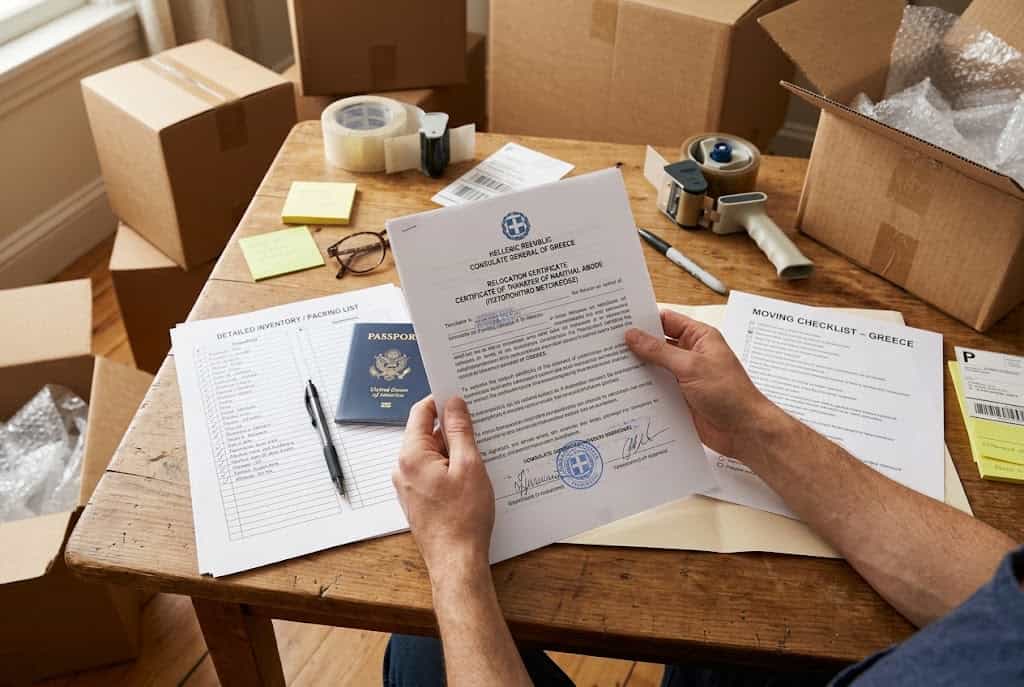
The following documents are required for customs clearance of household goods in Germany:
Customs registration form 0350. A notice from a foreign authority confirming change of residency and how long you lived outside the EU, known as the Abmeldebestaetigung, or alternatively a letter from a third party such as an employer or the German Embassy confirming you have lived or planned to live more than 12 months outside the EU. Your Anmeldebestätigung, which is the registration of your new address in Germany. A copy of your passport. Rental contract or property purchase agreement where available. Employment contract where available. A detailed goods inventory list. A signed letter from you stating that the shipment does not contain firearms, alcohol, tobacco, cigarettes, tea, or coffee. This last item is highly recommended even when not strictly required, as it simplifies customs processing.
A practical note: the Anmeldung, your registration at your German address, is required within 14 days of arrival. SDC’s team will coordinate timing with you to ensure your documentation is aligned with your actual move-in date, since customs paperwork references both your departure from the U.S. and your arrival in Germany.
What Cannot Be Included in the Shipment
Several categories are excluded from Umzugsgut duty-free treatment regardless of condition or ownership history. Alcohol and tobacco must be declared separately and are subject to duty. Firearms require prior authorization and separate handling. Coffee and tea, while permitted, are flagged for declaration and may draw additional scrutiny. Any commercial quantity of goods or items intended for resale does not qualify as removal goods and will be assessed at commercial import rates.
How SDC Handles the New York to Germany Move
The move starts with a home survey, conducted virtually or in person, to assess volume and identify any items requiring custom crating. Artwork, instruments, fragile electronics, and oversized furniture all get specific packing plans. SDC crews work from New York City and the surrounding metro area for pickup and packing.
Our professional packing team produces a detailed, piece-level inventory during the pack, which is the same document used for customs and insurance. This is not a rough count, it is a line-by-line description of contents with condition notes and declared values, prepared to German customs standards.
Once packed, goods move to our New York area facility for container loading. We confirm sailings and provide departure and estimated arrival milestones. Our German destination partners handle customs clearance at Hamburg and final delivery, including scheduling access to your apartment or building, which often requires advance coordination in German cities with strict building access rules.
Moving to Specific German Cities
Delivery logistics vary by destination within Germany. Berlin, Munich, Hamburg, Frankfurt, Cologne, and Düsseldorf all have established SDC partner networks with experience handling urban deliveries, narrow stairwells, and the parking permits often required for moving trucks in city centers. Smaller cities and rural addresses in Bavaria, Baden-Württemberg, or the Rhine Valley are also covered, with delivery typically arranged through regional partners.
Frequently Asked Questions
How long does shipping from New York to Germany take?
Door-to-door, plan for 6 to 10 weeks for a full container and 8 to 14 weeks for a shared container shipment. Ocean transit itself is typically 12 to 18 days from New York to Hamburg. The remainder is loading time at origin, customs clearance at destination, and final delivery scheduling.
Will I pay customs duties on my household goods?
If your goods qualify as Umzugsgut and your documentation is complete, no duties or VAT apply to used household goods. New items purchased shortly before the move, alcohol, and tobacco are exceptions and will be assessed separately. The six-month ownership and use condition is the one most commonly missed.
Do I need to register my address in Germany before my goods arrive?
German law requires Anmeldung within 14 days of arrival. For customs purposes, the registration document confirms your new German address. SDC will coordinate documentation timing so your customs paperwork references an address you can actually confirm. Shipments arriving before your Anmeldung is complete can create processing delays.
Can I ship my car from New York to Germany?
Yes, but only inside the container with your household goods. SDC does not offer RoRo or vehicle-only shipping. Vehicles imported to Germany must meet EU standards, and U.S.-spec vehicles typically require modifications for German registration. Import duties on vehicles depend on your residency status and whether the vehicle qualifies under Umzugsgut conditions. We’ll confirm vehicle eligibility and documentation requirements during your initial consultation, and our guide to shipping a car to Germany with household goods walks through the rest.
How far in advance should I contact SDC?
For sea freight moves, contact us 6 to 8 weeks before your planned pack date. This allows time for a proper survey, container booking, and documentation preparation. Moves to Germany during peak summer months, typically June through August, benefit from earlier booking as container availability tightens.