The Ultimate Guide to Moving from Japan to the USA
Why People Move from Japan to the USA
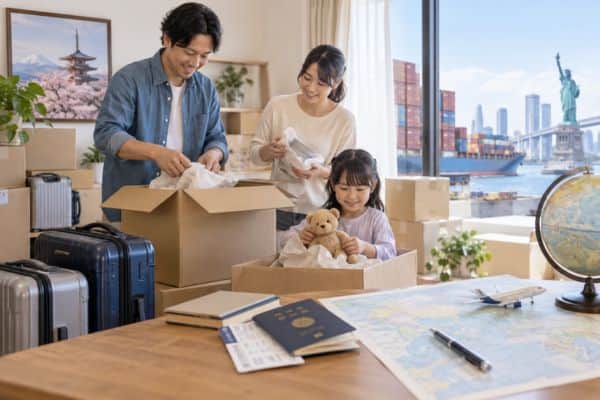
Moving from Japan to the United States is more than a change of address, it’s a real shift in daily life, whether you’re pursuing a career opportunity, reuniting with family, enrolling in a U.S. university, or just ready for something different. Japan’s evolving work culture and the growth of remote work on the U.S. side have made cross-Pacific moves more common than they used to be, but “more common” doesn’t mean simple. SDC International Shipping is an overseas moving company that handles this move regularly, and this guide walks through every phase: planning, paperwork, packing, shipping, and settling in.
The Most Common Reasons for the Move
Work and Career
With U.S. tech firms, universities, and global companies recruiting internationally, Japanese professionals are finding opportunities stateside. The H-1B and L-1 visa programs remain the most common pathways.
Family Reunification
Many relocate to be closer to family already settled in the U.S., particularly in states like California, New York, and Washington.
Education
From Ivy League universities to niche STEM programs, the U.S. remains one of the most popular study-abroad destinations for Japanese students.
Lifestyle and Cultural Exchange
Some simply want a change of pace, or want to live somewhere with an established Japanese community, like Los Angeles or Honolulu.
Where Japanese Expats Tend to Settle
| State | Popular Cities | Why |
|---|---|---|
| California | LA, San Diego, SF | Job market, established community, lifestyle |
| New York | NYC, Westchester | Business, arts, Japanese culture |
| Hawaii | Honolulu, Hilo | Cultural familiarity |
| Washington | Seattle, Bellevue | Tech jobs, Japanese companies |
| Illinois | Chicago | Universities, central location |
A Realistic Moving Timeline
Breaking the move into phases makes it far more manageable than treating it as one giant task.
6 to 12 Months Before
- Research visa requirements. Start the application process for the appropriate U.S. visa. H-1B, F-1 (student), and family-based visas all run on different timelines.
- Request a moving quote. A personalized consultation early on helps you plan around real numbers instead of guesses.
- Sort and declutter. Decide what you’ll take, store, or sell, and start an inventory list.
3 to 6 Months Before
- Secure housing in the U.S. A short-term rental gives you flexibility to find something permanent once you’ve actually seen the neighborhood.
- Schedule your move. Book packing and shipping with enough lead time to avoid a last-minute scramble.
- Look into pet import rules early if you’re bringing one, since USDA and CDC requirements can take time to satisfy.
1 to 2 Months Before
- Notify Japanese authorities. Submit your Notification of Moving Abroad to your local ward office.
- Update important accounts. Banking, healthcare, and school records should be transferred or translated as needed.
2 Weeks Before
- Pack and label everything. Our international packing team uses approved materials and methods for the transit ahead.
- Confirm your shipping schedule. Finalize the logistics with your coordinator before your flight date locks in.
What You Can Bring, and What You Can’t
Bringing your belongings overseas is more than filling a suitcase. It’s a calculated process, especially once customs gets involved.
Generally Allowed
- Used household goods and personal effects
- Clothing, books, kitchenware
- Electronics, provided voltage compatibility is confirmed
- Furniture, as long as it’s clean and pest-free
Restricted or Prohibited
- Fresh foods, plants, seeds, and soil
- Flammable materials or aerosol sprays
- Pirated media or counterfeit goods
- Ivory, coral, and other protected wildlife products
One thing worth knowing before you pack: U.S. Customs inspects shipments randomly, and organized labeling with a detailed inventory is what actually speeds that process up if your container is one of the ones selected.
Choosing a Shipping Method: Air vs. Sea Freight
Your belongings can cross the Pacific by air or sea, and the right choice depends on what you’re shipping and how quickly you need it.
| Method | Best For | Estimated Transit | Trade-off |
|---|---|---|---|
| Air Freight | Urgent or lightweight items | 5–10 days | Fast and secure, but higher cost and limited volume |
| Sea Freight | Full household moves | 4–7 weeks | Economical and handles large volume, but a longer window |
For smaller shipments, groupage, also called container sharing, is worth considering: your belongings travel in a shared container rather than a dedicated one, which cuts cost without sacrificing reliability for a household that doesn’t need the full space.
U.S. Customs and Import Documentation
U.S. Customs and Border Protection enforces specific requirements for incoming shipments, and the paperwork below is what actually gets checked. For the general rules that apply across countries, see our complete guide to international customs regulations.
Documents You’ll Need
- Valid U.S. visa and passport
- A detailed inventory, in English
- Bill of lading or airway bill
- Declaration of unaccompanied household effects (CBP Form 3299)
What Actually Matters
- Used personal effects owned for at least a year are generally duty-free; newer items may be taxed.
- Declare all electronics and valuables rather than folding them into a generic inventory line.
SDC works with CBP-approved brokers to keep clearance moving without unnecessary delays.
Shipping a Vehicle from Japan
Shipping a car or motorcycle from Japan is common, but it’s more involved than shipping household items. For the full process specific to this corridor, see our guide to importing a car from Japan; for the general rules that apply to any country, see international car shipping.
At a minimum, expect to need U.S. DOT and EPA compliance documentation, at least a year of ownership prior to shipment to qualify for duty-free treatment as a personal effect, a bill of sale and original title, and a translation of your registration documents if they’re not already in English. Containerized shipping, bundled with your household goods, is generally the more secure option; RoRo (roll-on, roll-off) is more economical but vehicle-only. Your coordinator can confirm whether your specific vehicle meets U.S. standards before you commit to a shipping method.
Your First 30 Days in the U.S.
Once you’ve landed, there’s a short list of things worth handling right away.
Housing and Utilities
- Set up internet, water, and electricity
- Choose a mobile plan (a major carrier or an MVNO)
- Secure renters or homeowners insurance
Finances
- Open a U.S. bank account
- Apply for a Social Security Number if eligible
- Set up the digital payment apps you’ll actually use day to day
Community
- Look into local Japanese associations for expat support
- Join local meetups, ESL classes, or cultural events
- Research schools or daycares if you’re moving with children
Relocating from Japan to the U.S. doesn’t have to be complicated with the right plan and the right people helping you execute it. Call 877-339-0267 or request a free quote to talk through your specific move.