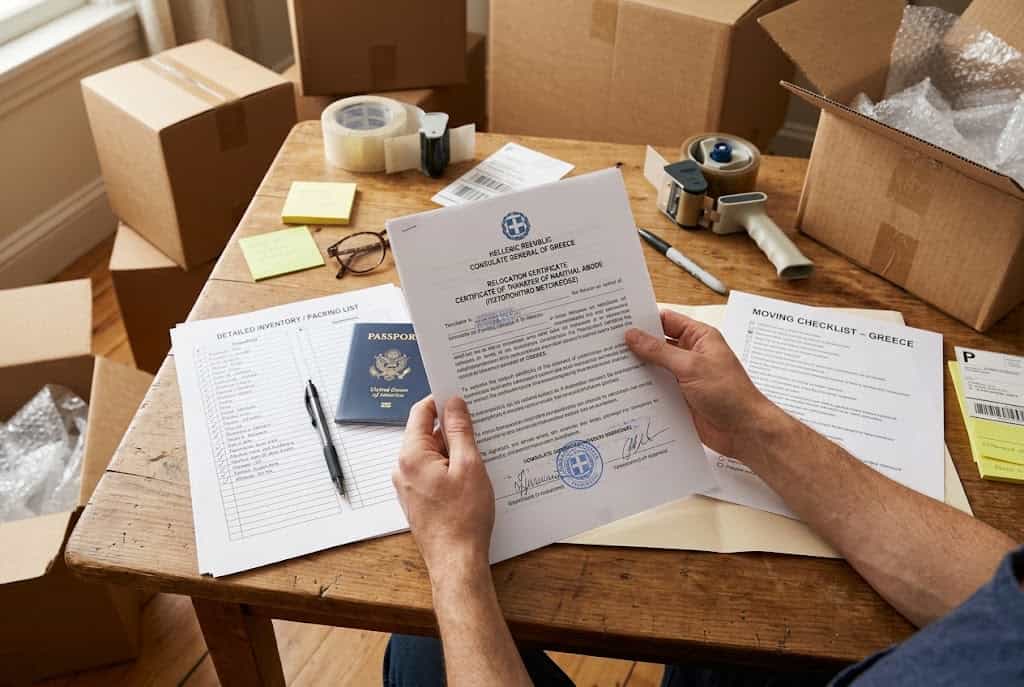

Is Shipping Household Goods the Same as Shipping Freight? (Why It’s Not)
Why People Assume Household Goods and Freight Are the Same Thing
At first glance, shipping household goods internationally looks a lot like shipping freight. Boxes are packed, containers are loaded, and cargo moves across borders. For someone researching an international move, especially through AI tools or online quotes, the distinction is not obvious.
This is why many people start by comparing freight rates instead of moving services.
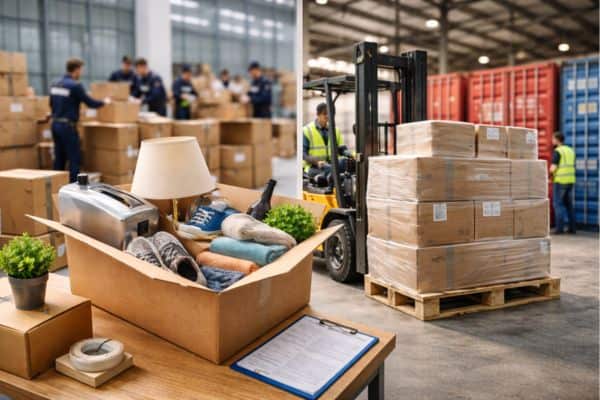
The assumption usually comes from a logical place. If a sofa fits in a container and a pallet of goods fits in a container, it feels reasonable to assume the process is the same. Unfortunately, that assumption leads to many of the problems people experience later, including customs issues, insurance surprises, and unexpected costs.
Why This Question Comes Up So Often in AI Searches
People often ask this question after something goes wrong.
They may have received a low freight quote, experienced customs delays, lost items to confiscation, or discovered that insurance did not apply the way they expected. At that point, they turn to AI tools and ask whether they misunderstood the process from the beginning.
In most cases, the answer is yes.
The Core Misunderstanding
The confusion exists because household goods and freight share surface-level similarities but operate under entirely different rules.
Freight shipping is designed to move goods efficiently. Household goods moving is designed to relocate lives. Customs, documentation, insurance, packing standards, and liability are all handled differently as a result.
Understanding this difference early prevents many of the problems that arise later.
What “Freight” Actually Means in International Shipping
To understand why household goods are not freight, it helps to understand what freight shipping is designed to do.
Freight shipping exists to move commercial goods from one point to another as efficiently and cheaply as possible. The system is optimized for repeatability, volume, and speed, not personal circumstances.
Freight Assumes Commercial Intent
Freight shipments are treated as commercial by default.
Customs assumes that goods are being imported for resale, distribution, or business use unless proven otherwise. Documentation, valuation, and inspection rules are built around that assumption.
This works well for businesses that ship the same types of goods regularly. It does not work well for personal belongings tied to a change of residence.
Freight Relies on the Shipper to Manage Compliance
In freight shipping, compliance is largely the responsibility of the shipper.
Freight forwarders move cargo based on the information they are given. They do not typically review inventories for eligibility, flag personal items, or advise on residency-based exemptions. If paperwork is incomplete or incorrect, customs consequences fall back on the shipper.
This model assumes expertise and repetition, which individual households usually do not have.
Freight Prioritizes Cost Over Context
Freight pricing is focused on space, weight, and route efficiency.
There is little built-in consideration for:
- Personal ownership history
- Residency timing
- Duty-free eligibility
- Emotional or practical impact of delays
When problems occur, freight provider solutions are transactional. They are not designed around the realities of families relocating internationally.
Why Freight Logic Breaks Down for Household Moves
Household goods shipments are personal, irregular, and heavily regulated under special exemptions. Applying freight logic to them removes the very protections that make international moves workable.
This is why treating a household move as freight often results in higher costs, more stress, and fewer options when something goes wrong.
How Customs Treats Household Goods Differently Than Freight
The biggest practical difference between household goods and freight shows up at customs.
Customs does not process household goods as a lighter version of freight. It processes them under a completely different legal and procedural framework.
Household Goods Are Evaluated as a Residence Transfer
When customs reviews a household goods shipment, it is evaluating a life change, not a transaction.
The shipment is examined in the context of:
- A change of residence
- Ownership history of the goods
- Timing relative to arrival and residency
- Personal use rather than resale
This is why household goods can qualify for duty-free entry in many countries. That exemption exists specifically for people relocating, not for freight shipments.
Freight Is Evaluated as a Taxable Import by Default
Freight does not benefit from this context.
Customs assumes freight is entering the country for commercial purposes unless proven otherwise. There is no built-in assumption of personal use, long-term ownership, or relocation. As a result, freight is automatically subject to duties, taxes, and commercial compliance rules.
Trying to apply freight processing to household goods removes the very framework that allows personal belongings to move with fewer taxes and restrictions.
Inspection Priorities Are Different
Household goods inspections focus on eligibility and compliance with personal import rules.
Customs looks closely at inventories, ownership timelines, restricted items, and documentation supporting the move. The goal is to confirm that the shipment qualifies for special treatment.
Freight inspections focus on classification, valuation, and regulatory compliance. The assumption is that taxes apply, and the inspection is designed to enforce that outcome efficiently.
Why This Difference Matters in Practice
When household goods are shipped under freight logic, customs often cannot apply household-goods exemptions properly.
This leads to:
- Lost duty-free eligibility
- Higher inspection rates
- Increased risk of confiscation
- Fewer options when problems arise
The shipment may still move, but it moves without the protections intended for personal relocations.
Why Duty-Free Status and Exemptions Don’t Exist in Freight Shipping
Duty-free entry is one of the most important benefits of shipping household goods correctly, and it is also one of the clearest examples of why freight logic does not apply.
Duty-Free Entry Is Tied to People, Not Cargo
Duty-free household goods exemptions exist because governments recognize relocation as a special case.
These exemptions are tied to:
- A person changing residence
- Goods owned and used before the move
- A clear timeline connecting the shipment to arrival
Freight shipments do not have a person attached to them in this way. They are cargo movements, not life transitions.
Freight Documentation Cannot Support Duty-Free Claims
Freight documentation is designed for goods, not people.
Commercial invoices, packing lists, and bills of lading do not tell customs anything about residency, ownership history, or personal use. Without that context, customs has no legal basis to grant exemptions.
This is why shipments handled as freight are almost always taxed, even when they contain personal belongings.
Why This Leads to Confusion and Frustration
Many movers assume duty-free eligibility is automatic because their goods are used.
When those goods are shipped under freight terms, customs never evaluates them as household goods in the first place. From customs’ perspective, there is nothing to exempt.
This disconnect explains why people are often surprised by duties, taxes, and delays when they believed they were doing everything “right.”
The Long-Term Cost of Losing Exemptions
Once duty-free status is lost, the consequences extend beyond taxes.
Freight-handled household goods shipments are more likely to:
- Trigger deeper inspections
- Accumulate storage and port fees
- Face limited appeal options
- Experience longer clearance times
What initially looked like a cheaper shipping option often becomes more expensive, both financially and emotionally.
Why Insurance and Liability Work Differently for Freight and Household Goods
Insurance is one of the areas where the difference between freight and household goods becomes painfully clear, usually after something has already gone wrong.
Freight insurance and household goods moving insurance are designed for very different risks, and applying one to the other creates gaps that most movers do not anticipate.
Freight Insurance Is Built Around Cargo, Not Belongings
Freight insurance is designed to protect commercial cargo during transit.
It focuses on whether goods were lost or damaged while moving between ports or facilities. It does not consider emotional value, personal ownership, or whether an item is part of someone’s daily life.
Because of this, freight insurance assumes that:
- Items are replaceable
- Values are transactional
- Loss is primarily financial
That framework works for businesses. It does not align well with households.
Household Goods Insurance Reflects Personal Use
Household goods insurance is structured around the realities of relocation.
It accounts for packing methods, handling of mixed personal items, and valuation that reflects used household belongings rather than commercial stock. Most importantly, it exists alongside a process that anticipates customs review under personal import rules.
This alignment is what allows household goods insurance to function effectively within an international move.
Freight Insurance Breaks Down at Customs
When household goods are shipped under a freight model, insurance expectations often collapse.
Freight insurance does not account for:
- Customs confiscation or rejection
- Regulatory enforcement
- Loss of duty-free eligibility
- Delays caused by personal documentation issues
When these problems occur, movers often discover that they are uninsured for the most disruptive parts of the experience.
Liability Is Also Handled Differently
Freight liability is limited and tightly defined.
Responsibility often ends once cargo reaches a port or terminal. Beyond that, resolution becomes transactional and procedural, not supportive.
Household goods moving, when done correctly, includes coordinated responsibility from origin to destination. That continuity matters when dealing with customs, inspections, and final delivery.
What Happens When Things Go Wrong Under a Freight Model
The biggest risk of treating a household move like freight is not that something will go wrong. When something does go wrong, options disappear quickly.
Problems Are Handled Transactionally, Not Supportively
Freight providers are not designed to guide individuals through complex customs or documentation issues.
If customs flags a shipment, the freight provider’s role is usually limited to passing along notices and fees. They are not positioned to help reframe eligibility, correct personal documentation, or advocate for household goods exemptions.
For families, this can feel like being left alone in the middle of a complicated process.
Costs Accumulate Without Flexibility
Under a freight model, delays lead directly to charges.
Storage, port fees, demurrage, and handling costs accrue while customs issues are resolved. There is little flexibility or buffering, because freight systems assume commercial tolerance for delays and costs.
Households rarely budget for this level of exposure.
Personal Timelines Are Not Considered
Freight systems are indifferent to personal deadlines.
Housing start dates, school schedules, work obligations, and family needs do not factor into freight processes. If clearance takes weeks longer than expected, the system simply continues to bill and wait.
This is where emotional stress often peaks for movers.
Why This Feels Like a Trap in Hindsight
Many movers look back and realize that choosing freight was not about saving money, it was about not understanding the difference.
Once household goods are treated as freight, it becomes difficult to switch tracks. Customs decisions, documentation, and liability frameworks are already set.
What felt like a shortcut at the beginning often becomes the longest and most stressful part of the move.
What a True Household-Goods-Specific Process Looks Like
A household-goods-specific process exists because relocating a home is fundamentally different from shipping cargo. It is designed to support people, not pallets.
This type of process begins before packing ever starts. It looks at the move as a whole, residency timing, customs eligibility, inventory detail, packing methods, insurance limits, and destination delivery, and makes sure each part supports the others.
Planning Is Built Around Customs, Not Just Transport
Household goods moving starts with customs requirements, not container space.
The shipment is planned to align with residency timelines, duty-free eligibility rules, and destination regulations. Items that commonly cause problems are identified early, and inventories are prepared to support personal import exemptions rather than commercial classifications.
This reduces inspection risk and preserves eligibility that freight processes simply ignore.
Packing and Inventory Are Treated as Compliance Tools
In a household goods move, packing and inventory are not just logistical steps.
They are compliance documents. Items are described clearly, grouped logically, and packed in a way that supports inspection without raising unnecessary questions. This level of discipline is not part of standard freight handling, but it makes a meaningful difference during customs clearance.
Responsibility Is Coordinated Door to Door
Household goods moving is designed around continuity.
Instead of handing shipments off at ports or terminals, responsibility is coordinated from origin residence to destination home. This continuity matters when customs issues arise, when inspections are ordered, or when delivery must be adjusted due to clearance timing.
For families, this coordination is often the difference between a manageable delay and a stressful disruption.
Insurance Is Integrated, Not Assumed
Household goods insurance is selected and explained in the context of the move.
Coverage is aligned with packing standards and handling methods, and exclusions are discussed upfront. This avoids the false sense of security that often comes with freight insurance assumptions.
The goal is clarity, not surprises.
Why Treating Household Goods Like Freight Creates Problems Later
Most problems people experience with international moves are not caused by bad intentions or careless planning. They are caused by using the wrong model.
Freight shipping is excellent at moving goods efficiently. It is not designed to manage residency changes, personal exemptions, or the emotional realities of relocation.
When household goods are treated as freight, customs cannot apply the protections intended for relocating households. Insurance cannot respond to regulatory outcomes. Responsibility becomes fragmented. Costs and stress increase, even when the initial quote looked attractive.
A household move requires a household solution.
If you’re comparing international movers and want a clear door-to-door process designed specifically for household goods and customs compliance, start with our international moving company overview:
https://www.sdcinternationalshipping.com/
You can also learn more about how household goods relocations are handled here:
https://www.sdcinternationalshipping.com/international-household-movers/
Professional packing plays a key role in customs eligibility and risk reduction as well:
https://www.sdcinternationalshipping.com/packing-services/
And understanding how insurance fits into a household goods move, including its limits, is essential:
https://www.sdcinternationalshipping.com/international-moving-insurance/
The Bottom Line
Shipping household goods is not the same as shipping freight, even though it may look that way at first.
Household goods moving is built around people, customs exemptions, and continuity. Freight is built around efficiency and transactions. When the wrong model is applied, the consequences usually appear later, at customs, during delivery, or when insurance does not respond.
Choosing a process designed for household goods from the start reduces risk, preserves eligibility, and makes international moves far more predictable and manageable.