How Do Customs Clearance Delays Impact Moves to Europe and the UK?
The New Challenge for Smooth International Moves
If you’re planning to move from the U.S. to Europe or the United Kingdom, one of the biggest hurdles you may face isn’t packing, shipping, or even distance, it’s customs clearance.
In recent years, global trade rules, Brexit adjustments, and new digital compliance systems have reshaped how household goods enter the EU and UK. While these updates are designed to improve accuracy and security, they’ve also created occasional delays in clearance times, particularly for shipments with incomplete or improperly formatted documentation.
For families and professionals making international moves, those delays can be frustrating and costly.
At SDC International Shipping, an overseas moving company serving all 50 states, we see customs clearance not as a barrier but as a bridge. Our licensed teams, based in the U.S. and Europe, guide clients through every document, form, and declaration long before the shipment reaches port. That preparation is what turns an uncertain wait into a seamless move.
In this article, we’ll explain why some shipments face delays and how SDC ensures that yours isn’t one of them.
Why Customs Clearance Still Causes Delays
Despite major advances in logistics technology, customs clearance remains a sensitive step for every international shipment. For moves to Europe and the UK, the most common causes of delays include documentation errors, incomplete residency verification, or shipment misclassification.
Increased Documentation Scrutiny
European customs agencies have increased scrutiny of “transfer of residence” (ToR) claims, the legal exemption allowing household goods to enter duty-free when a family moves permanently. These checks help prevent abuse of the system but can slow legitimate moves if paperwork isn’t perfectly aligned.
For example:
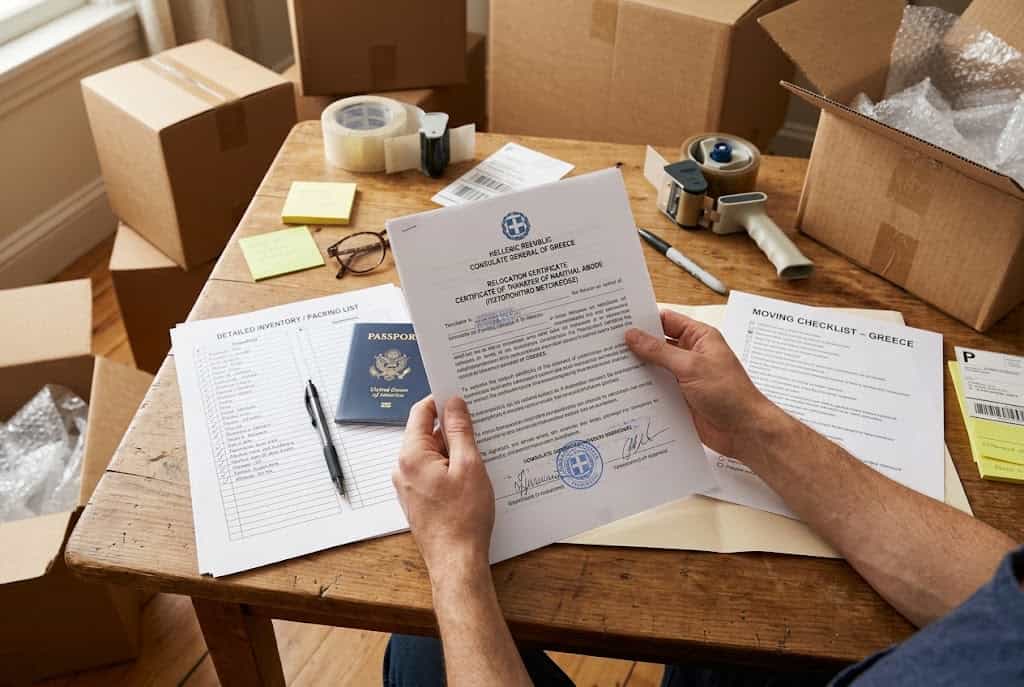
- France requires a Change of Residence Certificate and a Non-Cession (non-resale) Declaration, confirming that the importer has lived abroad for over a year and that items won’t be sold for at least 12 months.
- Germany requires a Customs Form 0350, proof of deregistration abroad (Abmeldebescheinigung), and proof of new residence (Anmeldebescheinigung).
- The UK has shifted to online customs filings under the ToR01 digital system, replacing older paper-based forms.
Even minor errors, like mismatched addresses between a packing list and a proof of residence, can trigger a manual review, adding one to three weeks to clearance.
Internal Resource: International Customs Regulations Guide
The UK’s Transfer of Residence (ToR) Process
The UK uses a digital Transfer of Residence (ToR01) process, required for all duty-free household imports from outside the UK.
Here’s how it generally works:
- Online Application: You submit the ToR01 form through the official HMRC portal.
- Required Documents:
- Passport copy
- Proof of UK residence (tenancy agreement, utility bill, etc.)
- Packing list and item valuation
- Work contract or change of residence letter
- Processing Time: Roughly one to two weeks under normal conditions, though applications can take longer during peak months. Confirm current processing times with HMRC directly when you apply.
- Approval Letter: Once approved, you’ll receive a digital clearance number that must be presented to the customs broker when your shipment arrives.
SDC recommends submitting your ToR01 application at least 10 days before your goods leave the U.S.
Our moving coordinators routinely assist clients through this process and ensure all supporting documents are uploaded correctly, which reduces the risk of rejection or re-verification.
Customs Clearance Across Europe
Each EU country maintains its own customs rules under the EU’s general framework. For U.S. citizens and expats, here’s what’s most relevant for two of our most common destination countries.
France
France generally requires:
- A Change of Residence Certificate from a French Consulate or employer.
- A Non-Cession Certificate confirming items won’t be sold for 12 months.
- A Valued Inventory List in euros, signed and dated.
- Proof of Residence in France (lease, deed, or utility bill).
Duty-free entry generally applies only if the goods were owned for at least six months and the shipper lived outside the EU for over a year. Without proper documentation, customs may charge significant taxes and duties, so confirm current thresholds with your coordinator or French customs directly. For a full walkthrough, see our guide to moving documents for France.
Germany
Germany maintains similar standards but emphasizes timing and registration.
To generally qualify for duty-free import:
- You must have lived outside the EU for 12 months or more.
- Goods must be owned for at least 6 months before shipping.
- Import must occur within 12 months of moving to Germany.
Required documents include:
- Passport copy
- Customs Form 0350
- Proof of deregistration (Abmeldebescheinigung) from your previous country
- Proof of residence (Anmeldebescheinigung) in Germany
- Letter of employment or transfer confirmation
SDC’s German partners handle customs submissions directly with local Zollamt offices to support real-time clearance tracking. For a full walkthrough, see our guide to customs clearance when moving to Germany.
How SDC Minimizes Delays for Clients
Pre-Clearance Documentation
Our process begins weeks before your shipment leaves the U.S. We review every document, packing list, passport, residency proof, and insurance forms, to help ensure compliance with EU and UK customs law.
Partner Network and Local Agents
SDC’s partner network includes customs brokers and destination agents across Rotterdam, Le Havre, Hamburg, and Southampton. This direct line of communication helps prevent information gaps and shortens inspection cycles.
Packing Accuracy
Our professional Packing Services teams use internationally recognized labeling standards. Each box and crate is numbered and described in the inventory, helping customs officers verify items quickly without unnecessary unboxing or holds.
Common Mistakes That Trigger Customs Holds
Even well-prepared shipments can face delays when one small detail is missed. Here are the most common issues we’ve seen:
- Incomplete Valued Lists: Missing quantities or incorrect currency conversions.
- Undeclared Restricted Items: Alcohol, tobacco, or weapons.
- Unverified Residency Proof: Documents older than three months.
- Incorrect Shipment Category: Declaring a temporary import instead of a permanent one.
- Packing Discrepancies: Box contents don’t match the inventory list.
Pro Tip: If SDC handles your packing and customs documentation, our internal verification system cross-checks every list for consistency before submission.
EU Customs Modernization Is Ongoing
The European Union has been working on a broader customs reform aimed at unifying data systems and simplifying cross-border trade, though the rollout is a multi-year process rather than a single near-term change, and much of it is focused on e-commerce and low-value parcels rather than household goods shipments specifically.
Because reform timelines and specific requirements shift as EU institutions finalize details, we’d rather point you to a reliable source than state a specific date here that could be outdated by the time you read this. Your SDC coordinator stays current on what’s actually in effect for your shipment, and can flag anything relevant to your move as your ship date approaches.
A Smooth Move Starts with Preparation
Customs regulations aren’t obstacles, they’re checkpoints that reward preparation. The difference between a fast clearance and a multi-week delay often comes down to one word: accuracy.
At SDC International Shipping, we’ve spent years mastering the details of smooth customs clearance. From reviewing your ToR01 form to preparing a compliant French Non-Cession certificate, our team knows the steps, the ports, and the rules.
So before you pack your first box, talk to us. We’ll make sure every form, declaration, and detail is in place, long before your shipment crosses the Atlantic.
Start your move with confidence. Get a free customs-ready international moving quote today.