
Comparing Air and Sea Freight for Moving to the USA
When planning an international move to the USA, one of the earliest decisions you’ll face is how to ship your household goods: by air or by sea. The right answer depends on your shipment volume, timeline, and budget. This guide breaks down how each method works, what it costs in practical terms, and how to decide which option, or combination of both, makes sense for your move.
Working with an overseas moving company that handles both air and sea freight means you can compare options and coordinate your shipment from a single point of contact, rather than managing separate carriers for different parts of your move.

Air Freight: Speed at a Premium
Air freight is the fastest way to move personal belongings to the USA. Transit times from most major international departure points run 3 to 7 days door to door, depending on the origin city, routing, and U.S. destination. Customs processing for air shipments is generally faster than for sea freight because individual shipments are smaller and handled discretely rather than in consolidated containers.
The trade-off is cost. Air freight is typically priced by volumetric or actual weight, whichever is greater, and rates are significantly higher per kilogram than sea freight. For a small shipment of 50 to 100 kg, such as electronics, documents, clothing, and immediate-use items, air freight can be practical. For anything approaching a full room of furniture or appliances, the cost becomes prohibitive quickly.
Air freight makes the most sense when you are relocating on short notice and need essential items quickly, when your total shipment volume is small, or when you need specific items, such as work equipment or medication, to arrive ahead of your main sea freight container.
Sea Freight: The Standard for Full Household Moves
Sea freight is the default method for full household relocations and the most cost-effective option for any shipment that fills a significant portion of a shipping container. Transit times vary by origin and U.S. destination port. From Europe, East Coast ports such as New York and Baltimore typically run 14 to 21 days from port loading. West Coast ports such as Los Angeles and Seattle run 25 to 35 days. From Asia, East Coast routing via the Panama Canal adds time and typically runs 28 to 40 days depending on origin port.
Sea freight shipments move in one of two ways. A full container load (FCL) means your goods occupy a dedicated 20-foot or 40-foot container. A less-than-container load (LCL), also called groupage or consolidation, means your goods share container space with other shipments heading to the same destination port. LCL is more affordable for smaller household moves but adds handling time at both ends and slightly increases the risk of damage from co-loading.
SDC uses in-house consolidation for LCL shipments rather than outsourcing to third-party consolidators, which reduces handling touchpoints and keeps costs more predictable for clients moving smaller volumes.
Customs Clearance: How It Differs Between Methods
Both air and sea freight shipments require U.S. customs clearance, but the process differs in pace and documentation requirements. Air freight clears through the airport of entry and is typically processed within 1 to 3 business days of arrival. Sea freight clears through the destination port and, for household goods, usually takes 3 to 7 business days after vessel arrival, assuming documentation is complete.
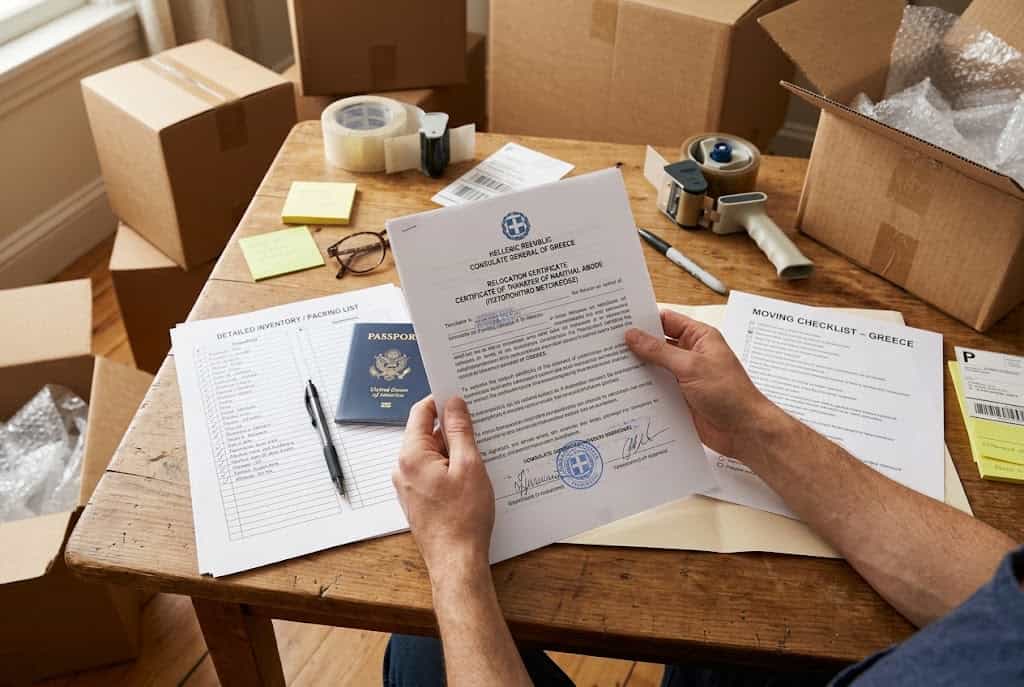
For both methods, the core documentation is the same: a detailed packing list with declared values, your visa or residency documentation, and CBP Form 3299 for duty-free entry of used household goods. Incomplete or inconsistent paperwork is the most common cause of customs delays on both air and sea shipments. Having your customs documentation prepared and reviewed before your shipment departs significantly reduces the risk of holds at the port or airport of entry.
Using Both: Air and Sea in Combination
Many people moving internationally use a combination of both methods. The typical approach is to send a small air freight shipment containing essential items needed immediately on arrival, such as clothing, electronics, and important documents, while the bulk of the household goods travel by sea. This approach allows you to arrive and function normally while your container is still in transit, without paying air freight rates for a full household.
The key to making this work smoothly is coordinating the timing so that your sea freight container arrives within a week or two of your own arrival date. If it arrives too early, your goods go into port storage. If it arrives too late, you’re living out of your air freight shipment longer than planned. Your moving coordinator can help you back-calculate the vessel departure date from your target delivery window.
Packing Standards Apply to Both Methods
Whether you ship by air or sea, packing standards for international shipments are the same. Approved materials include wood, cloth, and cartons rated for international freight. Items that are not packed to international standards can be rejected at customs or excluded from insurance coverage. Professional packing services ensure your items are packed correctly, inventoried accurately, and documented in a format that satisfies both carrier and customs requirements for either shipping method.
Which Method Is Right for Your Move?
For most people moving a full household to the USA, sea freight is the practical choice. It handles larger volumes at a fraction of the cost of air, and with proper planning the transit time is manageable. Air freight works well as a complement for the items you need immediately on arrival, or as the sole method if your shipment is small and your timeline is tight.
The decision comes down to three variables: volume, timeline, and budget. If you are unsure which combination works for your specific move, a relocation specialist can walk you through the options based on your origin, destination, shipment size, and target arrival date.