
Can I Ship My Furniture from New York to Overseas Destinations?
Yes, you can ship furniture from New York to overseas destinations, and New York is one of the better starting points in the United States for doing it. The Port of New York and New Jersey is one of the busiest container ports on the East Coast, with frequent sailings to Europe, the Middle East, South America, and beyond. For New Yorkers planning an international move, this proximity to port infrastructure translates into shorter origin trucking times, more departure options, and in many cases, more competitive sea freight rates than clients shipping from interior cities.
Working with a door-to-door international shipping company that handles the full move from your New York apartment or home to your destination address overseas makes the process significantly more manageable. This guide covers what to expect when shipping furniture from New York, how the logistics work, and what affects cost and timeline.
How Furniture Gets Shipped from New York
International furniture shipping from New York moves almost exclusively by sea freight. Air freight is available for smaller, urgent shipments, but for furniture, it is rarely cost-effective. The sea freight process from New York involves collection from your residence, packing and crating where needed, transport to the port, container loading, ocean transit, destination port clearance, and final delivery to your new address.
Full Container Load vs. Shared Container
If you are moving a full household, a dedicated 20-foot or 40-foot container gives you exclusive use of the space. Your goods are loaded, sealed, and not handled again until they reach the destination port. This is the most straightforward option for larger moves and typically the most efficient for customs purposes, since the entire container belongs to one shipment.
If you are shipping a partial load, a smaller apartment, or a selection of furniture rather than an entire home, a shared container (also called LCL, or less than container load) consolidates your goods with other shipments heading to the same destination. This reduces cost significantly but adds some transit time, since the container needs to be deconsolidated at the destination before your portion is cleared and delivered.
Collection from New York Addresses
Furniture collection from New York City apartments involves logistics that do not apply in the same way elsewhere. Elevator reservations, building COI requirements, street parking permits for the moving truck, and narrow staircases in older buildings all need to be coordinated in advance. SDC’s team handles the building logistics as part of the move coordination, but confirming your building’s requirements early is important. Some Manhattan and Brooklyn buildings require COI documentation from the moving company before they will permit access.
Which Furniture Travels Well Internationally
Most furniture ships internationally without issue when packed correctly. Solid wood pieces, upholstered sofas and chairs, beds and mattresses, dining sets, shelving, and wardrobes are all routinely shipped in international containers. The key factor is export-quality packing rather than the type of furniture itself.
Items That Require Extra Preparation
Antique furniture, large mirrors, glass-topped tables, and artwork require custom crating rather than standard export wrapping. Custom crates are built to the specific dimensions of the piece and provide rigid protection against the compression and movement that occurs in a container over a 3 to 6 week ocean transit. If you have pieces in this category, they should be flagged during the survey so crating can be quoted and scheduled.
Flat-pack furniture, particularly lower-grade particleboard pieces, sometimes does not survive international transit well. If the destination country has good availability of replacement furniture, it is worth evaluating whether shipping these items makes economic sense versus replacing them at the destination.
Electrical Appliances
US appliances run on 110V/60Hz. Most of Europe, the UK, the Middle East, and other common destinations use 220-240V/50Hz. Large appliances such as washing machines, dryers, and refrigerators are generally not worth shipping because they will not function on the destination voltage without an expensive transformer, and most destination countries have good appliance availability. Smaller electronics can often be adapted with plug adapters or converters, but this varies by device. Your coordinator can advise on which appliances make sense to include based on your specific destination.
Transit Times from New York
Transit times from New York vary by destination and container type. As planning ranges, direct sailings to the UK take approximately 10 to 16 days at sea. Western Europe sailings run roughly 12 to 18 days. The Middle East, including Dubai and Abu Dhabi, is typically 25 to 35 days. South America varies considerably by country, with Brazil running approximately 14 to 22 days to major ports.
These are ocean transit times only. Door-to-door timelines include origin packing and port delivery, ocean transit, destination customs clearance, and final delivery. For a full container load on a well-documented move, total door-to-door time to Western Europe is typically in the 6 to 10 week range. LCL shipments add time at both ends for consolidation and deconsolidation.
Customs at the Destination
Used household furniture imported as part of a personal relocation typically qualifies for duty-free entry in most destinations, provided the items have been owned and used for a minimum period and you are genuinely establishing residence. The specific requirements vary by country. Germany, France, the UK, and most EU countries have change-of-residence or transfer-of-residence relief mechanisms. The UAE has its own import documentation process for household goods. Brazil requires specific documents including proof of residency change and customs registration numbers.
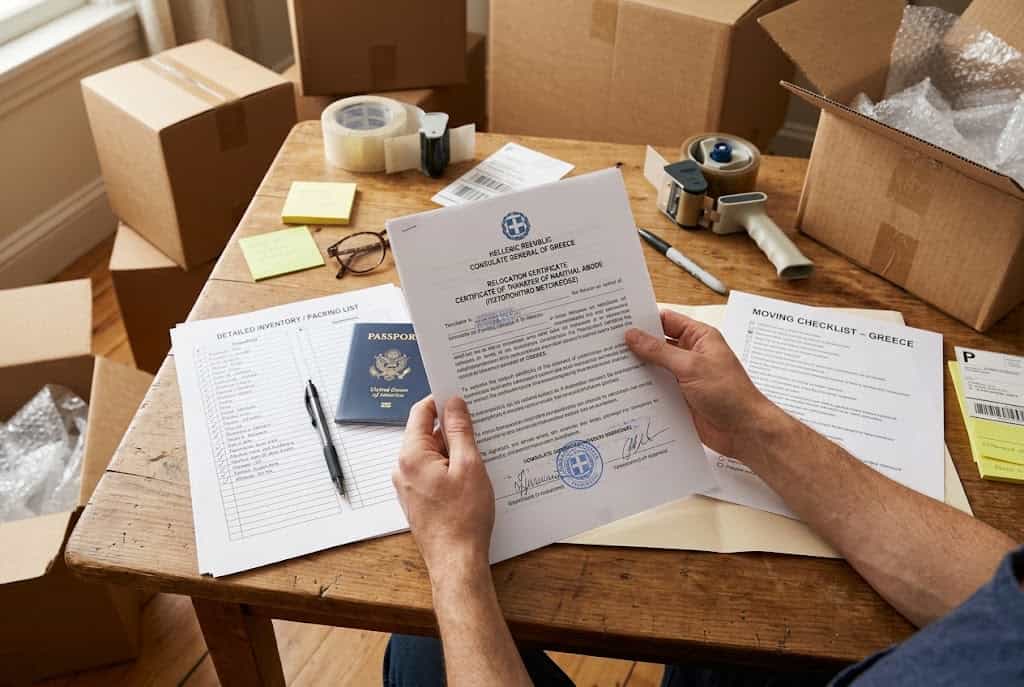
The condition of your document package at the time of customs submission is the primary factor in how smoothly clearance goes. A complete, consistent set of documents submitted in advance of the shipment’s arrival moves through clearance efficiently. Incomplete or inconsistent documentation is the most common cause of delays and additional costs at destination customs.
Professional packing and preparation of your shipment also supports customs clearance, since a well-organized, clearly inventoried container is much easier for customs to review than a loosely packed or poorly described load.
What Affects the Cost of Shipping Furniture from New York
The main cost variables are shipment volume (cubic feet or cubic meters), container type (FCL vs. LCL), destination, and the services included in the quote. Origin packing, customs brokerage, destination delivery, and insurance are all components that may be included in a door-to-door quote or itemized separately depending on the provider.
New York’s port access generally keeps origin freight costs competitive. However, New York City-specific logistics, including the COI requirements, parking permits, and elevator coordination mentioned above, are real costs that should be confirmed upfront rather than discovered mid-move. A detailed survey of your residence and a written quote covering all services is the best way to avoid cost surprises.
FAQs
Do I need to be present when the furniture is collected?
Someone needs to be present at the origin address to allow access and confirm the inventory. This does not need to be the person relocating, but whoever is present should be able to identify the items being shipped and confirm any items being left behind.
Can I ship furniture to a destination where I have not yet arrived?
Yes, but timing matters. Many countries have rules about how far in advance a shipment can arrive relative to the owner’s arrival date and still qualify for duty-free relief. For UK moves, for example, the shipment can arrive no earlier than 6 months before you do. Your coordinator will advise on the timing window for your specific destination.
What happens if my furniture is damaged in transit?
Marine cargo insurance covers your shipment against damage or loss during transit. Coverage is available at different valuation levels, from basic carrier liability through full replacement value coverage. For furniture with significant value, full all-risk marine insurance is worth the additional cost. SDC can provide insurance options as part of the move quote.
Can I include my car in the same container as my furniture?
In some cases, yes. A vehicle can be loaded into a 40-foot container alongside household goods when the volumes work and the destination permits it. This is destination-specific and depends on the vehicle dimensions and the volume of household goods. It is worth discussing during the survey if you are considering shipping a vehicle alongside your furniture.
How far in advance should I contact a shipper?
For moves from New York City, 6 to 8 weeks before your target packing date is a reasonable lead time for a full household move. This allows time for the survey, quote, booking, any custom crating fabrication, and building logistics coordination. Moves with more complex logistics or to destinations with longer documentation requirements benefit from more lead time.