Who Does Not Qualify for Duty-Free Household Goods Entry to Switzerland
Why Duty-Free Entry to Switzerland Is Not Automatic
Many people assume that shipping household goods to Switzerland is automatically duty-free. The assumption feels reasonable, especially when the items are used, personal, and clearly part of an international move.
In practice, Swiss customs does not treat duty-free entry as a default. It treats it as a conditional exemption that must be clearly earned and documented.
This is where many shipments run into trouble.
Switzerland Applies Duty-Free Rules Conservatively
Switzerland has one of the most structured and rule-driven customs systems in Europe. While household goods can qualify for duty-free entry, Swiss customs applies eligibility requirements strictly and consistently.
Customs is not evaluating whether a move feels legitimate. It is evaluating whether the move meets every condition required for exemption under Swiss import law. When even one condition is missing or unclear, duty-free status is denied.
Why “Used Household Goods” Is Not Enough
A common misunderstanding is that used items are automatically exempt from duties and taxes.
In Switzerland, condition alone is not decisive. Customs looks at the context of the shipment, not just the contents. That includes residency history, timing, ownership duration, and the purpose of the move.
If those elements do not align, the shipment may be treated as a taxable import, even if every item is clearly used and personal.
Duty-Free Eligibility Is About the Move, Not the Shipment
Swiss customs evaluates whether a shipment represents a genuine transfer of primary residence.
That determination goes beyond boxes and furniture. It includes whether the move is permanent or temporary, whether residency has been established, and whether the shipment timing supports the claim that the goods are arriving as part of relocation rather than convenience.
When that narrative is weak or incomplete, duty-free treatment is removed.
Why This Catches Movers Off Guard
Most movers focus on logistics first, packing dates, transit times, and delivery windows.
Duty-free eligibility is often assumed rather than confirmed. By the time customs reviews the shipment, it is too late to adjust residency timing, ownership history, or documentation strategy.
This is why Swiss duty charges often feel unexpected, even when the mover believed everything was done correctly.
Why Understanding This Early Matters
Once a shipment arrives in Switzerland, customs decisions are difficult to reverse.
If duty-free status is denied, duties, taxes, and delays follow. The financial and logistical consequences can be significant, especially in a country where customs compliance is tightly enforced.
Understanding that duty-free entry is conditional, not automatic, is the foundation for avoiding these outcomes. The rest of this article explains who does not qualify for duty-free entry to Switzerland, and why those disqualifications occur so frequently.
What Switzerland Means by “Duty-Free Household Goods”
To understand who does not qualify for duty-free entry, it helps to be clear about what Swiss customs actually means when it uses the term “duty-free household goods.”
In Switzerland, duty-free entry is not a general courtesy. It is a narrowly defined exemption tied to a specific type of move.
Duty-Free Is a Change-of-Residence Exemption
Swiss customs grants duty-free entry only when a shipment is clearly connected to a genuine transfer of primary residence.
This means customs must be satisfied that:
- A primary home is being relocated
- The move is not temporary or speculative
- The goods were part of daily life before the move
- The shipment timing supports a real relocation
If the shipment does not clearly reflect these conditions, duty-free treatment is removed.
Household Goods Must Be Personally Owned and Used
Swiss customs expects duty-free household goods to be established personal effects.
Ownership alone is not enough. Customs looks at whether the items were actually used as part of everyday living before the move. Goods that appear new, unused, or recently acquired weaken the claim that the shipment represents a household rather than an import.
This is why even a small number of new items can jeopardize eligibility.
The Exemption Applies to the Shipment as a Whole
Another common misunderstanding is that duty-free status is evaluated item by item.
In Switzerland, customs evaluates the shipment as a complete case. If the overall narrative of the move does not support a clear change of residence, customs may deny duty-free treatment broadly, even if many items individually appear eligible.
Partial approvals are possible, but they are not guaranteed and often come with added scrutiny.
Timing Is Built Into the Definition
Swiss customs does not treat timing as a minor detail.
The arrival of household goods must align closely with the establishment of residence in Switzerland. Shipments that arrive too early, before residency is formalized, or too late, long after relocation, can lose their connection to the move.
When that connection weakens, duty-free eligibility disappears.
Why Swiss Customs Takes This Narrow View
Switzerland’s customs framework is designed to prevent abuse of personal import exemptions.
By applying a strict definition of duty-free household goods, customs ensures that exemptions are used only for genuine relocations, not for convenience imports or asset transfers.
For movers, this means the burden is on the documentation and timing to clearly demonstrate eligibility.
Understanding this definition is critical, because anyone whose move falls outside it, even unintentionally, risks being charged duties and taxes on their household goods.
Residency and Timing Issues That Disqualify Shipments
Residency and timing are the two most common reasons household goods shipments fail to qualify for duty-free entry in Switzerland. In many cases, the goods themselves are not the problem. The problem is when and how the move is structured.
Swiss customs looks closely at whether a shipment truly represents a change of primary residence. When residency or timing does not clearly support that conclusion, duty-free treatment is denied.
Residency Is Evaluated Before the Shipment, Not After
One of the biggest misconceptions is that residency can be “in progress” when household goods arrive.
Swiss customs expects residency to be clearly established or legally supported at the time of import. Shipments that arrive before residence permits are approved, before registration is completed, or before the move is clearly formalized are often viewed as premature imports.
When residency status is uncertain, customs has no basis to grant a duty-free exemption.
Temporary Stays Often Do Not Qualify
Short-term assignments, trial relocations, or exploratory stays frequently cause problems.
If customs determines that the move is temporary rather than permanent, duty-free eligibility may be denied. This can apply even when the mover intends to stay long term but cannot yet demonstrate that intention through documentation.
Intent alone is not enough. Swiss customs relies on verifiable residency status.
Shipping Too Early Weakens the Connection to the Move
Timing matters just as much as residency.
When household goods arrive significantly before the mover, customs may conclude that the shipment is not tied to an actual relocation. Early shipments are often interpreted as convenience imports rather than part of a residence transfer.
Once that interpretation is made, duty-free treatment is unlikely.
Shipping Too Late Creates a Different Problem
Late shipments can be just as risky.
If household goods arrive long after the mover has settled in Switzerland, customs may question whether the goods are still part of the original move. Extended gaps between arrival and shipment weaken the narrative that the goods are essential to establishing a household.
In these cases, customs may treat the shipment as a taxable import rather than personal effects.
Frequent Travel and Split Residency Raise Red Flags
Moves involving frequent travel, split residences, or extended time in multiple countries often trigger additional scrutiny.
When customs cannot clearly identify a single primary residence being transferred to Switzerland, eligibility becomes difficult to prove. This is especially common for professionals with international work patterns or families transitioning in stages.
Why Timing and Residency Are So Closely Linked
Swiss customs does not view residency and timing as separate factors.
They work together to establish whether a move is genuine. Even strong documentation can fail if the shipment timing does not align with residency status. Likewise, good timing cannot compensate for unclear residency.
For many movers, duty-free eligibility is lost not because they did something wrong, but because the move was structured in a way that customs could not clearly classify as a residence transfer.
Ownership and Usage Problems That Trigger Duty Charges
Beyond residency and timing, Swiss customs places heavy emphasis on ownership and prior use. Even when a move clearly represents a change of residence, problems arise when the contents of the shipment do not look like an established household.
In Switzerland, this is one of the most common reasons otherwise legitimate moves lose duty-free status.
Recently Purchased Items Are a Major Red Flag
Swiss customs expects duty-free household goods to have been owned and used before the move.
Items purchased shortly before shipping often undermine that expectation. New furniture, appliances, electronics, or home goods can cause customs to question whether the shipment reflects daily life or a convenient way to import purchases without paying tax.
Even a small number of new items can attract scrutiny, especially if they appear high value or unused.
“Owned” Does Not Always Mean “Eligible”
Ownership alone is not enough.
Swiss customs looks for evidence that items were part of normal household use. Goods that appear unopened, unused, or still in original packaging weaken the claim that they are personal effects. This applies even when items were technically purchased before the move.
From customs’ perspective, duty-free exemptions exist for lived-in households, not newly assembled ones.
Partial Disqualification Is Common
In many cases, customs does not reject the entire shipment outright.
Instead, specific items may be identified as ineligible and assessed for duty and tax. While this can preserve duty-free treatment for the rest of the shipment, it also introduces delays, additional paperwork, and valuation disputes.
Partial disqualification still increases cost and complexity.
Replacement Purchases Create Risk
Moves that involve replacing furniture or household items before departure often run into trouble.
While this may make logistical sense for the mover, it can conflict with Swiss customs’ expectations. Replacing items shortly before shipping blurs the line between transferring a household and importing goods.
This risk is often underestimated during planning.
Why Swiss Customs Focuses So Closely on Usage
Swiss customs applies strict ownership and usage rules to protect the integrity of the exemption.
Without these controls, duty-free entry could easily be used to import newly purchased goods under the guise of relocation. By scrutinizing ownership duration and use, customs ensures that exemptions apply only to genuine household transfers.
For movers, this means that what seems reasonable or practical may still be disqualifying from a customs standpoint.
Employment, Second Homes, and Non-Qualifying Moves
Even when residency timing and ownership appear to be in order, Swiss customs may still deny duty-free entry if the purpose of the move does not clearly qualify. This is especially common in cases involving employment arrangements, secondary residences, or moves that fall into a gray area between temporary and permanent.
In Switzerland, intent matters, but it must be supported by structure and documentation.
Temporary Work Assignments Often Do Not Qualify
Short-term or fixed-duration work assignments are a frequent source of disqualification.
If customs determines that the move is tied to a temporary posting rather than a permanent relocation, duty-free treatment may be denied. This can happen even when the mover brings a full household and intends to stay for an extended period.
What matters is whether the employment arrangement supports a permanent change of residence, not how complete the shipment looks.
Second Homes and Partial Relocations Create Problems
Household goods shipped to a second residence, vacation property, or future home are often not eligible for duty-free entry.
Swiss customs expects duty-free household goods to be connected to a primary residence transfer. When goods are clearly destined for a secondary home, or when the mover maintains a primary residence elsewhere, eligibility is weakened or lost entirely.
Partial relocations, where some household goods are shipped while the main residence remains abroad, often fall into this category.
Students and Short-Term Residents Face Additional Scrutiny
Students and individuals relocating for limited-duration programs frequently encounter duty-free issues.
Even when stays are expected to last multiple years, customs may classify these moves as temporary if residency status, housing arrangements, or documentation do not clearly establish permanence. In these cases, household goods may be treated as taxable imports.
Self-Employed and Remote Workers Can Be Hard to Classify
Moves involving self-employment, remote work, or non-traditional employment structures can be difficult for customs to evaluate.
Without clear employer documentation or residency confirmation, customs may struggle to determine whether the move represents a permanent relocation. When that determination is unclear, duty-free eligibility is often denied.
Why Swiss Customs Focuses on the Nature of the Move
Swiss customs is not questioning motives. It is determining whether the legal conditions for exemption are met.
Duty-free household goods entry is intended for clear, permanent changes of residence. When employment arrangements, housing plans, or personal circumstances suggest something less definitive, customs applies standard import rules instead.
For movers, this means that even well-organized shipments can lose duty-free status if the underlying move does not clearly qualify.
Documentation Issues That Undermine Eligibility
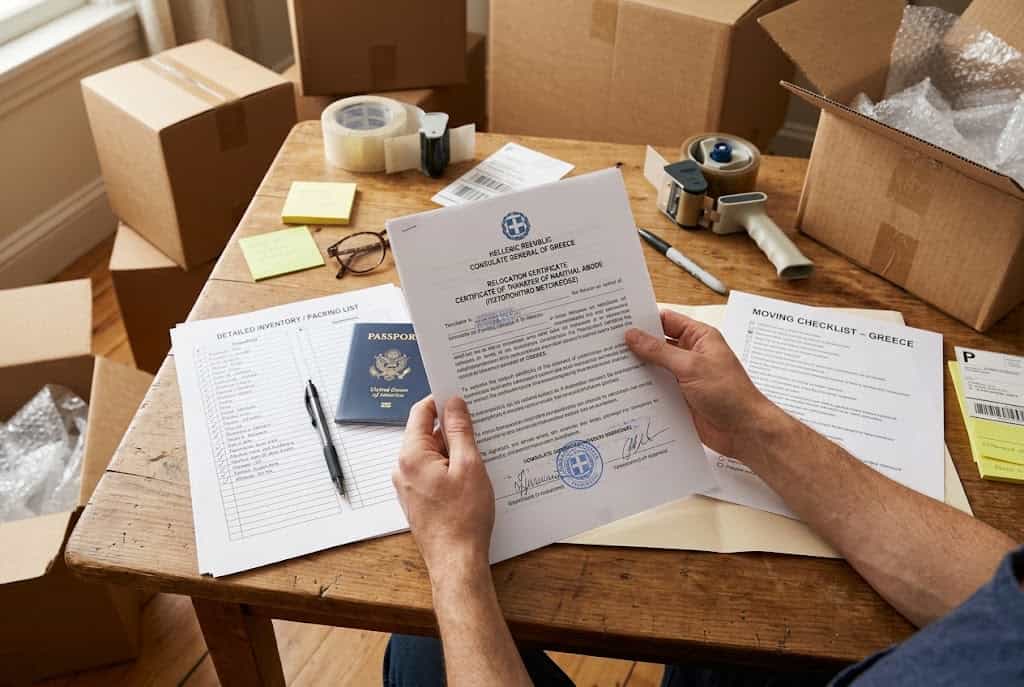
Even when residency, timing, and ownership are solid, duty-free eligibility can still fail because of documentation. In Switzerland, paperwork is not a formality. It is the mechanism customs uses to decide whether an exemption applies.
Swiss customs evaluates documents collectively, not in isolation. When the paperwork does not tell a clear, consistent story, duty-free treatment is often denied.
Incomplete or Missing Forms Create Immediate Problems
Duty-free entry relies on specific declarations and supporting documents.
When required forms are missing, unsigned, or incomplete, customs cannot confirm eligibility. In these cases, customs does not usually request clarification. Instead, it proceeds under standard import rules and assesses duties and taxes.
This is one of the fastest ways a shipment loses duty-free status.
Inconsistencies Raise Red Flags
Small inconsistencies can have large consequences.
Differences between stated move dates, shipping dates, residency documents, and inventories often trigger closer review. Even when discrepancies are unintentional, customs must resolve uncertainty conservatively.
When documents conflict, Swiss customs typically resolves that conflict by denying the exemption.
Inventories That Are Vague or Overly Broad
The inventory plays a central role in customs clearance.
Descriptions that are too general, such as “household items” or “miscellaneous goods,” weaken the credibility of the shipment. Swiss customs expects inventories to clearly reflect a lived-in household, not an undefined collection of items.
Poor inventories increase the likelihood of inspection and partial or full disqualification.
Documentation That Does Not Support a Residence Transfer
Swiss customs is not only checking what documents exist, but what they demonstrate.
If residency papers, employment documents, or housing agreements do not clearly support a permanent move, duty-free eligibility becomes difficult to justify. Documents must work together to show that the shipment is part of establishing a primary residence in Switzerland.
When that narrative is incomplete, the exemption fails.
Why Documentation Issues Are So Difficult to Fix After Arrival
Once a shipment arrives, documentation options are limited.
Dates cannot be changed, ownership history cannot be retroactively established, and missing documents may no longer be obtainable in time. Appeals based on documentation gaps are rarely successful because customs decisions are based on what is available at clearance.
This is why documentation errors, even minor ones, are among the most costly mistakes movers make.
How to Preserve Duty-Free Eligibility When Moving to Switzerland
Because Swiss customs applies duty-free rules strictly, the only reliable way to avoid charges is to plan the move around eligibility requirements, not convenience. Once a shipment arrives, options are limited. Before shipping, they are not.
Preserving duty-free status is about alignment, making sure residency, timing, contents, and documentation all tell the same story.
Align the Shipment With Residency Approval
One of the most important steps is ensuring that household goods arrive in Switzerland in connection with an established or clearly supported residence.
This means planning shipment timing around residence permits, registration requirements, and housing arrangements. Shipping too early or too late is one of the most common and avoidable mistakes.
Be Conservative About What You Ship
When in doubt, exclusion is often the safer choice.
New or recently purchased items, replacement furniture, and goods that were not part of daily life before the move introduce unnecessary risk. Even when the overall move qualifies, these items can trigger partial disqualification, delays, or added charges.
A disciplined approach to shipment contents helps protect the exemption.
Treat the Inventory as a Compliance Document
Swiss customs relies heavily on the inventory to understand the nature of the shipment.
Clear, specific descriptions that reflect a lived-in household reduce scrutiny. Vague or overly broad inventories invite inspection and weaken the case for duty-free entry.
Inventory preparation is not administrative busywork. It is part of customs compliance.
Use a Household-Goods-Specific Process
Moves to Switzerland work best when they are handled as household goods relocations, not general freight shipments.
Household goods processes are designed around customs exemptions, residency timing, packing standards, and destination coordination. Freight processes are not.
If you’re comparing international movers and want a clear door-to-door process built around compliance rather than assumptions, start with our international moving company overview:
https://www.sdcinternationalshipping.com/
For destination-specific guidance on shipping household goods to Switzerland, including customs considerations and planning requirements, you can review our Switzerland moving page here:
https://www.sdcinternationalshipping.com/moving-company-to-switzerland/
Professional packing also plays a major role in eligibility and inventory accuracy:
https://www.sdcinternationalshipping.com/packing-services/
It’s equally important to understand how moving insurance fits into this process, and what it does and does not cover if customs issues arise:
https://www.sdcinternationalshipping.com/international-moving-insurance/
The Bottom Line
Duty-free household goods entry to Switzerland is not automatic, even for legitimate moves.
Eligibility depends on residency timing, ownership history, the nature of the move, and documentation consistency. When any of these elements is unclear, Swiss customs applies standard import rules instead.
The good news is that most disqualifications are preventable. With careful planning, disciplined shipment contents, and a process designed specifically for household goods, duty-free entry to Switzerland is achievable.