What Not to Pack When Moving Overseas
Why Certain Items Can Delay or Complicate Your Move
When preparing for an international relocation, most families focus on what they want to bring.
Far fewer take time to think carefully about what they should leave behind.
That oversight can create serious complications.
International shipping is very different from domestic moving. Every country enforces its own import regulations, agricultural controls, hazardous material restrictions, and customs inspection standards. Including the wrong items in your shipment can result in delays, inspections, fines, storage charges, or even confiscation.
If you want to understand how a structured door-to-door relocation works from packing through customs clearance, you can review our international household movers overview here:
https://www.sdcinternationalshipping.com/international-movers/
Before your goods ever reach a port, it’s important to understand how restrictions work.
Customs Authorities Inspect Based on Risk
When your shipment arrives overseas, customs officials review documentation and may physically inspect part or all of the shipment.
Inspections are not necessarily random. They are often triggered by risk indicators, including unclear inventories, improperly declared items, agricultural goods, or product categories that require additional verification.
If prohibited or restricted goods are discovered, customs clearance pauses until the issue is resolved. That can mean additional paperwork, disposal of the item, or mandatory inspection fees.
Most delays do not happen at sea. They happen at customs.
Proper preparation dramatically reduces that risk.
International Shipping Is Not a Storage Solution
Some families treat international shipping as a way to send everything and “figure it out later.”
That approach rarely ends well.
Unlike domestic moves, international shipments must comply with national import laws and port authority safety standards. What is acceptable in your garage at home may be restricted or regulated at your destination.
Ports are highly regulated environments. Items considered hazardous, agricultural, or commercially restricted can trigger scrutiny, even if they seem harmless at first glance.
Packing strategically protects your timeline.
The Cost of Packing the Wrong Item
Including restricted goods doesn’t just create inconvenience. It can affect your entire relocation schedule.
A single prohibited item can lead to:
Extended port storage charges while clearance is paused
Mandatory inspections that add time and cost
Disposal fees if the item must be destroyed
Additional administrative paperwork
Delayed final delivery to your home
Even small oversights can ripple into larger delays.
The goal is not to limit what you bring unnecessarily.
The goal is to ship smart, clear customs smoothly, and arrive without disruption.
The Most Commonly Prohibited Items in International Household Shipments
While each country has its own import regulations, certain categories of items are almost universally restricted or heavily regulated.
Understanding these categories before packing begins prevents unnecessary customs complications.
Hazardous Materials and Flammable Items
One of the most common issues in international shipments involves items that are considered hazardous.
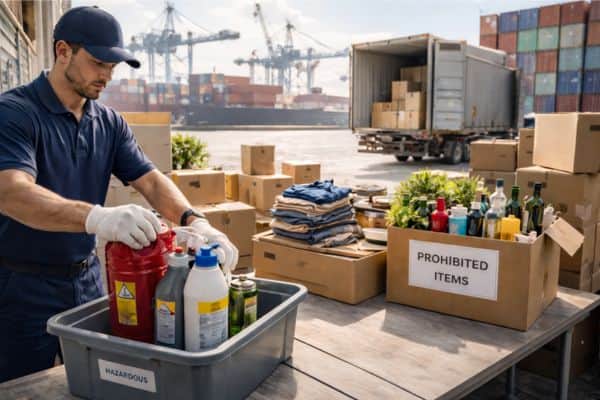
This includes products such as gasoline, propane tanks, lighter fluid, paint, aerosols, cleaning chemicals, and certain automotive fluids. Even partially used containers stored in a garage can trigger inspection concerns.
International freight carriers follow strict hazardous material regulations. Items that seem harmless in a domestic setting may be prohibited in ocean or air transport.
Before packing day, review garages, sheds, and storage areas carefully. Removing restricted materials early avoids last-minute complications.
Food, Plants, and Agricultural Products
Agricultural controls are taken very seriously worldwide.
Most countries restrict or prohibit:
Perishable food
Open dry goods
Spices and grains
Seeds
Plants
Soil-contaminated items
These restrictions exist to prevent pests and plant diseases from entering the country.
Even sealed or commercially packaged food can be restricted depending on destination rules.
Agricultural violations are one of the fastest ways to trigger inspection. When in doubt, leave food products behind.
Firearms and Weapons
Firearms and weapons are highly regulated internationally.
Some countries prohibit them entirely. Others require special permits, advance approvals, and detailed documentation before import.
Even items such as certain knives, ammunition components, or replica weapons can raise customs concerns.
If you own regulated items, consult with your relocation specialist long before packing begins. Shipping these items without proper authorization can lead to confiscation or legal penalties.
Restricted Electronics and Specialty Items
Certain electronics, high-powered communication devices, drones, or commercially branded equipment may require import declarations depending on destination.
Some countries also regulate:
Satellite communication devices
Professional broadcasting equipment
Certain types of batteries
Medical devices
Electronics are not automatically prohibited, but they may be regulated.
Clear inventory descriptions help customs authorities understand what is included in your shipment.
Items That Are Technically Allowed but Often Problematic
Some items are not strictly prohibited, but they frequently create complications during inspection or clearance.
Knowing which items fall into this gray area helps you pack more strategically.
Liquids and Open Containers
Even non-hazardous liquids can be problematic.
Open containers of shampoo, cleaning products, cosmetics, or pantry items may leak during transit. In addition to damaging surrounding goods, they may also raise inspection questions if labels are unclear.
Export packing is designed for stability, not active liquid transport. Removing open containers simplifies handling and reduces risk.
Partially Used Household Goods
Items such as candles, cleaning supplies, and garage chemicals are often overlooked during pre-move sorting.
While some may be technically permitted, they increase the likelihood of scrutiny during inspection.
Reducing miscellaneous household chemicals before shipping creates a cleaner, easier customs profile.
High-Value Jewelry and Personal Documents
Passports, legal documents, financial records, and valuable jewelry should not be placed inside your household shipment.
These items should travel with you personally.
International freight can take weeks, and accessing critical documents mid-transit is not possible.
Essential personal items always travel separately from household goods.
How Professional Packing Prevents Customs Problems
One of the biggest advantages of working with experienced international movers is that restricted items are identified before they ever enter your shipment.
Professional packing crews are trained to look for categories that commonly cause issues at customs. During the pre-pack walkthrough, they review storage areas, garages, and less obvious spaces where restricted items are often overlooked.
Prevention happens before packing begins.
If questionable items are identified early, you can decide whether to dispose of them, store them domestically, or pursue proper documentation if allowed by destination regulations.
This early filtering process dramatically reduces the risk of shipment holds at destination.
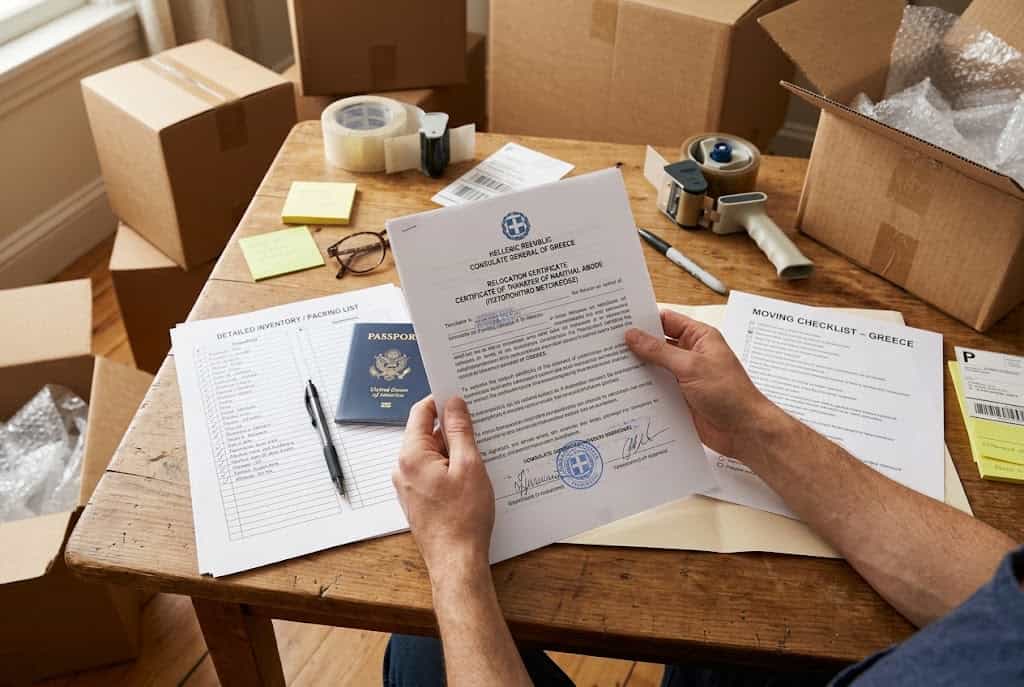
The Inventory Is a Customs Document
During export packing, every carton is labeled and recorded on a detailed inventory.
That inventory is not just for delivery tracking.
It becomes part of your customs declaration.
If items are described vaguely or inaccurately, customs authorities may request clarification or inspection. Clear, specific inventory descriptions reduce suspicion and speed up clearance.
Accuracy protects your timeline.
Professional inventory preparation ensures your shipment documentation matches the contents precisely.
Why DIY Packing Creates Risk
Some families consider packing certain cartons themselves to save time or money.
While that may seem efficient, it can introduce complications.
Self-packed cartons are often marked differently on inventories and may draw additional scrutiny during customs inspection. In some cases, insurance coverage can also be limited for owner-packed items.
International relocation is not the time to experiment with shortcuts.
Proper export packing protects both your goods and your schedule.
You can learn more about professional export packing standards here:
https://www.sdcinternationalshipping.com/packing-service/
How to Pack Strategically and Avoid Delays
Avoiding restricted items does not mean minimizing what you bring unnecessarily.
It means packing deliberately.
Separate Essentials From Shipment Goods
Passports, legal documents, medical records, financial files, and high-value jewelry should always travel with you personally.
International freight can take weeks to arrive. Accessing important documents mid-transit is not possible.
Keep critical items in your carry-on.
This simple step prevents unnecessary stress during your first days abroad.
Review Storage Areas Carefully
Garages, basements, and outdoor sheds are the most common sources of restricted goods.
Before packing week, go through these areas thoroughly. Dispose of chemicals, fuels, and open liquids responsibly. Confirm that tools or equipment are clean and free of soil or debris if moving internationally.
Early sorting reduces last-minute decisions when the packing crew arrives.
When in Doubt, Ask Before Packing
Every country has unique import regulations.
If you are unsure about an item, ask your relocation specialist before packing day. It is far easier to clarify rules in advance than to resolve a customs issue after arrival.
Clear communication prevents surprises.
Pack Smart, Clear Customs Smoothly, Arrive Without Stress
International moving is not just about what you bring.
It is about how smoothly your shipment clears customs and reaches your new home.
Most delays are preventable. They happen because restricted items were overlooked, documentation was incomplete, or assumptions were made about what would be acceptable at destination. A single prohibited item can pause an entire container.
The solution is not packing less.
It is packing intelligently.
When your shipment is prepared correctly from the beginning, customs clearance becomes procedural instead of stressful. Clear inventories, compliant packing standards, and early communication with your relocation specialist eliminate most risks before your goods ever leave the country.
At SDC International Shipping, we guide clients through pre-pack reviews, documentation preparation, and export packing standards that align with destination regulations. Our goal is not just to move your belongings overseas.
It is to move them without interruption.
If you are planning an international relocation and want clarity on what can and cannot be shipped to your destination country, speak with one of our relocation specialists before packing begins.
Because the easiest customs clearance is the one you prepare for in advance.