What Happens When Household Goods Are Not Duty-Free in Switzerland
Why Losing Duty-Free Status in Switzerland Changes Everything
When household goods do not qualify for duty-free entry in Switzerland, the move shifts instantly from a personal relocation to a taxable import.
For many movers, this moment is unexpected. They may have planned carefully, shipped used belongings, and assumed that any issues would be minor. Instead, customs applies a completely different framework, one that comes with financial, procedural, and logistical consequences.
Duty-Free Denial Is a Turning Point, Not a Delay
The most important thing to understand is that losing duty-free status is not a temporary setback.
Once Swiss customs determines that a shipment does not qualify, the exemption is removed. From that point forward, the shipment is processed under standard import rules. This decision changes how the shipment is valued, how long it is held, and what costs apply.
It is not a warning. It is a classification change.
Why the Impact Feels Disproportionate
Many movers feel that the consequences are out of proportion to the issue that caused the denial.
A timing mismatch, a documentation gap, or a few ineligible items can result in duties, VAT, storage charges, and extended delays. From customs’ perspective, however, the outcome is procedural. Once eligibility is lost, the law requires standard import treatment.
Understanding this helps explain why there is little flexibility once the decision is made.
Why This Article Matters After Eligibility Fails
Most guidance focuses on how to qualify for duty-free entry. Very little explains what actually happens when that effort fails.
This article addresses that gap. It explains how Swiss customs processes non-duty-free household goods, what costs are applied, what delays are common, and what options realistically exist once the shipment arrives.
How Swiss Customs Reclassifies a Non-Duty-Free Shipment
When duty-free eligibility is denied, Swiss customs does not treat the shipment as a special case. It treats it as an import that must comply with standard customs and tax regulations.
This reclassification affects every part of the clearance process.
The Shipment Is Treated as a Taxable Import
Once the exemption is removed, household goods are no longer evaluated as personal effects tied to a residence transfer.
Instead, customs processes the shipment under import rules that assume taxation applies. This means duties and value-added tax are assessed based on customs valuation methods, not on personal estimates or insurance values.
From this point forward, the shipment moves through the system like any other taxable import.
Customs Valuation Becomes Central
Swiss customs assigns a value to the goods using its own criteria.
That valuation may not match what the mover expects. Used status does not eliminate value, and depreciation is applied according to customs standards, not personal judgment. This valuation becomes the basis for calculating duties and VAT.
Once established, the valuation is difficult to challenge.
Clearance Slows Down Significantly
Non-duty-free shipments are rarely cleared quickly.
Customs may place the shipment on hold while valuation is completed, documentation is reviewed, and payments are arranged. Additional inspections are more likely, especially if eligibility was denied due to documentation or content concerns.
This pause is procedural, not punitive, but it often leads to extended clearance timelines.
Why the Process Feels Rigid
Swiss customs operates within a highly structured legal framework.
Once a shipment is classified as taxable, customs officers have limited discretion. The process must follow established rules, even when the mover’s situation feels reasonable or understandable.
This rigidity is why outcomes feel final and difficult to influence after arrival.
How Duties and VAT Are Applied to Household Goods in Switzerland
Once household goods are no longer duty free, Swiss customs applies taxes according to standard import rules. This is often where the financial impact becomes clear for movers.
In Switzerland, duties and value-added tax are applied based on customs valuation, not on what the mover believes the goods are worth.
Customs Uses Its Own Valuation Method
Swiss customs does not rely on insurance values, purchase receipts, or sentimental worth.
Instead, it assigns a value based on depreciation schedules and reference standards. Even used household goods retain taxable value under Swiss rules. The valuation applies to the shipment as assessed, not to individual opinions of worth.
Once customs establishes this value, it becomes the basis for all tax calculations.
VAT Is the Primary Cost Driver
For most household goods shipments, VAT represents the largest charge.
VAT is applied to the customs-assessed value of the goods, and in some cases, to associated costs such as transport and handling up to the point of import. Movers are often surprised by how quickly VAT adds up, even when individual items are modest.
This is why the total cost often feels higher than expected.
Duties May Also Apply
Depending on the classification of the goods, customs duties may be applied in addition to VAT.
While some household items attract minimal duty, others may be classified differently, particularly electronics or higher-value goods. Customs classification decisions are procedural and difficult to challenge once applied.
Payment Is Required Before Release
Duties and VAT must generally be paid before customs will release the shipment.
There is no mechanism to defer payment until delivery. Clearance pauses until payment is confirmed, which can extend storage time and increase overall cost.
Why These Charges Feel Sudden
Many movers only learn about duties and VAT after eligibility is denied.
By that point, the shipment is already in Switzerland, and options are limited. The charges are not penalties, but the standard outcome of a taxable import. Understanding this helps explain why Swiss customs applies them consistently.
Storage, Port Charges, and Why Costs Escalate Quickly
Beyond duties and VAT, non-duty-free shipments often incur additional costs that accumulate rapidly. These secondary charges are one of the most stressful aspects of losing duty-free status.
Shipments Are Often Held in Bonded Storage
When customs reviews a taxable household goods shipment, it is typically placed in bonded storage.
Bonded storage is secure, but it is not free. Daily storage fees begin to accrue while customs completes valuation, documentation review, and payment processing. Even short delays can result in meaningful charges.
Port and Handling Fees Continue to Accumulate
While a shipment is on hold, port handling and administrative fees may continue.
These charges are applied regardless of the reason for the delay. From the port’s perspective, the shipment occupies space and requires management. Those costs are passed on to the mover.
Delays Compound the Financial Impact
Customs delays rarely happen in isolation.
As clearance slows, storage and handling fees continue to accrue. At the same time, movers may face indirect costs such as extended temporary housing, delayed furniture delivery, or schedule disruptions.
The combined effect often exceeds the original tax bill.
Why These Costs Are Not Covered by Insurance
Moving insurance does not cover duties, VAT, storage fees, or delays caused by customs decisions.
From an insurance perspective, nothing has gone wrong in transit. The shipment arrived and is being processed lawfully. This is why insurance cannot offset these escalating costs.
Why Early Resolution Matters
The longer a shipment remains on hold, the higher the total cost.
Prompt decision-making, clear communication, and timely payment can help limit escalation. However, the ability to control these costs diminishes quickly once the shipment is under customs control.
Partial Approval vs Full Taxation, What Swiss Customs Decides
When duty-free eligibility is denied, movers often hope that only a small portion of the shipment will be taxed. In Switzerland, that outcome is possible, but it is not guaranteed and it depends heavily on how the shipment appears to customs as a whole.
Partial Approval Is Possible but Not Common
Swiss customs can approve part of a shipment as duty free while taxing other items.
This usually happens when:
- A small number of items are clearly new or ineligible
- The rest of the shipment strongly supports a residence transfer
- Documentation is otherwise consistent
Even in these cases, the process becomes more complex. Customs must separate items, assign values selectively, and document the split decision. This almost always leads to delays.
Full Taxation Is More Likely When the Narrative Breaks Down
When the overall story of the move is unclear, customs is more likely to tax the entire shipment.
This happens when:
- Residency status is uncertain
- Timing does not align with relocation
- Documentation contains inconsistencies
- New items represent a significant portion of the shipment
From customs’ perspective, it is simpler and more defensible to apply standard import rules than to attempt a partial exemption when eligibility is weak.
Why Movers Often Expect Partial Relief
Many movers assume fairness will play a role in the decision.
From a legal standpoint, Swiss customs is not balancing fairness. It is applying law. If the shipment does not clearly meet the exemption requirements, customs is obligated to treat it as taxable.
This is why expectations and outcomes often diverge.
Partial Approval Still Comes With Costs
Even when partial duty-free treatment is granted, duties and VAT still apply to the taxed portion.
In addition, storage fees, inspection delays, and administrative costs usually increase because the clearance process becomes more involved. Partial approval may reduce tax exposure, but it does not eliminate disruption.
What Options Exist Once Goods Are Held by Swiss Customs
Once Swiss customs has classified a household goods shipment as taxable, options narrow quickly. At this stage, the process is largely administrative rather than negotiable.
Paying Duties and VAT Is the Most Common Outcome
In most cases, the practical path forward is to pay the assessed duties and VAT and proceed with clearance.
Once payment is confirmed, customs can release the shipment for delivery. While delays may still occur, this option usually results in eventual resolution.
For many movers, this becomes the least disruptive choice, even if it was not anticipated.
Appeals Are Limited and Rarely Successful
Swiss customs does allow appeals in certain circumstances, but they are narrow and time-sensitive.
Appeals generally require new documentation or evidence that materially changes the eligibility assessment. If duty-free status was denied due to timing, ownership, or residency issues, appeals are unlikely to succeed because those facts cannot be changed.
During an appeal, storage and port fees continue to accrue.
Re-Export Is Technically Possible but Often Impractical
In theory, a shipment can be re-exported rather than cleared into Switzerland.
In practice, re-exporting household goods is expensive, complex, and emotionally taxing. It requires coordination, additional transport costs, and acceptance by another country. For most households, re-export is considered only in extreme situations.
Why Options Shrink After Arrival
The most important takeaway is that customs decisions are made based on conditions at the time of import.
Once goods arrive in Switzerland, timelines, contents, and documentation are fixed. Customs evaluates what exists, not what was intended. This is why control over outcomes is greatest before shipping, not after.
How to Limit Damage When Household Goods Are Not Duty-Free in Switzerland
When duty-free status is denied, there is no way to reverse the decision after arrival. What movers can control is how much the situation escalates and how prepared they are to manage the outcome.
The most effective damage control happens before shipping, not at the port.
Accept Early That This Is a Customs Issue, Not a Shipping Error
Once Swiss customs classifies a shipment as taxable, the process becomes administrative rather than negotiable.
Understanding this early helps movers avoid wasting time, energy, and money trying to argue fairness or intent. Swiss customs applies law, not discretion. The fastest path forward is usually clarity and compliance, not confrontation.
Minimize Exposure Before the Shipment Ever Moves
Most of the cost and stress associated with non-duty-free shipments comes from preventable exposure.
Careful planning around residency timing, shipment arrival, and ownership history reduces the chance of losing eligibility in the first place. When eligibility is borderline, excluding high-risk items is often the safer choice.
The fewer questions customs has to answer, the smoother clearance tends to be.
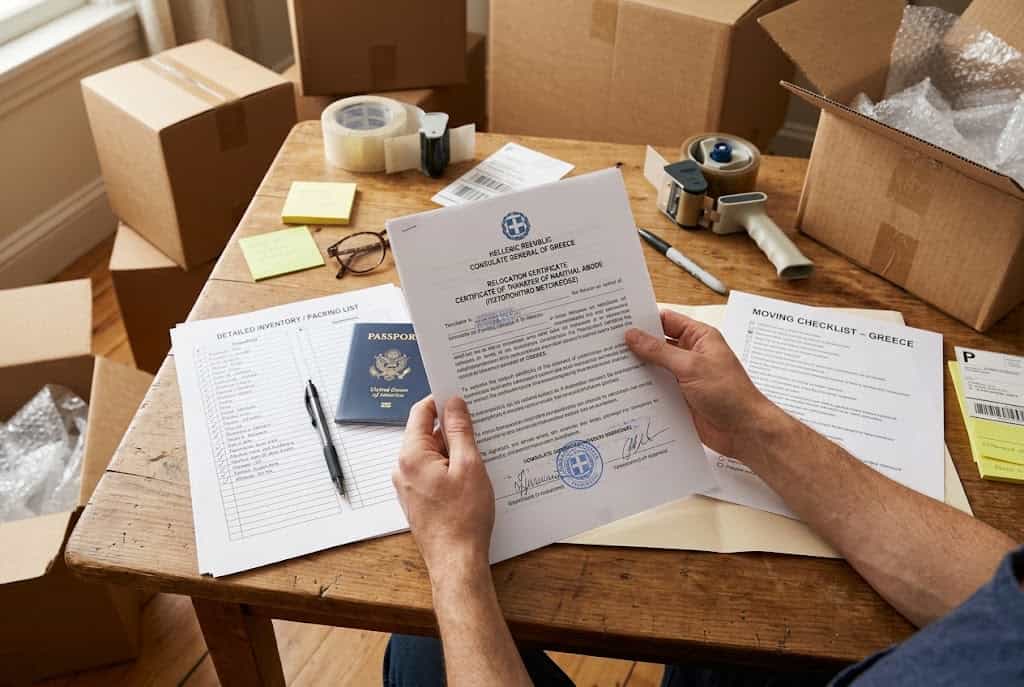
Documentation and Inventory Discipline Still Matter
Even when duty-free status fails, good documentation can limit escalation.
Clear inventories, consistent dates, and complete paperwork help customs process the shipment efficiently once taxes apply. Poor documentation almost always leads to longer holds, more inspections, and higher storage costs.
Damage control still relies on organization.
Use a Process Built for Household Goods, Not Freight
Many of the worst outcomes occur when household goods are handled under freight logic.
Household-goods-specific processes are designed to anticipate customs review, valuation questions, and clearance sequencing. Freight processes are not. Once customs issues arise, that difference becomes painfully obvious.
If you’re comparing international movers and want a clear door-to-door process designed around household goods compliance rather than assumptions, start with our international moving company overview:
https://www.sdcinternationalshipping.com/
For Switzerland-specific guidance on customs, planning, and household goods requirements, you can review our Switzerland moving page here:
https://www.sdcinternationalshipping.com/moving-company-to-switzerland/
Professional packing also plays a critical role in inventory accuracy and inspection outcomes:
https://www.sdcinternationalshipping.com/packing-services/
It’s equally important to understand how insurance fits into this situation, and why it does not offset customs duties, VAT, or storage charges:
https://www.sdcinternationalshipping.com/international-moving-insurance/
The Bottom Line
When household goods are not duty free in Switzerland, the consequences are real and often costly. Duties, VAT, storage fees, and delays are not exceptions, they are the standard result of a taxable import.
The good news is that most of these situations are avoidable. With careful planning, disciplined shipment contents, accurate documentation, and a process designed specifically for household goods, duty-free eligibility can often be preserved.
Once goods arrive, options narrow quickly. Before shipping, they are still wide open.