
Becoming American: What It’s Really Like to Take the U.S. Citizenship Test
For Russian immigrants starting over in the United States, the citizenship test isn’t just paperwork—it’s a life moment. It’s the emotional end to a journey that started long before they ever boarded a plane. Becoming a U.S. citizen represents safety, opportunity, and finally feeling like you belong. But getting there? That takes patience, preparation, and a deep breath.
At SDC International Shipping, we walk alongside people as they move their lives across the ocean. But our connection doesn’t stop at customs. Many of our clients go on to become permanent residents and, eventually, citizens. And we’ve heard it over and over: the day of the test is one of the most meaningful days in their lives.
So what’s it really like to take the U.S. citizenship test? What do you need to know, and how can you prepare without feeling overwhelmed? In this article, we’ll walk you through the process, share stories from Russian immigrants who’ve been there, and remind you that while it’s a big moment, it’s also one you can handle.
What Is the U.S. Citizenship Test? (And What’s on It?)
To become a U.S. citizen, immigrants must complete the naturalization process, which includes a civics test, an English language evaluation, and a personal interview. These steps are administered by U.S. Citizenship and Immigration Services (USCIS), usually months after submitting your Form N-400 (the application for naturalization).
The test itself is broken into two parts:
- A civics test, where you answer up to 10 questions from a list of 100 about U.S. government, history, and geography.
- An English test, which includes reading, writing, and speaking questions to ensure basic language comprehension.
To pass the civics test, you need to get at least six out of 10 questions right. The questions aren’t tricky, but they cover everything from the Bill of Rights to the branches of government. If you’re someone who didn’t grow up studying American civics, it can feel like a crash course in democracy.
The English test is basic, but nerves can make it feel bigger than it is. You might be asked to read a sentence like “The President lives in the White House,” or write one like “Citizens can vote.” You’ll also answer questions about your application in English during the interview.
But here’s what we tell our clients: this isn’t about being perfect. It’s about being prepared.
Real-Life Stories from Russian Immigrants Who Passed
When Marina moved from Saint Petersburg to Miami, she had no idea how long her path to citizenship would take. “At first, everything was about getting settled, finding a job, learning how things worked here,” she says. “I didn’t even think about the test until I’d been here almost five years.”
When her green card was finally eligible for conversion to citizenship, she took it seriously. “I studied every night for a month,” Marina says. “My daughter quizzed me on flashcards at the dinner table.”
She passed with flying colors. “The officer was kind,” she adds. “He smiled when I said Abraham Lincoln freed the slaves. I felt proud. I felt like I belonged.”
Then there’s Dmitry, who now lives in Raleigh, North Carolina. He struggled more with the language portion. “My English was okay, but I was nervous,” he says. “I practiced reading signs when I walked around the city. I listened to the radio and repeated sentences out loud.”
During his interview, he got flustered and forgot a word. “I paused, took a breath, and tried again. The officer waited. He didn’t rush me.” Dmitry passed, and a month later, he stood with 80 other new Americans at his naturalization ceremony.
“It’s hard to explain,” he says. “You feel joy, relief, and pride—all at once. You’re not just visiting. This is your country now.”
How to Prepare for the Test Without Losing Sleep
The good news? You don’t have to guess. The USCIS provides all 100 civics questions on their website, with approved answers. You can print them, download an app, or use flashcards. Practice them with a friend or family member. Many people start by memorizing 10 at a time.
Language prep can be as simple as reading news articles out loud or practicing basic conversations. Watch U.S. movies with subtitles. Use language-learning apps. Or enroll in a local ESL (English as a Second Language) class. Many libraries and community centers offer free ones.
We recommend preparing over 4–6 weeks instead of cramming. A little each day will build confidence. And don’t just focus on memorizing answers—practice speaking and listening in English, because the interview will include natural conversation.
Also, review your Form N-400 application carefully before the interview. The officer may ask about your travel history, employment, or moral character. Know your answers and bring copies of any supporting documents.
Lastly, remember: this isn’t a test of your worth—it’s a formality. And thousands pass it every week.
Why It’s Worth It (Even If It’s Intimidating)
Citizenship opens the door to voting, applying for a U.S. passport, petitioning for family members, and holding federal jobs. But the benefits go deeper than paperwork.
It means security. A permanent home. The ability to fully participate in a society you’ve worked so hard to join.
For parents, it’s about setting an example for their children. For seniors, it’s about securing retirement benefits. For everyone, it’s a turning point. You no longer feel like a guest in someone else’s country. You’re part of it.
Yes, the test can feel stressful. The process can take time. But the reward—standing in a room with other immigrants, hand over heart, swearing loyalty to your new country—is something many describe as one of the proudest days of their life.
How SDC Supports the Journey, Even After the Move
At SDC International Shipping, our work doesn’t end when your belongings are delivered. We stay connected with many of our clients through the next chapters of their journey—when they become permanent residents, and eventually, citizens.
We provide resources to help clients understand what to expect after their move. Whether that’s helping them settle into Florida or North Carolina, pointing them to local ESL programs, or simply cheering them on from afar, we’re invested in their success.
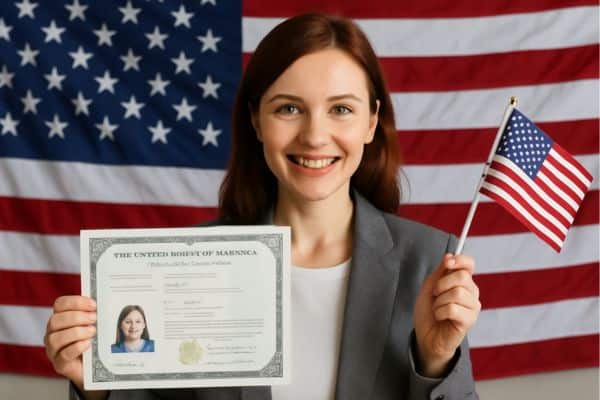
The naturalization test may not be part of our moving checklist, but we understand what it represents. And when we see the photos—new citizens holding tiny flags, smiling with their families—we feel a part of something bigger than shipping. We feel like we’ve helped people build their future.
Conclusion: From Russian Roots to American Dreams
Becoming a U.S. citizen is not just about passing a test. It’s about the courage to start over. The willingness to learn new things. The determination to build something better for yourself, and for the people who come after you.
For Russian immigrants across the U.S., from Miami to Raleigh, the citizenship test is a symbol. A sign that they’ve made it. And a doorway to everything they hoped for when they first dreamed of a new life.
If you’re still early in your journey, take heart. Others have walked this road. They studied. They stumbled. And they succeeded. So can you.
And if you’re just beginning the move, we’re here to help you get started. Request a quote or call 877-339-0267.
Because every American story starts with a step—and we’re here to walk with you, every mile of the way.