
When Should I Ship My Household Goods Before Moving to Italy?
Timing your shipment to Italy is one of the most important decisions in a retirement relocation.
Ship too early, and your goods may sit in storage waiting for residency confirmation. Ship too late, and you may arrive in Italy without furniture for weeks.
The right timing depends on your visa approval, residency registration, property availability, and the type of sea freight service you choose. SDC, a licensed door-to-door moving company, builds the schedule backward from the date you can register as a resident, with packing, shipping, customs clearance, and delivery fitting in behind it.
Below is how retirees should think about shipment timing.

Start With Your Residency Timeline
Italian customs clearance is tied directly to residency status.
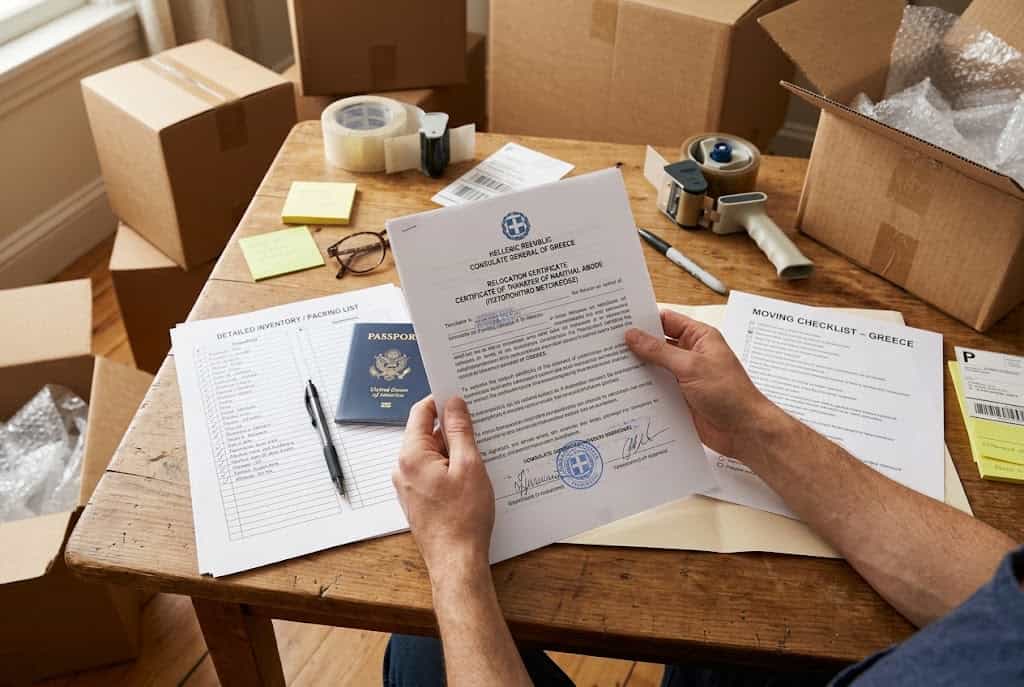
If you are relocating under an elective residency visa, your shipment should ideally arrive after your visa is approved and your residency process is underway.
Shipping too early can result in goods being held in bonded storage until proof of permanent residence is provided. You can better understand how this works by reviewing the broader framework of international customs regulations, which explains how residency documentation impacts clearance.
Most retirees benefit from scheduling shipment departure shortly after visa approval but allowing enough transit time so they can complete initial residency steps before the container arrives.
Aligning documentation with shipment arrival is the safest strategy.
Understand Sea Freight Transit Time First
Before choosing a departure date, you need realistic transit expectations.
A full container to Italy runs about 6 to 12 weeks door to door, depending on where in the US you start: New York 7 to 12 weeks, Boston 8 to 13, Chicago and other inland origins about 6 to 12. Groupage (shared container) runs about 8 to 16 weeks. These are planning ranges, not guarantees. Transit time includes export packing, port processing, ocean sailing, customs clearance, and final delivery. The moving to Italy from the USA guide covers the rest of the process.
If you are weighing speed against cost, our comparison of air freight and ocean freight explains when the faster option is worth it. For most retirement relocations, sea freight is the practical choice.
Knowing transit time allows you to work backward from your desired delivery window.
Consider Your Housing Situation in Italy
Are you purchasing property, signing a long-term lease, or staying temporarily before moving into a permanent residence?
Your housing status directly affects delivery timing and overall coordination.
If you are closing on a home in Italy, shipment arrival should be scheduled after you officially take possession. Delivering before keys are available can create unnecessary storage costs and additional handling. In some cases, shipments must remain in bonded or local storage until access is confirmed, which can extend delivery timelines.
It is also important to consider property readiness. Even if you legally own the home, renovations, cleaning, or utility activation may delay move-in. Scheduling delivery only after the residence is fully accessible prevents complications on delivery day.
If you are renting, confirm building access rules well in advance. Many historic Italian city centers have restricted traffic zones that require delivery permits. Some apartment buildings have narrow stairwells, limited elevator capacity, or specific time windows for large deliveries.
Your destination agent will schedule delivery only after customs clearance and access logistics are confirmed. Advance coordination with property managers, building administrators, or local authorities ensures that when your container arrives, everything is in place for a smooth and efficient unloading process.
Planning housing logistics with the same attention you give to customs documentation significantly reduces the risk of last-minute delays.
Should You Arrive Before Your Shipment?
Many retirees choose to arrive in Italy several weeks before their container.
This approach provides breathing room during what can otherwise feel like a compressed transition. Arriving early allows you to focus on residency registration, tax identification numbers, healthcare enrollment, and other administrative steps without the added pressure of coordinating immediate delivery.
It also gives you time to confirm utility activation, internet installation, banking setup, and any final property paperwork that may still be pending. These details often take longer than expected, especially in smaller towns where administrative processes move at a slower pace.
Being physically present in Italy can simplify communication with customs brokers and destination agents. If clarification is needed during clearance, having direct availability can help resolve questions more efficiently.
However, arriving first does mean living temporarily without your furniture. Many retirees choose short-term furnished rentals or extended-stay accommodations while waiting for their shipment. This added expense should be factored into planning, but for many, the tradeoff is worth the reduced risk of port delays.
There is no universal right answer. Some retirees prefer to synchronize arrival and delivery closely, while others value the flexibility and control that comes from arriving first.
In most cases, arriving ahead of your shipment reduces documentation-related risk and gives you greater control over final delivery timing, especially if unexpected administrative steps arise.
Avoid Shipping Immediately After Large Purchases
Timing also affects tax exposure.
If you recently purchased new furniture, electronics, or a vehicle, the six-month ownership rule may impact duty-free eligibility.
Shipping immediately after new purchases can trigger VAT review and slow clearance. If possible, major purchases should either be made well in advance of relocation or after arrival in Italy.
For retirees transporting higher-value items or specialty pieces, reviewing proper international moving insurance coverage before departure is also an important timing consideration.
Full Container vs. Groupage Timing Differences
Your shipping method also influences scheduling flexibility.
Full container shipments move according to vessel schedules once loaded and sealed. They generally offer more predictable departure timing and reduced handling.
Groupage shipments depend on consolidation schedules. Containers typically depart once sufficient shipments are combined, which can introduce flexibility in sailing dates.
If you are unsure which option fits your timeline, understanding how international shipping containers are structured can help clarify scheduling differences.
Work Backward From Your Ideal Delivery Date
The simplest way to determine shipment timing is to work backward.
Start with the date you want furniture delivered in Italy. Subtract estimated sea transit time. Subtract export packing and port processing time. Confirm that your residency documentation will be ready before arrival.
This structured approach prevents last-minute decisions and reduces the risk of storage charges.
Planning early gives you control.
Final Thoughts on Timing Your Move to Italy
Retirement relocation is not just about crossing an ocean. It is about synchronizing logistics, legal documentation, housing availability, and lifestyle transition.
Most shipment delays are caused by paperwork timing, not transportation failure.
By aligning visa approval, residency registration, and transit schedules, retirees can ensure their household goods arrive at the right moment, not too early and not too late.
When planning a permanent move to Italy, beginning the process with a structured timeline assessment ensures your relocation unfolds smoothly and without unnecessary stress.