
What Causes Delays at Italian Ports When Shipping Household Goods?
When retiring to Italy, most shipment delays do not happen in the middle of the ocean. They happen at the port.
Containers can arrive on time and still sit for days or even weeks before release. For retirees waiting to settle into their new home, this can feel frustrating and stressful.
The good news is that most delays are predictable and preventable. Understanding what causes them allows you to plan properly and avoid unnecessary disruption.
Below are the most common reasons household goods shipments are delayed at Italian ports.
Incomplete or Inconsistent Documentation
The most common cause of delays at Italian ports is documentation inconsistency.
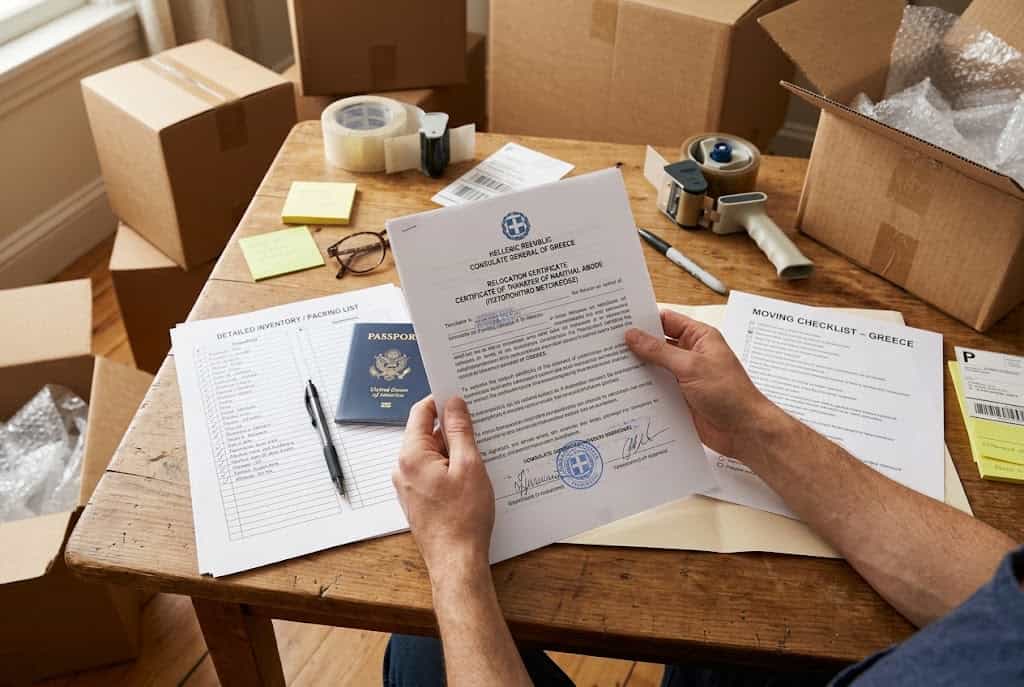
When your shipment arrives, customs officials review your passport, visa or residency paperwork, bill of lading, and detailed inventory. If even minor details do not align across these documents, clearance can pause while clarification is requested.
Common issues include spelling differences in names, mismatched destination addresses, unsigned declaration forms, or incomplete residency documentation. Even something as small as a missing middle name can trigger additional review.
When that happens, your container remains in bonded storage until corrected documents are submitted. Storage fees can accumulate during this period, especially in busy ports.
This is why understanding the full customs process before shipping is critical. Our guide to international customs regulations explains how paperwork is reviewed and why small inconsistencies can create unnecessary delays.
Retirees who begin document preparation early and work with experienced coordinators rarely encounter major port-side problems. Most documentation-related delays are preventable with careful review before departure.
Residency Not Fully Established
Italian customs ties duty-free entry directly to residency status.
If your shipment arrives before your residency registration is completed, customs may hold the goods until proof of permanent residence is provided.
This situation often affects retirees who ship immediately after selling their U.S. home but before completing local Italian registration.
While the goods are not confiscated, they may remain at port until residency confirmation is finalized. Storage charges can accumulate during this period.
Coordinating shipment timing with confirmed residency documentation is one of the most effective ways to avoid delays.
Vague or Poorly Structured Inventory Lists
Customs expects descriptive inventories.
Listings such as “miscellaneous household goods” or “packed by owner boxes” may raise questions. When item descriptions are unclear, customs officials may select the shipment for inspection.
Inspection requires opening the container, verifying contents, and resealing it. This process adds time and increases handling.
Retirees shipping full households often include artwork, collectibles, or older furnishings. If these items are not clearly declared, customs may review them more closely.
Accurate, detailed inventories prepared by professional packing teams significantly reduce inspection risk.
Newly Purchased Items and VAT Review
The six-month ownership rule plays a major role in customs evaluation.
If goods appear new or were recently purchased, customs may assess whether VAT should apply. This can lead to additional document requests or valuation review.
For example, if a retiree bought new furniture shortly before departure, customs may ask for purchase receipts to verify ownership duration.
When documentation is unclear, customs may temporarily hold the shipment while values are assessed.
Understanding which items may trigger VAT before shipping helps avoid surprise delays.
Port Congestion and Seasonal Volume
Not all delays are documentation-related.
Italian ports, particularly major commercial hubs, experience seasonal congestion. Summer months, holiday periods, and peak relocation seasons can increase container volume.
When port terminals are operating at high capacity, unloading and processing times may extend slightly.
While congestion delays are usually short, they can add several days to the timeline.
Working with experienced destination agents who monitor port conditions helps manage expectations during busy seasons.
Customs Inspections
Although not every shipment is inspected, customs officials retain the authority to conduct physical inspections at any time.
Inspections may be random or triggered by documentation questions. When selected, the container is opened under supervision and contents are verified against the declared inventory.
This process adds handling time and may extend port stay.
Most retirees with complete documentation and transparent declarations do not experience inspections, but the possibility exists.
Preparation is the best prevention.
Delivery Access Issues After Clearance
Sometimes delays occur after customs release.
Italy’s historic city centers often have narrow streets, restricted traffic zones, and delivery permit requirements. If access permits are not secured in advance, final delivery may be rescheduled.
Rural hillside properties may also require special vehicle arrangements.
While this is technically a post-port issue, it can feel like a customs delay if coordination is incomplete.
Confirming delivery logistics before shipment arrival avoids last-minute complications.
How Retirees Can Minimize Delay Risk
Most port delays stem from documentation timing rather than transportation failure. Understanding where the friction points typically arise — and addressing them before your shipment departs — puts you in a much stronger position upon arrival.
Begin document preparation early. The Italian customs process rewards preparation. Your inventory list, proof of residency, visa documentation, and Dichiarazione di Trasferimento should all be compiled and reviewed well before your container is loaded. Waiting until your shipment is already en route to gather paperwork is one of the most common and avoidable sources of delay. Work with your moving company and a customs broker familiar with Italian import regulations to confirm you have everything in order at least two to three weeks before departure.
Align shipment departure with residency confirmation. Timing matters enormously. Italian customs authorities require evidence that you have legally established residency in Italy, and if your shipment arrives before your residency registration is confirmed, your goods may be held until that documentation catches up. Coordinating the departure of your container with the expected date of your residency confirmation — not just your visa approval — can prevent your belongings from sitting in a bonded warehouse while bureaucratic timelines are resolved.
Avoid shipping newly purchased items that may trigger VAT review. Household goods imported as part of a permanent relocation are generally exempt from VAT and import duties, but this exemption applies to items you already owned and used before your move. Newly purchased goods, particularly high-value electronics, jewelry, or appliances, can raise flags during customs review and may be assessed separately. If you need to purchase items before your move, keep receipts and documentation, and speak with your customs broker about whether any items should be declared or shipped separately.
Use professional export packing services with accurate inventories. A detailed, accurate inventory is one of your most important documents at the port. Customs inspectors use it to verify the contents of your shipment, and vague or inconsistent descriptions — listing “miscellaneous household goods” rather than itemizing contents — can prompt a physical inspection, adding days or weeks to the clearance process. Professional packing services experienced in international relocations will produce inventories that meet customs standards and reduce the likelihood of scrutiny.
When these steps are handled properly, Italian port clearance is typically straightforward. The process is predictable for those who prepare carefully — delays are rarely random, and most can be traced back to something that could have been anticipated and resolved before the shipment ever left its origin country.
Final Thoughts on Italian Port Delays
Retiring to Italy is an exciting milestone. Waiting for furniture in port storage should not be part of that experience.
While some factors such as congestion are outside your control, most delays are preventable through early planning and documentation accuracy.
With experienced coordination and realistic timeline expectations, your household goods can clear Italian customs smoothly and move on to final delivery without unnecessary stress.