
Can I Ship My Car to Germany with My Household Goods?
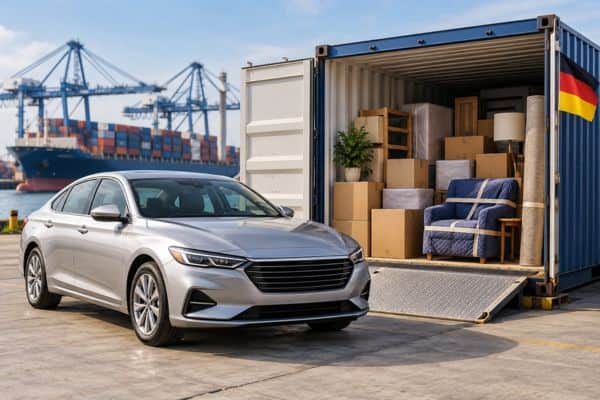
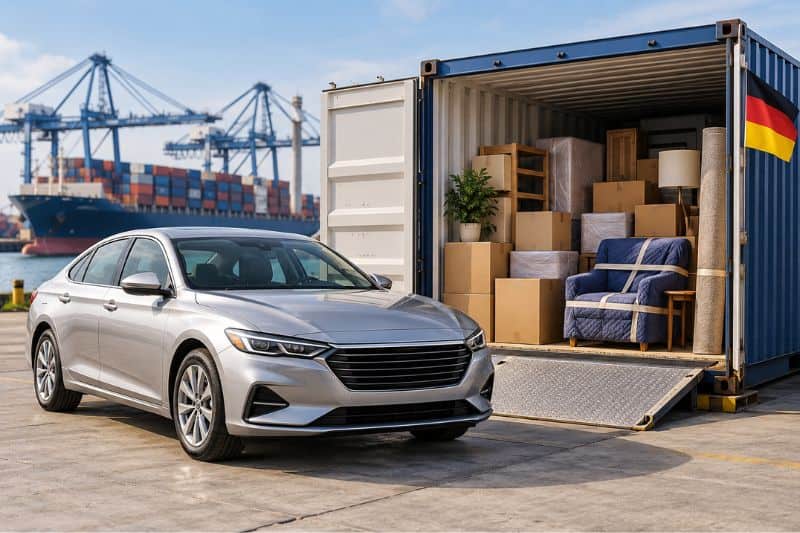
Yes, you can ship your car to Germany in the same container as your household goods, and for most families that is the sensible way to do it. The catch is that Germany treats your furniture and your car as two separate questions. The furniture clears if you meet the residency tests. The car has to pass its own tests at customs, then a third set at an inspection station before it can wear German plates.
SDC is a licensed door-to-door moving company serving all 50 states, and we ship vehicles under one policy: a car travels only when it is containerized with household goods. We do not handle vehicle-only shipments, and we do not use roll-on/roll-off.
If you only want to import a car, this post is the wrong fit. Our car shipping page covers the general picture.
What German Customs Asks About Your Car
Germany waives import duty and VAT on the belongings of a moving household (the rules call it Umzugsgut, or removal goods), and a private car can ride along under that relief. It has to clear these hurdles first:
- You have lived outside the EU for at least 12 consecutive months before moving to Germany.
- The car was registered in your name as its sole owner, and you personally used it at your previous home for at least six months. The clock stops at the vessel’s departure date, not its arrival.
- The car is imported around the time you establish residence, and no later than 12 months afterward.
- You keep it for 12 months after import. Customs registration form 0350 is where you declare that the goods will not be sold in that period.
Where Families Get Caught
The six-month clock. A car bought five months before the vessel sails is dutiable. One bought seven months before is not. If you replaced your car recently, the one that qualifies is whichever you have owned and driven longest, and the dates on the title decide it, not the date you booked your move.
Whose name is on the title. The rule says sole owner. A title shared with a spouse does not match that wording, so confirm it with your coordinator before you book, not after the container is packed. A leased car fails the test outright, because you do not own it. If a bank holds the lien, the lender’s written permission to export is part of the paperwork.
Selling early. Sell or lend the car inside that first year and you should expect a bill for the duty and VAT that were waived.
Duty-free is not tax-free. German motor vehicle tax (Kraftfahrzeugsteuer) applies to cars brought in from outside the EU, even when customs waives the duty. Those are separate bills from separate authorities.
The Step That Decides Whether You Can Actually Drive It
Clearing customs does not put the car on the road. A car built for the US market has no EU type approval, so Germany will not register it automatically. It needs an individual inspection under section 21 of the road traffic licensing regulation (the Einzelabnahme, §21 StVZO). An approved testing organization such as TÜV inspects the car and issues a report supporting an individual operating permit. The local traffic authority grants the permit, and only then can the registration office (Zulassungsstelle) issue plates.
The registration office will want your US title, proof that the car cleared customs, and a German liability insurance confirmation number (the eVB number). That last one catches people out. You need a German insurer lined up before you can register, so start that conversation while the container is still at sea.
What Inspectors Look At on a US-Spec Car
Expect scrutiny of the lighting and the instruments. Headlights need an E-marked beam pattern or EU-approved replacements. Rear turn signals typically need to be amber and separate from the brake lights. The speedometer has to show km/h, though a dual scale is accepted. Aftermarket exhausts that are too loud often fail. TÜV Rheinland’s own guidance also notes that a car missing a required safety system, such as a working tire pressure monitor on newer models, can be refused outright.
Some of those fixes are an afternoon at a garage. Others are not. A stock, recent sedan is a very different project from a lifted truck with a custom exhaust.
Plan for Weeks Without the Car
The inspection comes after the car is delivered and cleared, so budget several weeks of inspection, permit, and registration before it is road-legal. A rental or car-share membership for the first month or two is cheaper than the stress of improvising.
Which Cars We Would Ship, and Which We Would Leave in the Driveway
Our coordinators lean toward shipping a car that is fairly recent, close to stock, solely in your name, and worth more than a comparable car bought in Germany. A well-kept daily driver you have owned for years is the textbook case.
We start asking harder questions when the car is:
- Modified, lifted, or fitted with a loud aftermarket exhaust.
- Very large, since big pickups and full-size SUVs make both the container plan and German parking harder.
- Worth little enough that conversion and inspection could cost more than replacing it.
- Electric or hybrid. These ship safely in containers, but tell us at the quoting stage so the battery rules are planned from the start.
How the Container Side Works
Your car and your belongings go into one container under one customs file, so German customs sees a single relocation story. Container size depends on the car and your volume: a mid-size sedan takes up most of a 20-foot container’s floor length, which is why a car plus a full home usually means a 40-foot. Your coordinator sizes it from the car’s year, make, and model plus your inventory. A car also needs its own container, so you avoid the consolidation delays that groupage adds.
The car travels empty apart from its factory accessories. Anything else goes in labeled boxes so it appears on the inventory customs reads. Hamburg takes most of the household goods we land in Germany, and Bremerhaven handles a significant share of the vehicle shipments, so your coordinator confirms which port fits your file.
On insurance, vehicles are covered under the more limited total-loss option, not the full coverage available for professionally packed household goods. The application spells out exactly what that means, and our moving insurance page explains how the options differ.
How Long It Takes Depends on Where in the US You Start
Timelines to Germany follow your US origin. As typical ranges for a door-to-door move, not guarantees:
- East Coast origins: roughly 8 to 12 weeks.
- Gulf Coast origins: roughly 9 to 13 weeks.
- West Coast origins: roughly 10 to 14 weeks, since sailings from the Pacific take the long way around through the Panama Canal.
If you live in the Midwest or another inland region, the domestic leg to the port adds to the front of that schedule, and your coordinator builds it into your plan. Our week-by-week Germany timeline breaks the phases down.
Two things can stretch the schedule, and both are on your side of the ocean. A complete customs file usually clears within 5 to 10 business days, but if your German address registration (Anmeldebestätigung) is not ready when the container lands, everything waits in port storage and the fees accrue daily. And the car adds its own phase after delivery: inspection, permit, and plates.
Questions We Hear About Cars and Germany
Can I ship a car I bought a few months ago?
Not duty-free. Count back six months from the vessel’s departure date. If you fall short, the car is dutiable or it stays home.
Do I need to be in Germany before the container arrives?
Practically, yes. The customs file for your belongings, car included, depends on your address registration, and that happens in Germany. Most clients time the sailing so they land and register shortly before or just as the container reaches port.
What if I still owe money on the car?
You can still ship it, but the lender has to authorize the export in writing, and a bank holding the title complicates the ownership paperwork. Ask your lender early. Banks are not fast.
Will I pay German car tax even if customs is duty-free?
Yes. Customs relief covers duty and VAT on the import. The annual Kraftfahrzeugsteuer is a different obligation that applies to non-EU cars once they are registered.
Is it smarter to buy a car in Germany instead?
Sometimes. If the car is modified, very large, or worth little, buying locally can beat paying for conversion and inspection. If it is a recent, stock vehicle you have owned for years, shipping it usually wins. We will tell you which side yours falls on.
Before you book anything, send your coordinator four facts: the car’s year, make, model, and the date you bought it. Those settle most eligibility questions before anyone prices a container. Call 877-339-0267 or request a quote, and we will sort out whether the car belongs in the shipment. For the wider picture of a move to Germany, start with our Germany customs and shipping guide.