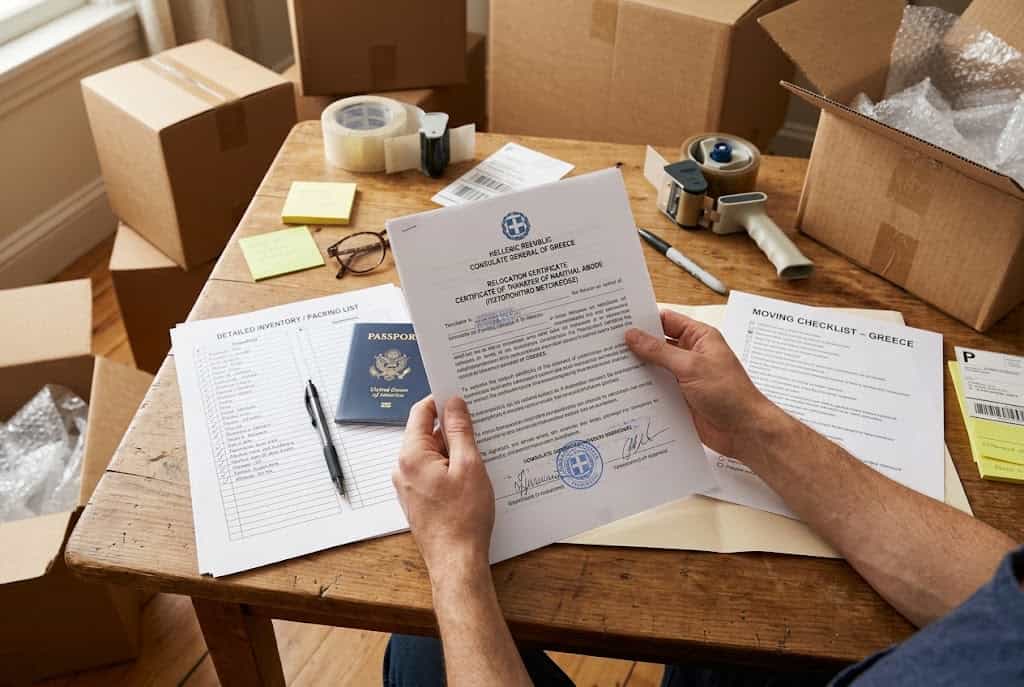

How Far in Advance Do You Need to Prepare Customs Documents for an Overseas Move?
Customs paperwork is rarely what people think about first when planning an international move. Most attention goes to flights, housing, and shipping dates. Customs tends to sit in the background, assumed to be something that can be handled later.
That assumption is one of the most common reasons international moves are delayed.
The reality is that customs documentation often needs to be prepared earlier than packing, earlier than shipping, and sometimes earlier than people expect the move to feel real. Waiting too long does not just create inconvenience, it can affect eligibility for duty-free entry, cause shipments to sit in port, and trigger costs that were never part of the original plan.
This article explains how far in advance customs documents should be prepared, why timing matters so much, and how early preparation changes the entire moving experience.
Why Customs Timing Matters More Than People Realize
Customs is not a single checkpoint at the end of the move. It is a framework that shapes how and when everything else happens.
Each country has its own rules regarding residency status, ownership timelines, documentation requirements, and inspection procedures. Many of these requirements are tied to specific dates, such as when you left your origin country, when you arrived at destination, or when your shipment departed.
If customs documentation is prepared too late, you may still be able to ship your household goods, but the conditions under which they are cleared can change dramatically.
This is why experienced international household movers treat customs planning as a foundational step, not an administrative afterthought.
https://www.sdcinternationalshipping.com/international-movers/
The Ideal Customs Preparation Timeline
While requirements vary by country, successful international moves tend to follow a similar customs preparation timeline.
4–6 Months Before Departure: Identify What Will Be Required
At this stage, the goal is not to complete paperwork, but to understand what paperwork will eventually be required.
This includes confirming:
- Whether you qualify for duty-free import
- Which residency or visa documents apply
- What proof of prior residence may be needed
- Whether any items in your shipment require special declarations
This is also when movers advise clients on what not to ship, based on customs restrictions rather than personal preference.
Understanding these requirements early prevents unpleasant surprises later in the process.
3–4 Months Before Departure: Begin Document Collection
This is when customs preparation becomes active.
Documents often need to be requested from employers, landlords, government offices, or embassies. Some take time to issue, and others must reflect very specific date ranges.
This phase usually includes preparing inventories, ownership declarations, and residency documentation. Rushing this stage increases the likelihood of errors that customs authorities may later question or reject.
Many delays attributed to “customs issues” actually begin here, when documents are assembled too close to shipment departure.
For an overview of how customs clearance works in practice, this guide provides helpful context:
https://www.sdcinternationalshipping.com/international-customs-regulations-the-complete-guide/
1–2 Months Before Departure: Review and Alignment
This is the most overlooked phase of customs preparation.
At this point, documents should not just exist, they should be reviewed, cross-checked, and aligned with the shipping timeline. Dates must make sense relative to one another, and inventories should accurately reflect what will be packed.
This is also when movers confirm that the shipment sequence supports customs clearance, especially if there will be more than one shipment or if air and sea freight are combined.
When this review phase is skipped, small inconsistencies can create outsized delays at destination.
What Happens When Customs Preparation Starts Too Late
When customs preparation begins late, options narrow quickly.
Shipments may depart before required documents are complete. Eligibility for duty-free import may be lost due to timing mismatches. Customs inspections may become more intensive because paperwork appears rushed or incomplete.
In many cases, shipments are allowed to arrive but cannot be cleared immediately. This leads to port storage, delayed delivery, and unexpected costs that are difficult to reverse once incurred.
Late customs preparation does not usually stop a move entirely, but it often changes the experience from predictable to reactive.
Why January and February Make Customs Timing More Sensitive
Early-year shipments tend to magnify customs timing issues rather than create them.
Customs offices are often working through year-end backlogs, and processing buffers are thinner. Documents that might have been reviewed calmly earlier in the year may receive stricter scrutiny when timelines are compressed.
This is why moves shipping in January or February benefit disproportionately from early customs preparation. When documents are ready well in advance, seasonal slowdowns become manageable instead of disruptive.
Customs Preparation Also Affects Packing and Shipping Decisions
Customs requirements influence more than paperwork.
They affect how inventories are written, how items are grouped, and sometimes how shipments are divided. Certain items may need to be documented separately, excluded entirely, or shipped later under different conditions.
When customs planning is integrated early, packing and shipping decisions are made with clarity. When it is delayed, packing often has to be adjusted at the last minute, increasing stress and the risk of mistakes.
This is why professional packing services work most smoothly when customs requirements are already understood.
https://www.sdcinternationalshipping.com/packing-service/
How SDC Approaches Customs Preparation Differently
SDC does not treat customs as a checklist that gets emailed to clients a few weeks before shipping. That approach assumes all moves follow the same pattern, and international moves rarely do.
Instead, customs preparation is integrated into the planning conversation from the very beginning. As soon as a potential move timeline and destination are known, SDC helps clients understand which customs rules are likely to apply to their specific situation. This includes identifying which documents will be required, which ones take time to obtain, and which dates matter most for eligibility and clearance.
Clients are guided not just on what paperwork is needed, but on when to request it and why timing matters. Documents are reviewed in the context of shipping schedules and expected arrival dates, so everything aligns logically rather than being assembled in isolation. This makes it easier to catch inconsistencies early, such as date conflicts, missing declarations, or items that may require special handling at the destination.
Because this work happens well before packing begins, potential issues are identified when there are still practical solutions available. Adjustments can be made to shipment timing, documentation can be corrected without pressure, and alternative approaches can be considered without adding cost or delay. The result is a customs process that feels predictable and controlled, rather than rushed and reactive.
The Simple Rule to Remember
If you are asking how far in advance customs documents should be prepared, the safest answer is earlier than you think.
Customs documentation should begin taking shape months before shipping, not weeks. When preparation starts early, customs becomes a formality. When it starts late, customs becomes a bottleneck.