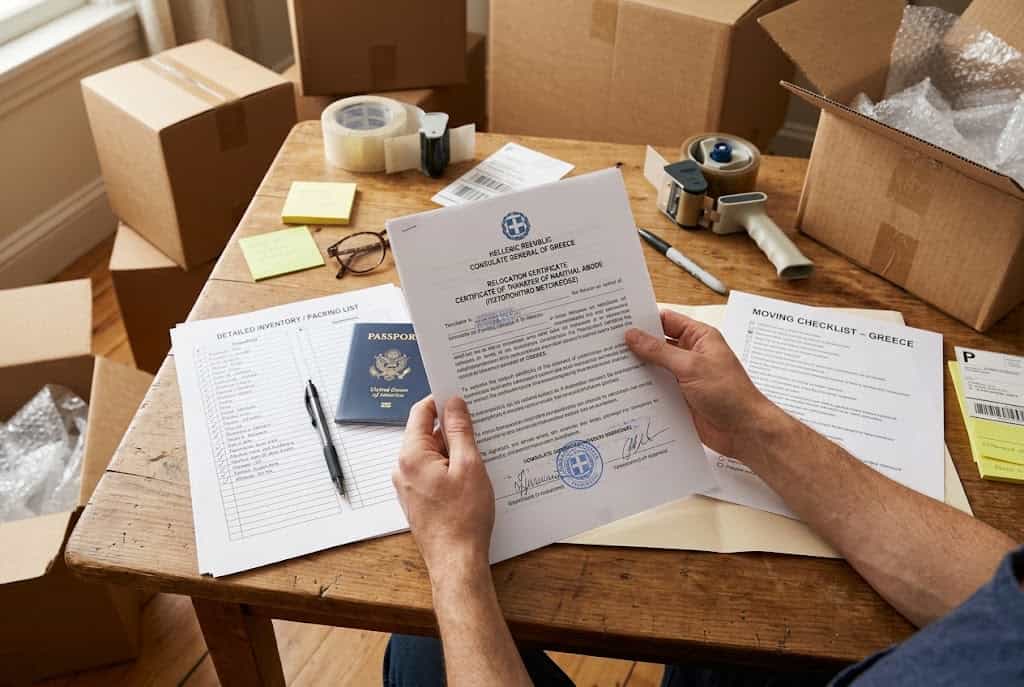

Why Household Goods Get Held or Delayed at Italian Customs
When a household goods shipment is delayed at Italian customs, it’s easy to assume something has gone wrong. In reality, delays are common in Italy, even for shipments that fully qualify for duty-free entry and are prepared correctly.
Most delays are procedural, not punitive. Understanding that distinction early helps reduce unnecessary stress.
Duty-Free Approval Does Not Mean Immediate Release
One of the most common misunderstandings is believing that duty-free status guarantees fast customs clearance.
In Italy, duty-free approval only determines whether VAT and duties apply. It does not bypass document verification, inspections, or administrative review. Those steps still take place, even when everything is in order.
As a result, a shipment can be fully compliant and still remain at port while routine checks are completed.
Italy Uses a Layered Clearance Process
Italian customs clearance is not a single decision made by one office. It is a layered process involving multiple reviews, confirmations, and internal handoffs.
Each stage exists to confirm compliance, not efficiency. When one step pauses, the entire shipment waits. This is normal within the Italian system, even though it can feel opaque to the shipper.
Original Documents and Formal Review Take Time
Italy places strong emphasis on original documentation and formal validation.
Even when documents are complete, customs may need time to reconcile inventories, confirm declarations, or match paperwork across systems. These reviews are standard, but they rarely happen quickly.
Silence during this period often feels like a problem, when in fact the shipment is simply moving through a required stage.
Port Conditions Influence Clearance Speed
Customs clearance does not happen in isolation.
Italian ports handle large volumes of commercial cargo alongside household goods. Staffing levels, inspection backlogs, and port congestion all affect how quickly shipments are processed. These conditions change frequently and are outside the shipper’s control.
A delay caused by port congestion has nothing to do with the quality of the shipment or its documentation.
A Delay Is Not the Same as a Problem
One of the most important things to understand is that a customs delay does not automatically mean there is an issue with eligibility or compliance.
In most cases, it simply means the shipment is waiting for its turn in a system that prioritizes process and verification over speed. When expectations are set correctly, delays become frustrating but manageable, rather than alarming.
Understanding how and why Italy handles customs clearance this way makes the process feel predictable instead of unpredictable.
The Difference Between a Customs Hold and a Disqualification
One of the most stressful parts of an international move is not knowing what a delay actually means. When Italian customs places a shipment on hold, many people assume the shipment has been rejected or that duty-free status has been lost.
In most cases, that assumption is incorrect.
Understanding the difference between a customs hold and a disqualification helps keep expectations realistic and prevents unnecessary panic.
A Customs Hold Is Procedural
A customs hold is an administrative pause.
It means Italian customs is reviewing documents, waiting for confirmation, scheduling an inspection, or processing the shipment within its internal workflow. Holds are common and often affect shipments that ultimately clear without issue.
During a hold, customs is not making a judgment about eligibility. It is completing a required step in the clearance process.
A Disqualification Is a Compliance Decision
A disqualification is different. It occurs when customs determines that the shipment does not meet the requirements for duty-free entry or personal effects import.
This decision is based on substantive issues, such as residency qualification, timing problems, or inventory concerns. Once a shipment is formally disqualified, VAT and duties may be assessed, and options become more limited.
Holds do not automatically lead to disqualification, but disqualifications often follow extended review when compliance issues are found.
Why the Two Are Often Confused
The confusion usually comes from silence.
Italian customs rarely issues frequent updates during review. From the shipper’s perspective, a lack of information feels like a negative outcome. In reality, it often means the shipment is waiting in queue or pending the next administrative step.
Without context, a normal hold can feel identical to a serious problem.
What Customs Is Evaluating During a Hold
While a shipment is on hold, customs may be:
- Verifying original documents
- Reviewing inventory descriptions and values
- Scheduling or completing an inspection
- Confirming residency or consignee details
None of these actions imply rejection. They are part of the standard clearance process.
Why Most Holds Resolve Without Issue
The majority of customs holds end with release, not penalties.
When documentation is consistent and the move was structured correctly, holds usually clear once the required step is completed. The process can feel slow, but it is often moving forward even when updates are minimal.
Knowing this distinction helps movers stay focused on coordination rather than worst-case scenarios.
The Most Common Reasons Household Goods Get Held at Italian Customs
Most customs holds in Italy are triggered by operational or administrative factors, not by eligibility failures. Even shipments that ultimately clear duty free often pause at this stage while customs completes its review.
Understanding the most common causes of holds helps set expectations and reduces unnecessary worry.
Missing or Late Original Documents
Italian customs places strong emphasis on original paperwork.
If original documents arrive late, are still in transit, or have not yet been released by another authority, customs may place the shipment on hold until the full file is complete. This can happen even when copies were submitted in advance.
These holds are procedural and typically resolve once the missing documents are received and verified.
Inventory Verification Requests
Inventories are frequently reviewed in detail.
When customs wants clarification, additional descriptions, or confirmation of values, the shipment may be held while those questions are addressed. This is especially common for large households, high-value items, or inventories that contain categories requiring closer review.
A request for clarification does not mean the inventory is wrong. It means customs wants certainty before proceeding.
Random or Targeted Inspections
Some shipments are selected for inspection even when documentation is complete and compliant.
Inspections may be random, quota-based, or influenced by broader enforcement initiatives. Once a container is selected, it must wait for inspection scheduling, staffing availability, and physical examination.
Inspection selection is not a judgment on the shipper. It is part of how Italian customs manages risk.
Port Congestion and Backlogs
Italian ports process commercial cargo and household goods simultaneously.
When ports experience congestion, staffing shortages, or seasonal volume spikes, clearance slows across the board. Household goods shipments are affected even when there are no issues with documentation or eligibility.
These delays are external to customs review and cannot be expedited by additional paperwork.
Consignee or Address Confirmation Issues
Customs must be satisfied that the consignee information matches the residency and delivery details.
If names, addresses, or residency records do not align cleanly, customs may pause the shipment while confirming details. These holds are usually resolved through clarification, but they still take time.
How Long Customs Delays Usually Last (And What Affects Them)
One of the hardest questions for movers is how long a customs delay will last. The honest answer is that there is no fixed timeline, because the duration depends on what type of hold is involved and how quickly required steps can be completed.
That said, certain factors consistently influence how long a shipment remains on hold.
The Type of Review in Progress
Administrative holds for document verification usually resolve faster than inspections.
When a shipment is waiting for paperwork or internal confirmation, progress resumes as soon as the required item is received or validated. Inspections, by contrast, depend on scheduling, staffing, and physical access to the container.
Responsiveness to Customs Requests
How quickly questions are answered matters.
When customs requests clarification or additional documentation, prompt and accurate responses help prevent further delays. Partial answers or inconsistent follow-ups often extend the review period rather than shorten it.
Port Conditions at the Time of Arrival
A shipment arriving during a busy period may take longer to clear, even with no issues.
Port congestion, holidays, and labor availability all influence how quickly customs processes shipments. These conditions change frequently and are outside the mover’s control.
The Completeness of the Original Submission
Shipments submitted with a complete, consistent document set tend to move more smoothly through review.
When customs has everything it needs from the start, there are fewer pauses for clarification. When documents arrive in stages, the process becomes fragmented and slower.
Why Timelines Change Mid-Process
It is common for estimated clearance timelines to shift after arrival.
This does not mean something has gone wrong. It usually means the shipment has entered a different stage of review than initially anticipated. Understanding this helps manage expectations and reduces frustration during the waiting period.
What Makes Customs Delays Worse After Arrival
Once a shipment has arrived in Italy, the range of options narrows significantly. At that stage, certain actions, even well-intentioned ones, often make delays longer rather than shorter.
Understanding what not to do after arrival is just as important as understanding how delays start.
Trying to Change Documents After the Shipment Arrives
One of the most common mistakes is attempting to revise documents once the shipment is already under customs control.
Italian customs evaluates the shipment based on the documents presented at clearance. Late corrections, amended inventories, or revised declarations usually trigger additional review instead of resolution. In some cases, they restart parts of the process entirely.
Submitting Information in Pieces
Customs works best with complete files.
When documents or clarifications are submitted incrementally, the shipment may be reviewed multiple times by different officers. This fragments the process and often results in repeated holds rather than progress.
A single, complete response is far more effective than multiple partial updates.
Delayed Responses to Customs Requests
Time matters once customs asks a question.
Slow replies, unclear answers, or missing attachments can push a shipment to the back of the review queue. Even short delays in response can extend the overall hold significantly, especially during busy port periods.
Escalating Without New Information
Repeated follow-ups without new information rarely speed things up.
Italian customs prioritizes compliance, not urgency. Pushing for release without resolving the underlying request usually results in silence rather than action. Progress comes from clarity, not pressure.
Using Non-Household Goods Processes
Shipments handled through general freight workflows often face longer delays.
Household goods moves involve specific documentation flows, inventory formats, and clearance expectations. When the process does not match those expectations, customs may take additional time to review and reconcile the shipment.
What You Can and Cannot Control Once Goods Are in Italy
Customs delays are frustrating largely because control is limited after arrival. Knowing where influence exists, and where it does not, helps movers focus their energy productively.
What You Can Still Influence
Even after arrival, some factors remain within the mover’s influence.
Clear communication, prompt responses to customs requests, and consistent documentation help prevent unnecessary escalation. When questions arise, accuracy matters more than speed alone.
Coordination between the shipper, destination agent, and customs representative also plays a role. When everyone is aligned, issues tend to resolve more smoothly.
What Is Entirely in Customs’ Hands
Certain elements are simply not controllable.
Inspection scheduling, internal review queues, staffing availability, and port conditions are determined by customs and port authorities. No amount of documentation quality can override those constraints once a shipment is in line.
Understanding this helps prevent frustration from turning into counterproductive action.
Why Patience Is Part of the Process
Italian customs clearance is methodical by design.
When a shipment is compliant, patience usually leads to release. When a shipment is not, rushing rarely improves the outcome. Staying focused on resolution rather than timelines helps keep the process moving forward.
The Value of Preparation Before Shipping
Most of what determines the length and smoothness of customs clearance is decided before the shipment ever leaves origin.
Once goods arrive, the process becomes reactive. Before shipping, it is proactive. That difference is why preparation matters so much for moves to Italy.
How to Reduce the Risk of Customs Delays Before You Ship to Italy
Most customs delays in Italy are decided long before a shipment ever reaches port. While no one can eliminate inspections or port congestion entirely, the way a move is planned has a direct impact on how smoothly clearance unfolds.
The goal is not to rush Italian customs. The goal is to give customs no reason to slow the shipment down further.
Plan the Move Around the Clearance Process, Not the Other Way Around
One of the most common causes of delay is building the shipping timeline around convenience rather than compliance.
Italian customs expects household goods shipments to align clearly with a change of residence. When shipping dates, arrival timing, and residency documentation are coordinated from the beginning, customs review tends to stay procedural rather than investigative.
Treat Documentation as a Clearance File, Not a Checklist
Customs does not evaluate documents individually. It evaluates the story they tell together.
Residency records, inventories, declarations, and shipping paperwork should all reinforce the same narrative. When documents are consistent, review is faster. When they contradict each other, even slightly, customs pauses to investigate.
Submitting a complete, unified document set from the start is one of the most effective ways to reduce delays.
Build an Inventory That Anticipates Review
The inventory is one of the first things Italian customs examines when a shipment arrives.
Clear descriptions, reasonable second-hand values, and consistency across paperwork help customs understand the shipment quickly. Vague language, unrealistic values, or last-minute revisions often lead to clarification requests or inspections.
High-risk categories such as alcohol, vehicles, tools, or valuables should be identified early and planned for deliberately.
Use a Household Goods Process, Not General Freight Handling
Household goods shipments follow different rules than commercial cargo.
Packing standards, documentation flow, inventory structure, and destination coordination all matter. When a move is handled using a true door-to-door household goods process, customs interactions tend to be smoother and more predictable.
If you’re comparing international movers and want a clear door-to-door process designed specifically for household goods, start with our international moving company overview:
https://www.sdcinternationalshipping.com/
For destination-specific guidance on how household goods moves into Italy are structured, including packing, shipping, and customs coordination, you can also review our Italy moving overview here:
https://www.sdcinternationalshipping.com/moving-company-to-italy/
Why Preparation Matters More Than Speed
Italian customs clearance rewards preparation, not urgency.
When a shipment is compliant, delays are usually temporary and procedural. When a shipment is unclear, every pause becomes longer and more complicated. Taking the time to plan properly before shipping helps ensure that any delays that do occur remain manageable rather than disruptive.