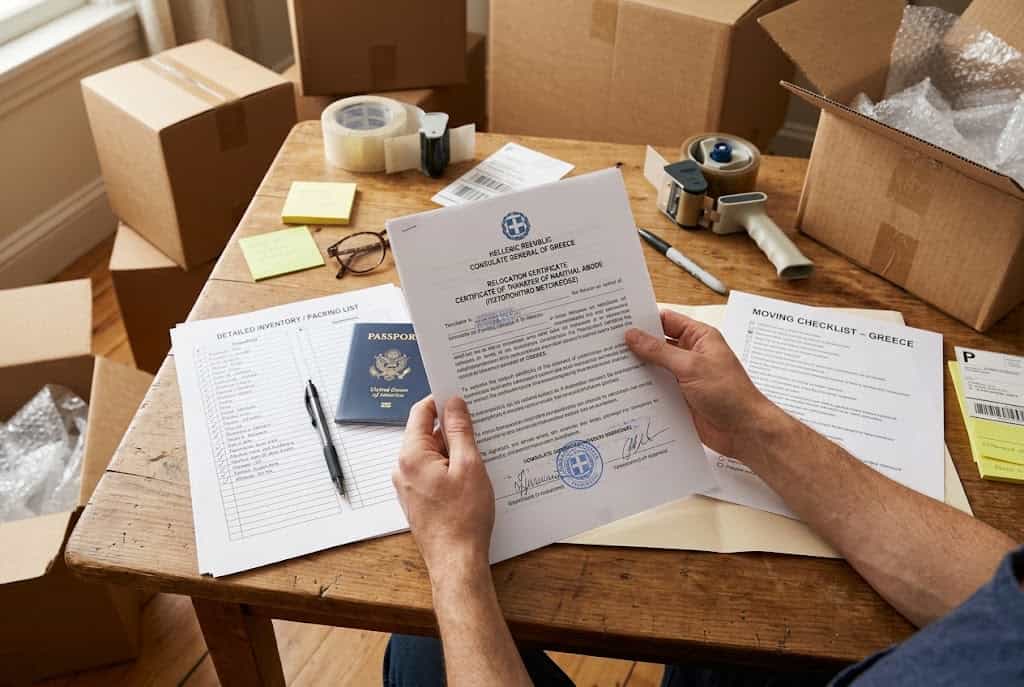

What Documents Do You Need Before Booking an International Move?
When people finally feel ready to book an international mover, a new kind of anxiety appears. It’s no longer about timing or cost, it’s about paperwork.
The question usually sounds like this:
“What documents do I actually need before I can book my international move?”
The good news is that booking an international mover does not require every document to be finished or approved. The bad news is that some documents need to be understood, identified, or in progress much earlier than people expect.
This article explains which documents matter before booking, which can come later, and how understanding documentation early prevents delays, stress, and surprises down the line.

Booking Does Not Mean Customs Is Complete
One of the biggest misconceptions is that all customs paperwork must be finalized before you can book an international mover. That’s not true.
Booking is about reserving capacity, not submitting documents to customs authorities. You can, and often should, book your mover before every form is completed, as long as the documentation path is clearly understood.
Problems arise when people book without knowing what documents will be required at all. That’s when timelines collide, eligibility windows are missed, and shipments move forward before paperwork is ready.
Understanding documentation requirements before booking doesn’t mean finishing everything, it means knowing what’s ahead.
The Core Information Movers Need Before Booking
Before an international mover can book your move responsibly, there are several pieces of core information that must be reasonably clear. This information allows the mover to choose appropriate shipping methods, reserve realistic capacity, and flag potential issues early, before they become problems.
The destination country is foundational. Customs rules, eligibility for duty-free import, documentation requirements, and even how shipments are inspected vary widely from country to country. Knowing the destination allows the mover to anticipate which rules will apply and how much preparation time is needed.
A rough departure window is equally important, even if dates are not final. Movers do not need an exact day, but they do need a realistic timeframe, such as “late March” or “sometime in early summer.” That window determines which shipping options are viable, how early packing needs to be scheduled, and whether consolidation or shared container options are realistic. Booking strategy changes dramatically depending on whether a move is flexible or tied to a fixed deadline.
Movers also need a general understanding of shipment size and structure. This includes whether you expect one shipment or phased shipping, whether air and sea freight might be combined, and whether storage may be involved at origin or destination. A move with multiple shipments or storage requires different coordination than a single, direct shipment.
None of this requires finalized paperwork or locked-in decisions, but it does require honest, thoughtful answers. Booking with vague or overly optimistic assumptions often leads to mismatched expectations, rushed adjustments, and avoidable stress later in the process.
Documents That Should Be Identified Before Booking
While not all documents must be completed or submitted before booking, certain categories should be identified early so timelines can be planned correctly and eligibility risks are avoided.
Most international moves require proof of identity, confirmation of residency status or visa type, and documentation showing prior residence in the origin country. These documents often determine whether household goods qualify for duty-free import and whether there are restrictions on timing. Some destinations place greater emphasis on employment or assignment letters, while others focus on the relationship between arrival dates and shipment departure.
Understanding which of these documents will apply to your move allows the mover to plan shipping sequences appropriately. For example, if a visa will only be issued after arrival, shipment timing may need to account for that. If eligibility depends on how long items have been owned, inventory planning may need to begin earlier.
Inventory preparation also starts earlier than most people expect. While the final, detailed inventory is created during packing, early documentation planning involves understanding what will be shipped, identifying any items that may be restricted, and deciding what should be excluded entirely. Items such as alcohol, food, certain electronics, or high-value goods may require special handling or should not ship at all, depending on destination rules.
Identifying these document and inventory requirements before booking prevents last-minute scrambling, rushed paperwork, and situations where shipments are delayed simply because something important was discovered too late.
What Can Usually Be Completed After Booking
Many documents can be completed after booking as long as they’re started early enough.
Final inventories, declarations, and customs forms are often prepared closer to packing or departure. Arrival documents, such as residency confirmations, may not exist at the time of booking and are expected to follow later.
The key is sequencing. Booking should happen with a clear plan for when each document will be prepared and reviewed, not with the assumption that everything can be handled “later.”
This sequencing is what keeps booking from turning into pressure.
Why Documentation Timing Affects Booking Strategy
Documentation doesn’t just affect customs, it affects how a move is booked.
If certain documents will only be available after arrival, shipping timelines may need to be adjusted. If eligibility windows are tight, shipments may need to be scheduled carefully. If restricted items are involved, packing and inventory preparation must account for that.
When documentation timing is understood before booking, movers can align shipping and packing strategies accordingly. When it isn’t, booking decisions are made blind.
This is why documentation awareness is a planning requirement, not an administrative detail.
https://www.sdcinternationalshipping.com/international-customs-regulations-the-complete-guide/
Why Last-Minute Document Discovery Causes Problems
Many international move delays don’t come from missing documents, they come from discovering requirements too late.
People book their move assuming documents are simple, only to learn later that certain forms must reflect specific dates, residency status, or ownership periods. Correcting these issues after booking is much harder than planning for them beforehand.
Late discovery often leads to rushed paperwork, customs holds, or storage while issues are resolved. None of these outcomes are caused by booking itself, they’re caused by booking without document awareness.
How SDC Approaches Documentation Before Booking
SDC does not expect clients to arrive with a stack of completed forms before booking.
Instead, documentation is discussed as part of the planning conversation. Clients are guided through which documents will be required, which ones take time to obtain, and which dates matter most. This allows booking to happen with clarity, even if paperwork is still in progress.
The focus is on readiness, not perfection. When documentation timelines are understood early, booking becomes a protective step rather than a risky one.
https://www.sdcinternationalshipping.com/international-movers/
The Question to Ask Before Booking
Instead of asking “Do I have all my documents ready?”, a better question is:
“Do I understand which documents I’ll need, and when they’ll need to be ready?”
If the answer is yes, booking can usually proceed safely. If the answer is no, planning should continue before dates are locked in.
The Takeaway
You don’t need every document finished before booking an international move, but you do need awareness.
Knowing which documents matter, how long they take, and how they interact with shipping timelines is what separates smooth bookings from stressful ones. Booking with clarity protects options. Booking without it creates pressure.
Understanding documentation early turns booking into a confident step forward instead of a leap of faith.