Customs Regulations for Moving from South Korea to the USA
Relocating from South Korea to the United States means your household goods pass through U.S. Customs and Border Protection (CBP) before they reach your door. As a licensed overseas moving company serving all 50 states, SDC coordinates packing, documentation, and customs brokerage so a missing form or an unverified inventory doesn’t turn into weeks of port storage fees.
Household goods and vehicles are treated very differently under U.S. customs rules, and conflating the two is one of the most common (and expensive) mistakes we see. Here’s how each actually works.
Household Goods: The One-Year Rule, and What It Actually Means
Under 19 CFR 148.52, furniture, personal effects, and other usual household items are eligible for duty-free entry if you used them abroad for at least one year and they aren’t intended for sale. Two details in the regulation trip people up less often than the headline rule itself, so they’re worth stating plainly: the year of use does not need to be continuous, and it does not need to immediately precede your move. A couch you used in Seoul for eight months, put in storage for four, then used again before shipping still counts toward the year.
First-time immigrants and visa holders bringing personal effects for immediate use are typically duty-free as well, without the one-year requirement applied to returning residents. Where duties do apply: items still in retail packaging, high-value electronics purchased shortly before the move, alcohol and tobacco, and quantities of identical items that look intended for resale rather than personal use. Your coordinator reviews your inventory before departure and flags anything likely to draw a duty assessment.
Vehicles: A Separate System
Vehicles do not fall under the household-goods duty exemption above, even when they’re shipped in the same container as your furniture. Korean-built vehicles currently face a 15 percent tariff, a rate that’s changed twice in the past year, so confirm the current number with your coordinator before you commit to shipping a car. See our full guide to shipping a car from South Korea to the USA for prep requirements, required forms, and the complete cost picture.
Required Documentation
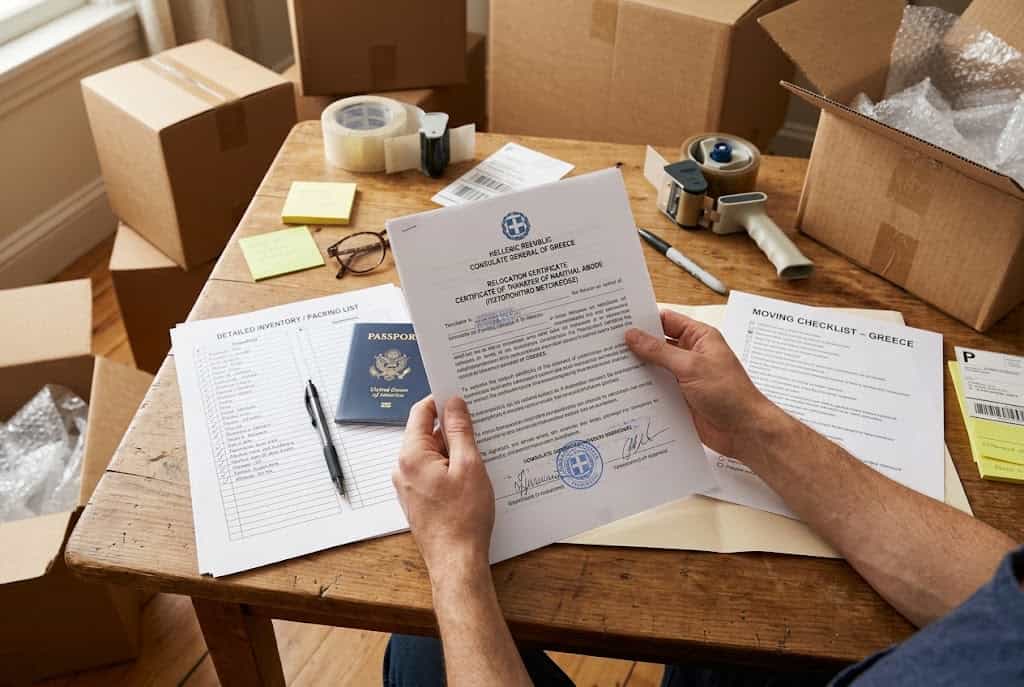
CBP Form 3299, the Declaration for Free Entry of Unaccompanied Articles, is the core form for duty-free household goods entry. Alongside it, you’ll need passport and visa copies for all family members, a detailed inventory listing box or container IDs, specific item descriptions rather than generic categories, and estimated values, plus a bill of lading identifying your shipment’s contents and route. If you’re shipping a vehicle, add the title, registration, EPA Form 3520-1, and DOT Form HS-7 to that list.
A missing signature on Form 3299, an inventory without values, or a bill of lading that doesn’t match your other paperwork is the most common reason a container gets flagged for review, and once that happens it can sit at the port for days or weeks generating storage charges. Our pre-departure verification cross-references every form before your shipment leaves South Korea. See our complete guide to international customs regulations for the general documentation process that applies across corridors.
Agricultural Inspection: The Step Most Guides Skip
Containers arriving from Asia, South Korea included, are frequently flagged for USDA agricultural inspection, and this catches first-time movers off guard more than any other single issue. Outdoor furniture, bicycles, lawn equipment, and vehicles are the most common triggers, since dirt, plant residue, or untreated wood on any of these can hold your entire container, not just the flagged item. Before loading, we arrange professional vehicle cleaning including the undercarriage, wipe down and inspect outdoor items for soil and organic matter, and confirm any wooden crating is ISPM-15 certified for international fumigation standards. That preparation is what prevents a quarantine order or an unplanned cleaning fee at the port. Our packing services are built around these compliance requirements from the start.
Frequently Asked Questions
Does my car qualify for the same duty-free treatment as my household goods?
No. Vehicles are handled as a separate customs matter and are currently subject to a 15 percent tariff on Korean-origin vehicles, a rate that’s changed twice in the past year. See the vehicle section above for current rates and where to find full shipping requirements.
Does the year of use for my household goods need to be continuous or right before my move?
No to both. The year of use can be broken up, including time in storage, and it doesn’t need to immediately precede your move. What matters is that you’ve genuinely used the item abroad for a cumulative year and it isn’t intended for sale.
Why do shipments from South Korea get flagged for agricultural inspection?
USDA inspects incoming containers from Asia for soil, plant residue, and pests, most often on outdoor furniture, bicycles, lawn equipment, and vehicles. Professional cleaning before loading, including vehicle undercarriages, is what prevents a quarantine hold at the port.
What’s the single most common cause of customs delays?
Paperwork mismatches: a missing signature on CBP Form 3299, an inventory without values, or a bill of lading that doesn’t line up with your other documents. Each is preventable with a pre-departure review, which is why we cross-check every document before your container leaves South Korea.
Protecting Your Shipment
Even a well-documented shipment can involve handling during an inspection. Marine insurance covers your household goods and vehicle against loss or damage during transit and customs checks, and we help align your inventory values with your coverage so there are no gaps if you need to file a claim.
If you’re ready to start planning, our team will review your inventory, flag anything likely to draw customs attention, and build a shipping timeline around your documentation instead of the other way around. Shipping a vehicle alongside your household goods? We’ll walk through current duty exposure before you commit. Call 877-339-0267 or request a quote to get started.