Customs Documentation for Moving from Mexico to the USA
Moving from Mexico to the USA is an exciting step, filled with opportunities for personal growth, career advancement, or family reunification. But as with any international relocation, navigating the customs process is essential to a smooth, hassle-free move. From household goods to personal vehicles, each item in your shipment must be accounted for with the correct paperwork, and getting that paperwork right the first time is what actually determines whether your shipment clears on schedule.
This guide breaks down the essentials of customs documentation for the Mexico-to-USA corridor and shows how SDC International Shipping simplifies the process. As a licensed door-to-door moving company serving all 50 states, our team handles this documentation regularly, not as a one-off.
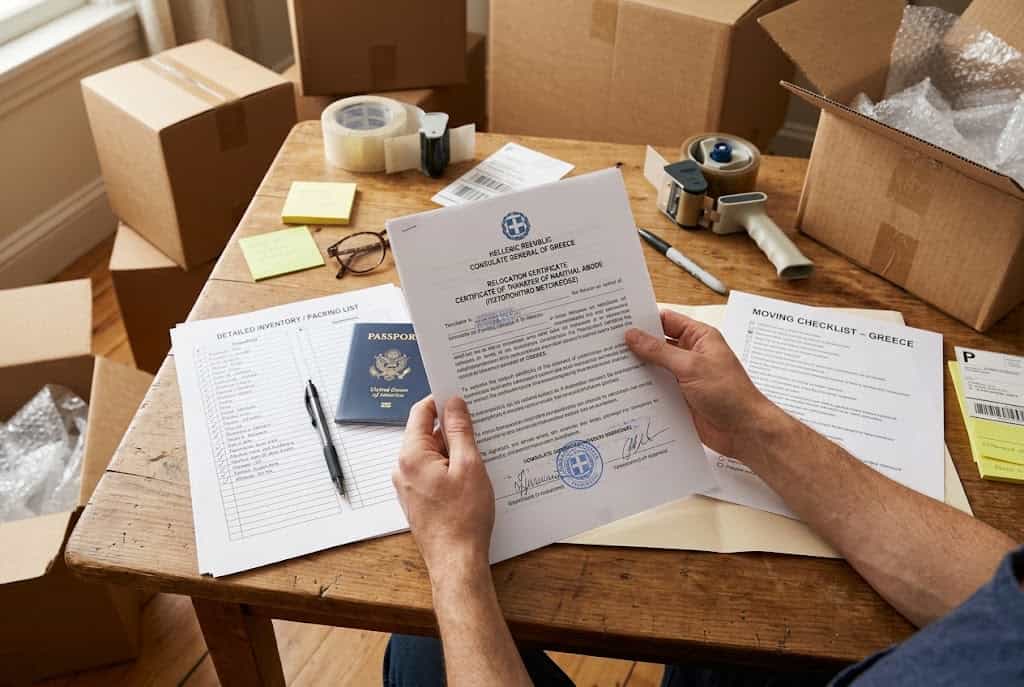
Key Documents Required for Household Goods
To move your household items into the USA, you’ll need a core set of documents:
- CBP Form 3299: the core customs declaration for duty-free entry of used household goods, covering the value and purpose of what you’re importing.
- Proof of residence abroad: documentation showing you established residence in Mexico prior to the move, since this is what qualifies your used belongings for duty-free treatment.
- Immigration documents: a valid passport and proof of your legal status entering the USA, whether that’s a returning citizen, a green card holder, or a visa holder.
Alongside these, you’ll need a detailed, itemized inventory of everything in your shipment. Vague descriptions are one of the most common reasons a shipment gets flagged for a closer look at the port, so specificity here matters more than most people expect.
Vehicle Shipping Documentation
If you’re bringing a personal vehicle into the USA, additional documentation is required beyond your household goods paperwork:
- Vehicle title and registration: proof that the vehicle is legally owned by you.
- EPA and DOT compliance documentation: confirmation the vehicle meets US environmental and safety standards.
- A separate customs declaration for the vehicle: specifying make, model, declared value, and VIN.
SDC ships vehicles exclusively in containers alongside household goods, not as a standalone shipment, which simplifies the customs handling on both ends since everything clears as a single file. For the general rules that apply to any country, see our complete guide to international customs regulations.
What Qualifies for Duty-Free Entry
Household goods you’ve owned and used for at least a year generally clear US Customs duty-free. Newer purchases, or anything you’re bringing in with the intent to sell, don’t qualify and may be assessed duty based on declared value. This is where honesty on your inventory actually works in your favor: under-describing or under-valuing higher-value items tends to draw more scrutiny from CBP, not less, since it’s exactly the kind of inconsistency that triggers a closer look.
Filling Out Customs Forms: Best Practices
Customs forms are declarations, and customs authorities use them to assess your shipment and apply the correct duty treatment. A few sections matter more than the rest:
- Itemized inventory: a comprehensive list of everything in your shipment, with descriptions, quantities, and approximate values for each item.
- Valuation: realistic, accurate declared values. Undervaluing items is more likely to create problems than avoid them.
- Purpose of shipment: clearly personal use, not resale. Personal effects generally receive more lenient treatment than commercial imports.
The mistakes that cause the most trouble are usually small: omitting serial numbers on electronics and other high-value items, using vague descriptions like “household goods” instead of “sofa” or “dining table,” or missing the submission deadlines customs authorities require. None of these are complicated to fix, but they’re the difference between a shipment that clears cleanly and one that sits at the port while questions get sorted out.
Which Port of Entry Matters
Mexico is the one corridor on this site where a shipment doesn’t have to cross by ship or plane at all. Household goods moving north commonly cross by land through one of the major border crossings, Laredo, El Paso, San Ysidro, or Nogales, especially for shipments originating in northern and central Mexico. Shipments from further south, or households that prefer a single dedicated container, sometimes route through a Gulf port instead. The choice affects more than just travel time: land crossings can move faster overall, but they’re also more exposed to crossing-specific congestion at peak periods, while ocean freight is more predictable but adds transit days. Your coordinator should confirm the actual routing for your shipment before you finalize a timeline, since a plan built around the wrong assumption is one of the more avoidable ways a move gets delayed.
Documentary Review Versus Physical Inspection
Once your shipment reaches the port of entry, CBP checks your documents against the physical contents in one of two ways. A documentary review, checking your paperwork against your declared inventory, is what happens with most compliant shipments, and it moves quickly when the paperwork is consistent. A physical inspection, an actual examination of the container’s contents, happens when something doesn’t line up: a name that doesn’t match across documents, an item description vague enough to raise a question, or a declared value that looks inconsistent with the item. A physical inspection isn’t a sign anything is wrong with your move, but it does add real time, often several days, so the goal of accurate, consistent documentation is to avoid triggering one in the first place, not to survive one gracefully.
What Happens If Your Goods Don’t Qualify for Duty-Free Entry
If CBP determines an item doesn’t meet the criteria, because it’s newer than the ownership threshold, or its documentation doesn’t support your declared residency status, that item is reclassified and assessed standard import duty based on its declared value. This is applied item by item, not to your entire shipment, so a single new appliance packed in with an otherwise qualifying household doesn’t disqualify everything else. The practical takeaway is that separating clearly new or high-value items in your inventory, rather than folding them into a generic list, keeps a reclassification contained to the item it actually applies to.
How Long Clearance Actually Takes
There’s no fixed number that applies to every shipment, and any estimate that ignores your documentation status and routing is a guess. As a general range: a shipment with complete, consistent paperwork that clears on documentary review typically adds a few days to your overall timeline once it reaches the border or port. A shipment selected for physical inspection should be budgeted for a week or more beyond that. Land crossings can move faster end to end than ocean freight, but they’re also more sensitive to which specific crossing point and time of year you’re using, so treat any timeline your coordinator gives you as a planning range, not a guarantee.
Common Questions
Do I need to be present when my shipment clears customs?
Not necessarily. A licensed customs broker or your moving company’s destination agent can handle clearance on your behalf, which is standard practice for household goods shipments. You may need to provide notarized authorization in advance.
What if I’m missing one document when my shipment arrives?
A single missing or inconsistent document is the most common reason a shipment gets held, not seized. In most cases the fix is submitting the corrected paperwork, not losing your duty-free eligibility entirely, but the shipment sits at the port until it’s resolved, so catching gaps before departure is far better than catching them after.
Can I ship before my immigration status is finalized?
It depends on your specific status and timeline, and shipping too early can create the exact documentation mismatch that triggers a hold. Confirm your status with your coordinator before committing to a shipping date rather than working backward from one.
How SDC Simplifies the Process
From your first consultation, SDC provides support tailored to your specific shipment: a pre-move review of what your documentation will need to include, accurate preparation of the required forms, and a checklist so nothing critical gets missed. We also act as your liaison with customs authorities, handling communication and resolving questions as they come up rather than leaving you to field them directly.
Special Cases: Vehicles, Art, and Antiques
Personal vehicles, valuable art, and antiques involve documentation and handling beyond a standard household shipment. For a vehicle, that means the title, registration, EPA and DOT compliance documents, and a separate customs form listing make, model, value, and VIN.
For art and antiques, our artwork shipping service covers custom crating for fragile pieces, a detailed itemized inventory with individual valuations, and the paperwork these higher-value shipments require for a clean customs clearance.
Getting Started
Moving from Mexico to the USA involves real paperwork, but none of it is complicated once you know what’s actually required. SDC International Shipping handles the customs side of this corridor regularly, whether you’re shipping household goods, a vehicle, or specialty items. Request a free quote to talk through your specific move.