
What Commonly Delays Household Goods Shipments to Germany?
Most household goods shipments to Germany are not delayed because something went “wrong” at sea. They’re delayed because customs could not clearly verify the move when the container arrived. Germany is methodical, not unpredictable. When expectations, paperwork, and timing don’t align, customs simply pauses the process.
Understanding what actually causes delays gives you far more control over your move than trying to ship faster or earlier.
If you want a clear picture of how documentation, timing, and shipping fit together door to door, this international moving company overview explains the full process: https://www.sdcinternationalshipping.com/
Documentation that doesn’t tell a consistent story
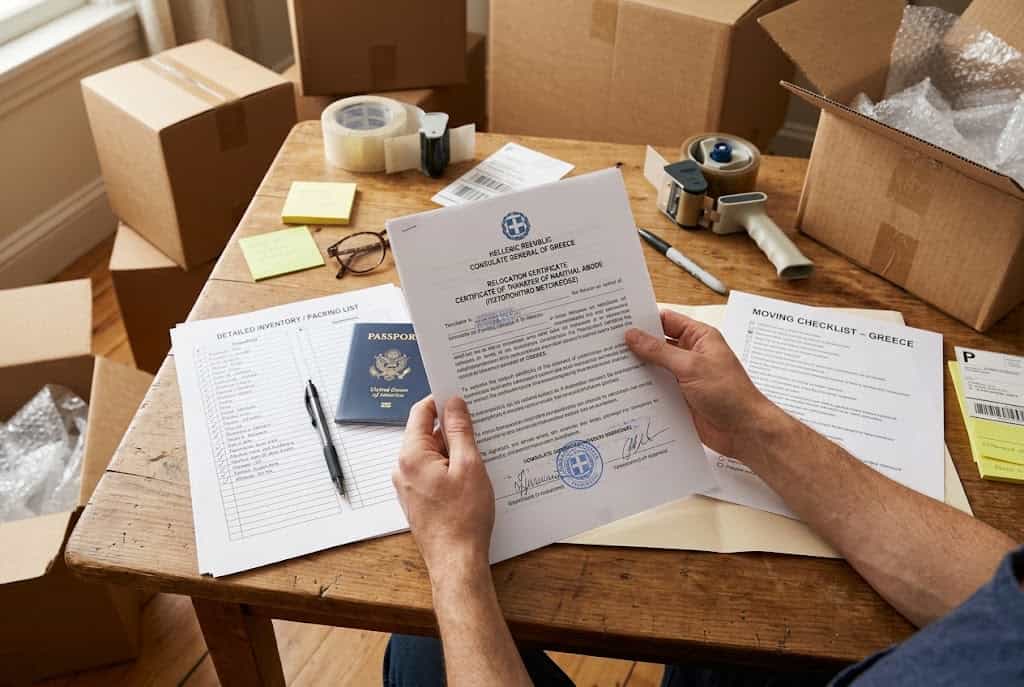
The most common cause of delays is not missing documents, but documents that don’t align. German customs reviews paperwork as a complete narrative. Names, dates, addresses, and residency timelines must support one another.
Even small inconsistencies, such as a spelling variation or mismatched address, can cause customs to pause clearance until clarification is provided. When documents look fragmented, customs has no incentive to move quickly.
This is why documentation preparation should never be treated as a last step. It is part of the move itself.
Shipping before residency status is established
Another frequent cause of delay is shipping household goods before residency documentation exists. When a container arrives and there is no visa approval, residence permit, or registration in place, customs cannot legally clear the shipment.
In these situations, goods are not rejected, but they are commonly placed into bonded storage while customs waits for proof that the move is legitimate. Storage fees and handling charges can add up quickly, even though nothing is technically “wrong” with the shipment.
This is why timing is discussed so often when planning moves to Germany. Shipping early does not help if paperwork is not ready.
Inventory issues that trigger inspection
Your inventory, sometimes called a packing list, plays a bigger role than many people realize. Customs officers rely on it to determine whether the shipment qualifies as household goods or needs further inspection.
Inventories that are vague, overly broad, or unrealistic often invite scrutiny. Phrases like “miscellaneous items” or “general contents” give customs very little confidence. Items that appear new, duplicated in large quantities, or undeclared can also raise questions.
Professional packing and inventory preparation dramatically reduce this risk. Experienced packers know how to describe goods in a way that reflects a normal household rather than a commercial shipment.
https://www.sdcinternationalshipping.com/packing-service/
Restricted or undeclared items
Some items are allowed into Germany only under specific conditions, while others require declaration even if they are permitted. Problems arise when restricted items are included without being clearly listed or explained.
Alcohol, tobacco, specialty items, or anything that appears resale-oriented often leads to inspection. Even when these items are eventually allowed, the extra review time can delay release of the entire shipment.
Transparency is always faster than omission.
Groupage shipments and timing mismatches
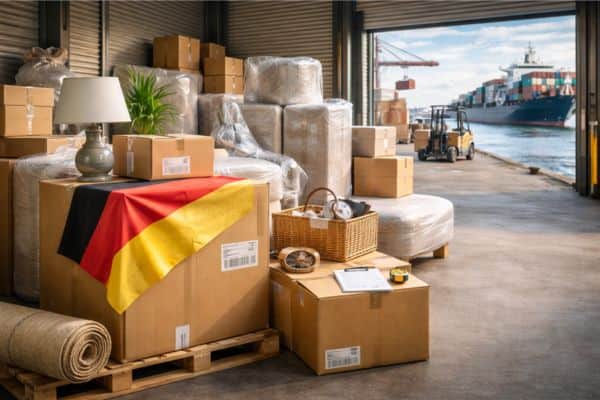
Shared container shipping, also known as groupage, is very common for Germany and works well when planned correctly. However, groupage shipments move on fixed schedules and are consolidated with other households.
If documentation is not ready when a groupage container arrives, the shipment cannot simply wait on the truck. It may be held at the port or transferred to storage until clearance is possible. This is not a flaw in groupage itself, but a timing mismatch.
Understanding how sea freight schedules work is part of avoiding unnecessary delays.
https://www.sdcinternationalshipping.com/sea-freight-vs-air-freight-international-moving/
Address or delivery details not finalized
German customs generally expects a confirmed delivery address at the time of clearance. When housing arrangements are still uncertain or change after the shipment has already arrived, clearance can slow down.
In some cases, using temporary storage until housing is finalized is the safer option. Storage is often used intentionally as a planning tool rather than a fallback when things go wrong.
https://www.sdcinternationalshipping.com/storage/
Customs inspection, normal but misunderstood
Inspections are not automatically a bad sign. German customs performs routine inspections to verify inventory accuracy and compliance. When documentation and packing are clear, inspections are usually brief.
Problems arise when inspections uncover inconsistencies or undeclared items. At that point, clearance slows not because customs is difficult, but because additional verification is required.
How insurance fits into delay scenarios
Delays don’t always result in damage, but extended handling and storage increase exposure. This is why many households choose international moving insurance, especially when shipping schedules or residency timing are tight.
Insurance does not speed up customs, but it protects you financially if items are damaged or lost while a shipment is held or moved between facilities.
https://www.sdcinternationalshipping.com/international-moving-insurance/
The practical way to avoid delays
Most delays are preventable, and they rarely come down to bad luck. They usually happen when shipping decisions are made in isolation, without considering how documentation, packing, shipping method, and arrival timing interact with one another. Germany’s customs system is designed to evaluate the entire move, not individual pieces of it.
When paperwork clearly supports a legitimate change of residence, inventories accurately reflect a normal household, and the shipment arrives within a reasonable window around your relocation, customs has very little reason to intervene. In those situations, clearance tends to be routine and efficient.
Problems arise when one part of the process moves ahead of the others. Shipping before residency documentation exists, packing without considering how items will appear on an inventory, or choosing a shipping method without accounting for fixed schedules can all create unnecessary friction. None of these issues are fatal on their own, but together they slow everything down.
The most reliable way to avoid delays is to plan the move as a single, coordinated process rather than a series of separate tasks. When timing and documentation support each other, German customs typically processes household goods without incident.
The goal is not speed, but clarity.
Final takeaway
Household goods shipments to Germany are delayed for predictable reasons: misaligned documents, shipping too early, unclear inventories, or restricted items that weren’t handled properly. Germany’s system rewards preparation and consistency, not guesswork.
If you want help coordinating eligibility, documentation, packing, sea freight, and customs clearance as one integrated process, our nationwide international moving services are designed to keep your shipment moving without unnecessary pauses.