Shipping Furniture and Household Goods to South Korea
Moving furniture and household goods to South Korea involves a different set of considerations than most Asia-Pacific destinations, particularly around the duty-free ownership rule and the realities of fitting American-scale furniture into a Korean apartment. This guide covers the practical side of shipping a full household from the USA to Seoul, Busan, or other South Korean cities.
SDC International Shipping is a licensed overseas shipping company serving all 50 U.S. states, with regular household goods routes to South Korea.
Two Separate Timing Rules, Not One
South Korean customs actually applies two different timing rules, and mixing them up is an easy way to plan around the wrong number. The first is about ownership: personal effects and furniture you’ve owned and used for at least three months before your move generally qualify for duty-free importation. Items purchased more recently, within three months of your departure, are considered dutiable and may be assessed import duties on arrival, even though they’re clearly part of a genuine household move.
The second rule is separate and has nothing to do with how long you’ve owned something: your shipment itself needs to physically arrive in South Korea within six months of your own arrival there. This is a logistics deadline, not an ownership test, but it matters just as much, since a shipment that departs the US too late relative to your own move date can miss that window regardless of how long you’ve owned everything in it.
This matters most for clients furnishing a home shortly before relocating, a common scenario for first-time movers upgrading furniture before a big move. If duty-free treatment matters to your budget, the practical takeaway is to either buy well ahead of your departure date or accept that recent purchases may be assessed duty on arrival, and separately, to book your shipment with enough lead time that it clears the six-month arrival window. Your SDC coordinator reviews your inventory and your timeline together and flags anything that could trigger an unexpected cost before your shipment departs.
Returning Korean Residents Get a Different Allowance
If you are a returning Korean resident (교민) who has lived abroad for one year or more, you may qualify for an expanded duty-free allowance on personal effects beyond what applies to first-time foreign movers. The exact exemption depends on how long you’ve been resident outside Korea and the documentation you can provide to support that residency period. This is worth raising with your coordinator early, since the documentation requirements differ from a standard foreign-national move and benefit from advance preparation.
Will Your Furniture Fit?
This is the question that doesn’t show up in a customs checklist but matters enormously in practice. South Korean apartments, particularly in Seoul, are generally smaller than comparable U.S. housing, and many buildings have specific delivery logistics: narrow stairwells in older buildings, elevator size limits, and loading dock or delivery window requirements in newer high-rises. Oversized American furniture, large sectional sofas, king bed frames, oversized dining sets, is the category most likely to create a problem at delivery rather than at customs.
It’s worth reviewing your furniture list against your actual floor plan before packing day. Some clients choose to sell or donate oversized pieces domestically and furnish with appropriately scaled items locally, particularly for large furniture that would require disassembly and difficult reassembly to navigate a Korean apartment building.
Required Documentation
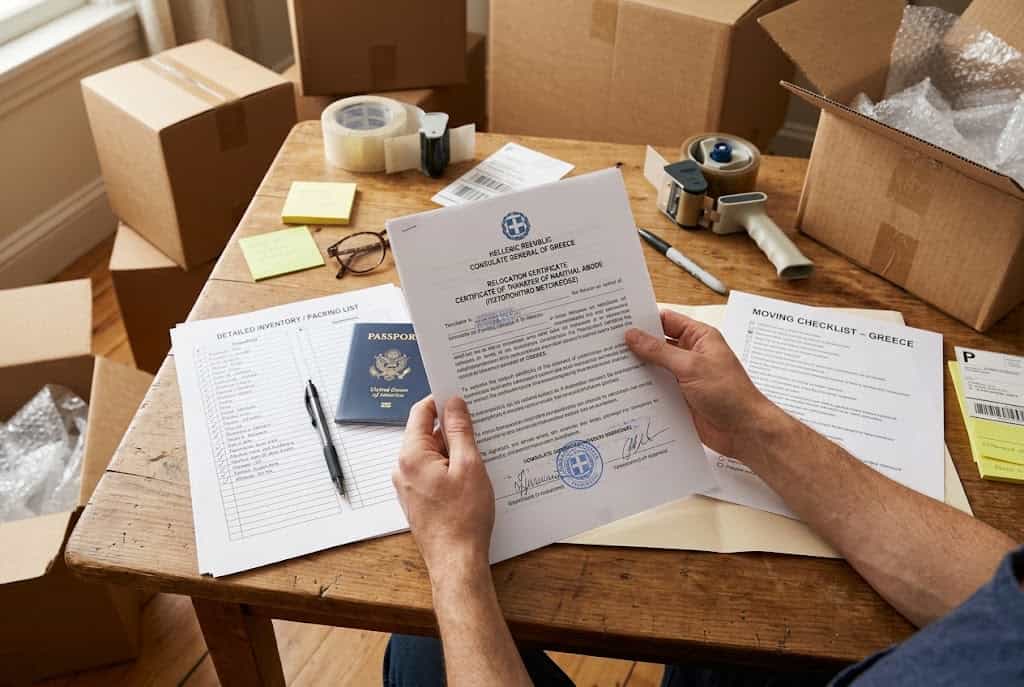
Customs clearance in South Korea requires a valid passport, your visa or residency documentation, a detailed itemized inventory with approximate values, and a bill of lading. A vague or incomplete inventory is one of the most common causes of delay: missing signatures, unclear valuations, or generic box-level descriptions rather than itemized listings all slow down the clearance process. Certain electronics, medications, and specialty goods fall into restricted categories that may require additional permits, and narcotics and weapons are prohibited under any circumstances.
Ocean Freight: Timelines from US Ports
Ocean freight from the US West Coast to Busan, South Korea’s primary container port, typically runs 18 to 25 days in transit. From the East Coast, add one to two weeks depending on routing. Total door-to-door time, including origin packing, port processing, ocean transit, and customs clearance in South Korea, generally runs eight to twelve weeks. Air freight is available for time-sensitive shipments and typically runs five to ten business days, though it’s priced for smaller volumes rather than full households. Many clients combine the two: essentials move by air while the bulk of their furniture and household goods follow by ocean freight on a separate timeline.
A Full Container Load (FCL), in a 20-foot or 40-foot container, gives you exclusive use of the container and makes sense for a full household or any shipment that includes a vehicle. A Less Than Container Load (LCL) consolidates your shipment with others heading to the same destination and is a more cost-effective option for smaller volumes like a one- or two-bedroom apartment.
SDC’s professional export packing service prepares furniture for the extended transit and handling involved in shipping to South Korea, including custom crating for higher-value pieces and proper wrapping for upholstered and wood furniture.
Frequently Asked Questions
Are new items I purchased before my move dutiable?
Yes. Items purchased within three months of your departure date are generally considered dutiable under South Korean customs regulations and may be assessed import duties on arrival. Items owned and used for three months or more are typically eligible for duty-free treatment. Your coordinator will review your inventory and flag any items that could trigger duties before your shipment departs.
Is there also a deadline for when my shipment has to arrive?
Yes, and it’s separate from the ownership rule above. Your shipment needs to physically arrive in South Korea within six months of your own arrival there. This is a logistics deadline tied to your move date, not to how long you’ve owned any particular item.
Can I ship my car along with my furniture to South Korea?
Yes, when it is containerized alongside your household goods. SDC does not offer car-only shipping or RoRo service. Eligibility depends on your residency status and documentation of ownership, and your coordinator will confirm requirements before booking.
Do returning Korean residents get a customs exemption?
Returning Korean residents who have lived abroad for one year or more may qualify for an expanded duty-free allowance on personal effects. The exemption depends on the length of your overseas residency and the documentation you can provide. Your coordinator will confirm eligibility based on your specific situation.
How do I get started?
Request a quote based on your furniture inventory and South Korea destination, and your coordinator will confirm the right container option, review your inventory against duty-free eligibility, and build a realistic timeline around your move date.