Moving to the Philippines
Article Updated: August 2026
The Philippines is one of the most accessible international relocation destinations for Americans. English is widely spoken, the cost of living is significantly lower than in the US, and the country has established visa pathways for retirees and long-term residents. This guide covers what Americans need to know before relocating: visa options, cost of living by city, healthcare, housing restrictions, and how to ship household goods from the US to the Philippines. SDC International Shipping is an FMC-licensed overseas moving company serving all 50 US states, with direct experience handling household relocations to the Philippines.

Why Expats Choose the Philippines
The Philippines has become one of the more popular destinations for American expats, particularly retirees and remote workers. English is an official language, which removes the language barrier that complicates relocation to much of Southeast Asia. The culture has strong American and Spanish influences, and the cost of living is considerably lower than comparable urban areas in the US.
Popular expat destinations include Cebu, Dumaguete, Baguio, Subic Bay, Davao, and Manila. Each has a different character: Cebu blends modern amenities with coastal access, Dumaguete offers a quieter retirement pace, Baguio provides cooler highland weather, and Manila offers the most professional and economic opportunities of any Philippine city.
Visa and Immigration
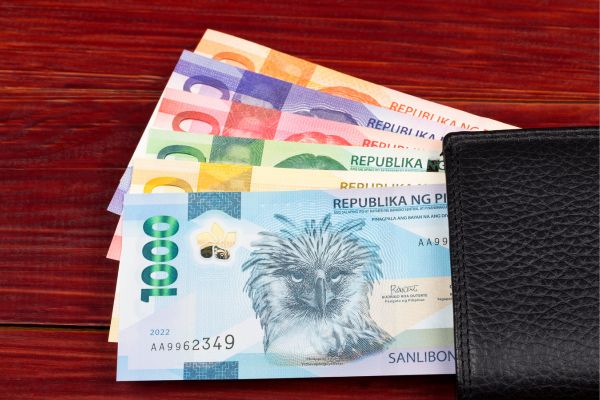
Understanding visa and immigration rules is a necessary part of preparing for your move. Requirements vary depending on whether you plan to work, retire, or simply live in the Philippines long-term.
Tourist Visa
Most Americans can enter the Philippines visa-free for an initial stay of 30 days. This can be extended up to 59 days at a Bureau of Immigration office. Long-term visitors may apply for multiple extensions, but this is not a sustainable arrangement for full-time residents.
Work Visa
If you plan on employment in the Philippines, you will need a work visa. The process requires sponsorship by a local employer, proof of qualifications, and government approval. Restrictions apply to foreign workers in certain industries, so confirming eligibility before accepting a position is important.
Retirement Visa (SRRV)
The Philippines offers a Special Resident Retiree’s Visa (SRRV), which allows qualifying retirees to remain in the country long-term. Benefits include multiple-entry privileges, exemption from certain exit clearance requirements, and duty-free importation of household goods up to a defined limit. Requirements typically include proof of a monthly pension or a qualifying time deposit in a Philippine bank. The SRRV is administered by the Philippine Retirement Authority and is one of the more straightforward long-stay visa options available to Americans.
Dual Citizenship
The Philippines permits dual citizenship, which is particularly relevant for Americans with Filipino heritage. Dual citizenship provides expanded rights including the ability to own land, vote, and work without foreign worker restrictions. The application process involves filing a petition, providing birth certificates, and in some cases attending an interview. Always consult the Philippine Embassy or a qualified immigration attorney for current requirements.
The Cost of Living in the Philippines
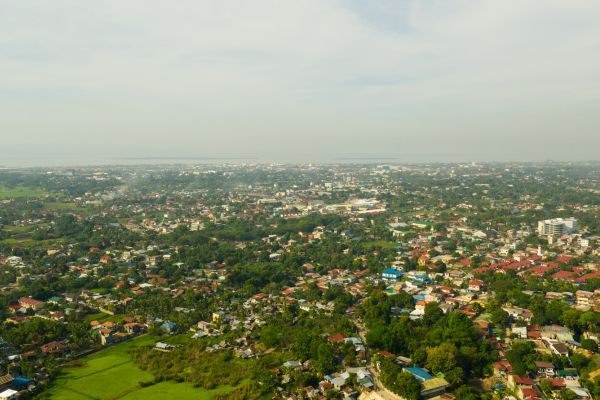
Cost of living is one of the primary reasons Americans relocate to the Philippines. Rent, healthcare, dining, and day-to-day expenses are all substantially lower than in the US, though costs vary meaningfully by city.
| Expense | Metro Manila | Cebu | Provincial City |
|---|---|---|---|
| 2-Bedroom Apartment | $700–$1,000 | $400–$700 | $300–$500 |
| Utilities | $100–$150 | $80–$120 | $60–$100 |
| Groceries (Family of 4) | $500 | $400 | $300 |
| Dining Out (mid-range, 2 people) | $25 | $20 | $15 |
| Private Healthcare Visit | $25–$50 | $20–$40 | $15–$30 |
A single adult can live comfortably on $600 to $1,200 per month depending on location. A family of four typically needs $1,800 to $2,500 per month. Manila and Cebu are the most expensive cities; provincial and secondary cities are considerably more affordable. Electricity costs are worth budgeting carefully in warm climates where air conditioning runs year-round.
Healthcare and Education
The Philippines has both public healthcare through PhilHealth and a private hospital network. Most expats use private hospitals in Manila, Cebu, and Davao, where standards of care are higher and facilities are accustomed to treating foreign patients. Doctor visit costs at private clinics start at around $20, and specialist consultations are considerably less expensive than equivalent US pricing.
For families with children, international schools are available in major cities with tuition ranging from $3,000 to $15,000 per year depending on school and grade level. Universities including Ateneo de Manila, the University of the Philippines, and De La Salle University accept international students at a fraction of US tuition costs.
Housing and Lifestyle
Foreign nationals cannot directly own land in the Philippines, but they can purchase condominiums. Renting is the most common choice for expats, particularly during the first few years while establishing residency. Popular expat neighborhoods in Manila include Makati, Bonifacio Global City, and Alabang. In Cebu, expats often settle in IT Park or near the beach resorts on Mactan Island.
For those seeking a quieter lifestyle, coastal towns like Dumaguete and Siquijor offer a slower pace with established expat communities and lower costs than the major urban centers.
Working and Doing Business
The Philippines has a growing economy with a strong outsourcing sector, expanding tourism, and active real estate development. Remote workers will find reliable internet in major cities, though speeds vary in rural areas. Foreign ownership of businesses is restricted in certain industries, but joint ventures with Filipino partners are a common and workable structure for entrepreneurs.
Shipping Household Goods from the USA to the Philippines
Most Americans relocating to the Philippines ship their household goods by ocean freight. The primary port of entry is the Port of Manila, with Cebu also handling container shipments for those relocating to the Visayas region. Ocean freight transit times from US West Coast ports to Manila typically run 18 to 25 days; from East Coast ports via the Pacific, expect 28 to 35 days.
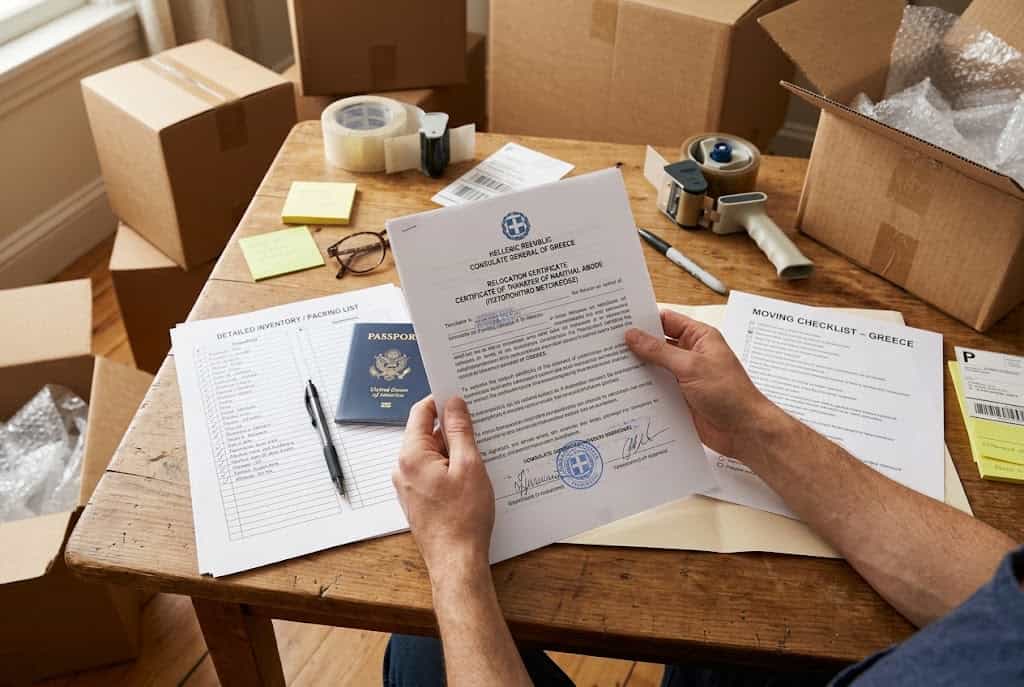
Philippine customs requires a detailed packing inventory for all arriving household shipments. It’s worth being precise here, because “duty-free” in the Philippines context isn’t one single rule. The Returning Resident and Balikbayan provisions under Section 800 of the Customs Modernization and Tariff Act apply specifically to Filipino citizens and OFWs returning home, not to foreign nationals relocating for the first time. As an American, your household goods clear under a separate Transfer of Residence allowance tied to your specific visa status: SRRV, 13A, work visa, or another qualifying residency document. The detail that catches people off guard is timing: your visa or residency document needs to be confirmed and in hand before your shipment reaches Manila. If your SRRV or 13A is still processing when the container docks, clearance under the duty-free allowance can’t proceed smoothly, and your coordinator should be timing the shipment’s departure against your visa timeline, not the other way around.
SRRV holders have access to a one-time duty-free importation allowance for qualifying household goods as a direct benefit of the visa, separate from the general Transfer of Residence process, which is worth confirming with your SDC coordinator before the shipment is packed.
SDC’s international packing and export documentation service covers inventory preparation, customs-compliant packing, and export paperwork from the US origin, which is particularly important for Philippines-bound shipments where inventory accuracy directly affects customs clearance speed at Manila port.
Common Challenges and How to Prepare
Relocating to the Philippines comes with practical challenges that are worth planning for. Traffic in Manila is significant and affects daily commute times. Government and bureaucratic processes can take longer than Americans are accustomed to. Power reliability varies by region, with occasional outages in provincial areas. Building in realistic timelines for visa processing, property rental, and customs clearance reduces friction considerably.
Frequently Asked Questions
How long does it take to ship household goods from the USA to the Philippines?
Ocean freight from US West Coast ports to Manila typically takes 18 to 25 days in transit. From East Coast ports, expect 28 to 35 days via Pacific routing. Door-to-door delivery, including packing, export clearance, ocean transit, Philippine customs, and final delivery, generally takes 8 to 12 weeks from the date of origin pickup.
Can I import my household goods duty-free when moving to the Philippines?
It depends on your status, and this is a common source of confusion. The Balikbayan box and Returning Resident duty-free provisions under Philippine customs law apply specifically to Filipino citizens and OFWs, not to foreign nationals. As an American relocating for the first time, your household goods and personal effects clear under a separate Transfer of Residence allowance, tied to a confirmed visa or residency document such as SRRV or 13A. SRRV holders have an additional one-time duty-free allowance for qualifying household goods as a direct visa benefit. The detail that matters most in practice: your residency document needs to be confirmed before your shipment arrives at Manila port, since clearance under any duty-free allowance depends on it. Documentation requirements include a detailed inventory, proof of prior US residence, and your confirmed visa or residency paperwork. Getting this right before the shipment departs is essential, as corrections at Manila port are time-consuming and costly.
Can foreigners own property in the Philippines?
Foreign nationals cannot own land in the Philippines but can own condominium units, provided foreign ownership in the building does not exceed 40% of the total units. Renting is the most straightforward option for newly arrived expats. Americans with Filipino dual citizenship can own land directly. For those interested in property purchase, working with a licensed Philippine real estate attorney is strongly recommended before committing to any transaction.