
Moving from Texas to Mexico: Sea Freight, Land Border, and Customs Explained
Texas is one of the most active origin states for moves to Mexico, and it has options that coastal states do not. A household in Houston, San Antonio, Dallas, or Austin can ship belongings to Mexico by sea through the Port of Houston, or in many cases by land across the shared border. Which routing makes sense depends on your volume, your destination in Mexico, and your timeline. This guide covers both, along with the Menaje de Casa customs process that applies regardless of how your goods travel.
For a door-to-door quote specific to your Texas city and Mexican destination, SDC International Shipping coordinates household goods moves to Mexico from across Texas and all 50 US states.
Texas to Mexico: Quick Facts
Sea Freight Origin Port: Port of Houston
Land Border Crossings: Laredo, McAllen, El Paso
Customs Document: Menaje de Casa (household goods inventory certified by a Mexican consulate)
Residency Requirement: Temporary or permanent Mexican residency visa
Visa Application: Begins at a Mexican consulate in the USA before entry
Sea Transit to Mexican Gulf Ports: 5 to 10 days
Land Transit: 2 to 5 days depending on destination
Total Door-to-Door: about 6 to 12 weeks by sea in an exclusive container, often considerably less for land transport to northern Mexico
Vehicle Shipping: Only containerized with household goods, and the car needs its own Mexican import approval
Sea Freight vs Land Border: Which Makes Sense
Texas is unusual among US origin states in offering a genuine choice between sea freight and land transport to Mexico. For a household in California or New York, sea freight is effectively the only practical option. For a Texas household, the shared border changes the calculation.
Sea freight through the Port of Houston
The Port of Houston is the primary sea freight gateway for Texas-origin moves to Mexico. Containers ship to Mexican Gulf ports, most commonly Veracruz or Altamira, with an ocean transit of roughly 5 to 10 days. Sea freight is generally the better choice for larger households, full-container loads, and destinations in central or southern Mexico that are closer to the Gulf ports than to the northern land border. It also keeps your goods in a single sealed container from origin to destination, which simplifies handling and reduces the number of handoffs.
Land transport across the border
For smaller volumes and destinations in northern Mexico, land transport across the Texas-Mexico border can be faster and more cost-effective. The major commercial crossings at Laredo, McAllen, and El Paso handle a large share of US-Mexico freight. Land transport can reach northern Mexican cities like Monterrey in a matter of days. The documentation rigor is identical to sea freight: the Menaje de Casa, residency visa, and supporting documents are required regardless of how the goods physically cross the border. Land routing does not mean lighter paperwork.
How SDC helps you decide
Your SDC coordinator weighs your shipment volume, your destination city, your timeline, and cost to recommend the routing that fits your move. A family relocating from Houston to Mérida with a full household typically ships by sea to Veracruz. A couple moving from San Antonio to Monterrey with a partial household may be better served by land. There is no single right answer, which is exactly why the routing decision is made per move rather than by default.
The Menaje de Casa: Required Either Way
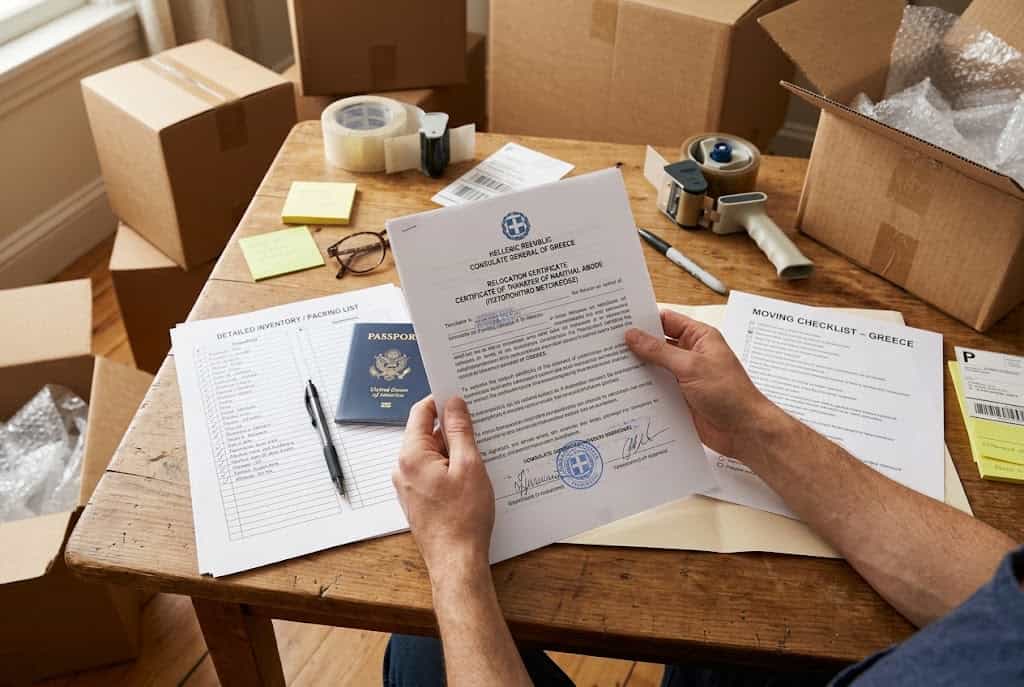
The Menaje de Casa is the customs document that allows you to import your used household goods into Mexico duty-free. It is a detailed inventory of everything in your shipment, certified by a Mexican consulate, and it establishes your right to bring personal belongings into Mexico without paying import duties. It is required whether your goods travel by sea or by land.
What it requires
To qualify for the Menaje de Casa duty-free exemption, you must hold a valid Mexican residency visa, either temporary or permanent, and the items in your shipment must have been owned and used by you prior to the move. New or commercial goods do not qualify. The Menaje de Casa must be prepared and certified by a Mexican consulate before your shipment sails. The goods must reach Mexico within six months of your first entry as a resident, and the benefit is one-time. Consulate appointments can take several weeks to get, so this is not a step to leave until the last minute.
Apply for residency before you enter Mexico
This is the single most important sequencing point for a Mexico move. You cannot apply for Mexican residency after entering the country as a tourist, and the Menaje de Casa duty-free exemption requires a residency visa. The residency application begins at a Mexican consulate in the USA before you cross the border. For Texas residents, the Mexican consulates in Houston, San Antonio, Dallas, El Paso, and other Texas cities process these applications. Starting the residency process early is what makes the rest of the move possible. Your SDC coordinator will explain the document sequence specific to your visa type and destination.
The most common cause of delays at Mexican customs is a missing, incomplete, or improperly certified Menaje de Casa. Getting this document right, and getting it done early, is the difference between a smooth clearance and a shipment held at the border.
Shipping a Vehicle from Texas to Mexico
Many Texas households moving to Mexico bring a vehicle. SDC ships cars only when they are containerized with household goods, and does not handle vehicle-only shipments. A container is the safer method compared to open transport, but the car still clears Mexican customs on its own approval, separate from the Menaje de Casa.
Which approval applies depends on your status. Temporary residents can generally bring a foreign-plated car under a Temporary Import Permit from Banjercito, tied to their immigration status. Permanent residents cannot get that permit, so the car would have to be permanently imported, which is limited to a model-year window that moves forward each November, or kept inside a border free zone. Confirm the route before the car goes into a container. Your SDC coordinator reviews your vehicle’s eligibility before booking so there are no surprises at the border. SDC’s international packing and export documentation service covers the household goods preparation and the customs inventory that supports both your belongings and your vehicle.
Common Texas-to-Mexico Routes
Texas households move to a wide range of Mexican destinations, and the routing often follows the destination.
Northern Mexico: Monterrey and the border region
Monterrey, one of Mexico’s largest business hubs, is a short distance from the Texas border. Moves to Monterrey and other northern cities are often well-suited to land transport through Laredo or Colombia Solidarity Bridge given the proximity.
Central Mexico: Mexico City, San Miguel de Allende, Querétaro
Central Mexico destinations, popular with American professionals and retirees, can be served by either sea freight to Veracruz with onward inland transport, or by land depending on volume. San Miguel de Allende in particular has a large American expat community.
The Yucatán and Riviera Maya: Mérida, Playa del Carmen, Tulum
Destinations in the Yucatán Peninsula and along the Riviera Maya are typically best served by sea freight to a Gulf port given the distance from the northern land crossings. Mérida has become one of the most popular relocation destinations for Americans in recent years.
Frequently Asked Questions
Is it better to ship from Texas to Mexico by sea or by land?
It depends on your shipment volume and destination. Sea freight through the Port of Houston is generally better for larger households and destinations in central or southern Mexico closer to the Gulf ports. Land transport across the border at Laredo, McAllen, or El Paso can be faster and more cost-effective for smaller volumes and northern Mexican destinations like Monterrey. The customs documentation is identical for both. Your SDC coordinator recommends the routing based on your specific move.
What is the Menaje de Casa and do I need one moving from Texas?
The Menaje de Casa is an inventory of your household goods, certified by a Mexican consulate, that allows you to import used personal effects into Mexico duty-free. It is required for any household goods move to Mexico under a residency visa, regardless of whether you ship from Texas by sea or by land. Without it, your shipment may be assessed import duties. The consulate has to certify the list before your shipment sails, and appointments can take several weeks, so start early.
Do I need a Mexican visa before I move from Texas?
Yes, if you want to import your household goods duty-free. The Menaje de Casa exemption requires a temporary or permanent residency visa, and you must apply for residency at a Mexican consulate in the USA before entering Mexico. You cannot apply for residency after entering as a tourist. Several Mexican consulates operate in Texas, including in Houston, San Antonio, Dallas, and El Paso.
How long does it take to move from Texas to Mexico?
For sea freight in an exclusive container, plan on about 6 to 12 weeks door to door; a shared container runs longer, about 8 to 14 weeks. Land transport to northern Mexico is often considerably shorter. Sea freight from the Port of Houston to a Gulf port runs 5 to 10 days on the water, with the full door-to-door timeline depending on packing, customs clearance, and onward inland transport to your final destination. Your SDC coordinator provides a specific timeline based on your move.
Can I ship my car from Texas to Mexico with my household goods?
Yes, but only containerized with household goods. SDC does not handle vehicle-only shipments. The car is not part of the Menaje de Casa and needs its own Mexican import approval: temporary residents can generally use a Banjercito Temporary Import Permit, while permanent residents face permanent importation within a model-year window or a border free zone. Your coordinator reviews your vehicle’s eligibility before booking.