What Documents Do I Need to Ship Household Goods to Vietnam?
Vietnam is one of the fastest-growing relocation destinations in Southeast Asia, but its customs process is stricter than many first-time movers expect. As an FMC-licensed door-to-door moving company, here’s what actually needs to be in place before your household goods can clear customs and be released to you in Vietnam.
The One Requirement That Trips Up Most People
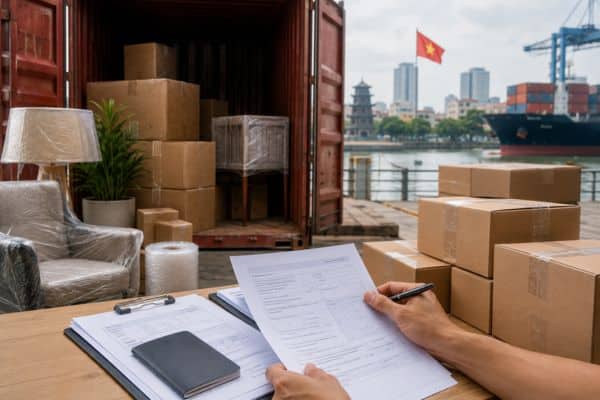
Vietnam’s customs clearance for household goods is tied directly to your work status. You generally need a valid work visa or work permit, and you need to be employed by a registered company or organization in Vietnam, before your shipment can clear. Without that in place, clearance can become complicated or stall entirely. This catches people who assume the process works like a typical duty-free personal effects move; in Vietnam, it doesn’t, unless your employment status is squared away first.
Returning Vietnamese citizens should pay particular attention here too: importing personal effects back into Vietnam is generally very difficult unless you worked overseas for a foreign company and are returning to continue working for that same company. It’s worth confirming your specific eligibility well before you book a shipping date, not after your container is already at sea.
Core Documents You’ll Need
- Passport, valid and matching the name on your visa and work permit
- Work visa or work permit, confirming your employment status in Vietnam
- Detailed packing list and inventory, itemized and valued; this is one of the documents customs relies on most heavily
- Bill of lading (a copy is generally sufficient for household goods clearance)
- Customs declaration form for import goods, completed for your specific shipment
- Arrival Declaration Form, which confirms you have an unaccompanied shipment arriving by sea or air. This one is easy to miss: it is not handed to you automatically at the airport. You have to specifically request it from customs and have it stamped before you leave the port of entry, and you’ll need it to support your shipment’s clearance later.
Which port you’re entering through matters for paperwork copies too: shipments arriving into Hanoi generally require 3 copies of your documents, while Ho Chi Minh City generally requires 2. Confirm the exact requirement for your specific port before you finalize your paperwork, since this is the kind of detail that varies and isn’t always obvious from general guidance.
Vietnamese customs can also request translations of your documents into Vietnamese, so it’s worth having key documents, particularly your inventory and any permits, ready to translate if asked rather than scrambling once your shipment has already arrived. This isn’t required upfront in every case, but it’s a common enough request that planning for it saves real time if it comes up.
Frequently Asked Questions
Can I ship household goods to Vietnam before my work visa is approved?
It’s possible to have your shipment in transit while your visa is finalized, but clearance on the Vietnam side generally depends on your work status being confirmed by the time your shipment arrives. Coordinating your shipping timeline against your visa timeline, rather than treating them as unrelated, avoids your goods sitting in a bonded warehouse waiting on paperwork.
Does Vietnam allow duty-free import of used household goods?
Used personal effects generally face more favorable treatment than new goods, but Vietnam’s process is more employment-status-dependent than a straightforward “used items are duty-free” rule. Your coordinator can confirm what applies to your specific situation based on your visa category and employer.
Which port should I expect to clear through, Hanoi or Ho Chi Minh City?
This depends on where you’ll actually be living and working in Vietnam, since it determines the more practical port of entry for your shipment. Confirm this early, since it affects how many copies of your documents you’ll need to prepare.
What Gets Extra Scrutiny
New electric appliances, alcohol and wine, and antique items are among the highest-duty categories, and shipments containing them tend to draw closer inspection. If you’re bringing new (not used) electronics or appliances, expect them to be assessed differently than the rest of a normal household shipment, and budget for the possibility of duty on those specific items even if the bulk of your shipment clears without issue.
Vietnam also applies quarantine checks through its Ministry of Agriculture and Rural Development for anything that could carry plant, soil, or animal material, outdoor furniture, garden tools, hiking or camping gear, that sort of thing. Cleaning these items thoroughly before they’re packed measurably reduces the chance of a quarantine hold once your shipment lands. This is a small step that’s easy to overlook and genuinely worth the extra ten minutes per item.
Random Inspections Are Part of the Process
Vietnamese customs conducts random examinations on a portion of shipments to check compliance, separate from the quarantine checks above. This isn’t a sign anything is wrong with your shipment specifically; it’s a routine part of how the system operates. Where it does matter is if a previous shipment under your name had a compliance issue, in which case a more thorough whole-lot examination can apply. Keeping your documentation clean and consistent from the start is the best way to stay on the routine side of that line.
Packing With Vietnam’s Process in Mind
Because your inventory list is one of the documents customs leans on most, accuracy matters more here than on some other corridors. Professional packing with a matching, itemized inventory reduces the back-and-forth if customs has questions about specific items, particularly anything new, high-value, or in the quarantine-risk category. See our packing services page for how we build that inventory alongside your packing.
Getting Started
Vietnam’s process rewards preparation more than most corridors: confirming your work visa status, getting your inventory precise, and knowing your entry port’s specific document requirements before you ship all reduce the odds of a delay once your container arrives. Request a free quote and your coordinator can walk through what your specific move to Vietnam requires.