
Container Shipping vs Roll-On Roll-Off: What’s Better for Your Vehicle?
Why This Decision Matters More Than You Think
If you’re moving overseas and planning to ship a vehicle, one of the first questions you’ll encounter is this:
Should you choose container shipping or roll-on roll-off?
At first glance, roll-on roll-off, commonly called RoRo, often appears cheaper and simpler. Container shipping may look more structured but more expensive. Many online comparisons stop there.
But when you’re relocating your household internationally, the decision isn’t just about the car.

It’s about protection, customs coordination, insurance eligibility, and whether your vehicle is traveling alone or alongside your household goods.
If you’re reviewing how full door-to-door relocations are structured, you can start with our international household movers overview here:
https://www.sdcinternationalshipping.com/international-movers/
Now let’s break down why this choice matters.
What Is Roll-On Roll-Off Shipping?
Roll-on roll-off shipping is exactly what it sounds like.
Your vehicle is driven onto a specialized car carrier vessel at the port of departure. It is secured inside the ship’s internal garage decks, transported overseas, and then driven off the vessel at destination.
RoRo is vehicle-only transport. You cannot load personal household goods inside the vehicle. Ports typically require vehicles to be empty except for factory-installed equipment.
This method is often used for dealership inventory, fleet exports, or standalone vehicle shipments.
What Is Container Shipping?
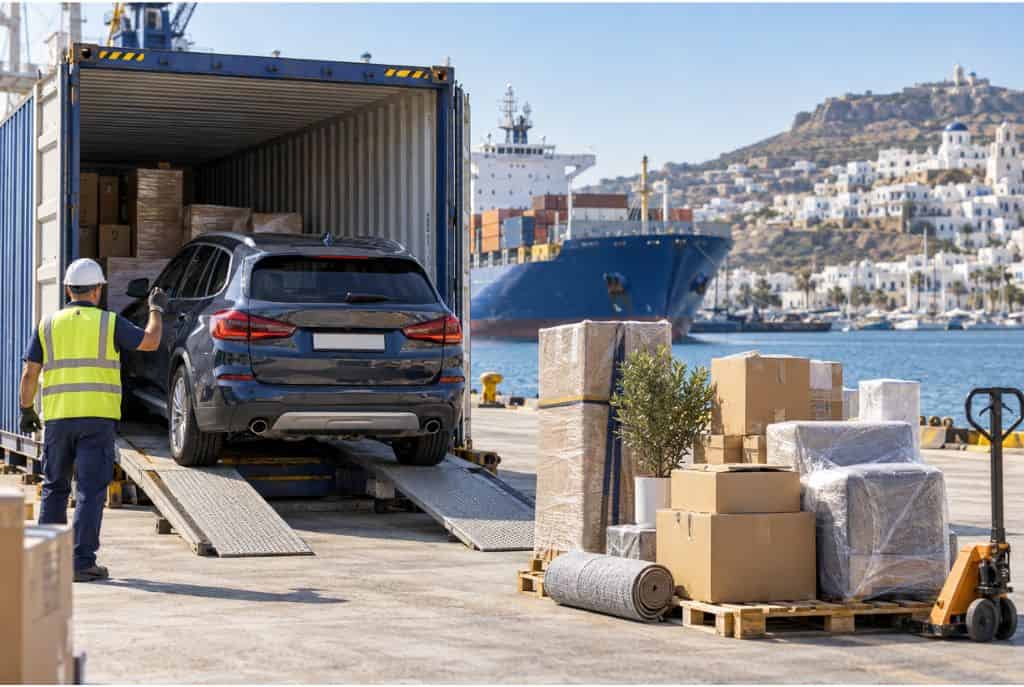
Container shipping places your vehicle inside a sealed ocean freight container.
The container may be dedicated to your household, or shared strategically depending on volume. When relocating internationally, vehicles are often loaded inside the same container as household goods when space allows.
Containerization provides enclosure. Your vehicle is protected from external exposure and secured inside the container alongside other items, if applicable.
This structure is especially relevant for families moving an entire household overseas rather than shipping a car independently.
You can learn more about how containerized transport works here:
https://www.sdcinternationalshipping.com/international-shipping-containers/
The Biggest Misconception About Vehicle Shipping
Many people assume RoRo is automatically better because it is marketed as cheaper.
But the lowest upfront price does not always equal the best overall strategy.
When moving internationally, your vehicle shipping method affects:
Customs processing
Insurance structure
Transit handling
Scheduling coordination
Overall relocation simplicity
This decision becomes part of your broader logistics plan, not just a transportation detail.
Container Shipping vs RoRo: Protection and Risk Differences
Now that you understand how each method works, let’s compare them where it matters most: protection.
When you’re relocating internationally, your vehicle is not just being transported. It’s entering a global logistics chain that includes port handling, vessel loading, unloading, customs processing, and inland delivery.
How it travels through that chain makes a difference.
Exposure During Transit
With roll-on roll-off shipping, your vehicle is driven onto the vessel and parked inside a large cargo deck alongside many other vehicles. While it is secured, it is not enclosed in a private container.
RoRo ships are secure, but not sealed per vehicle. Your car remains in an open deck environment inside the vessel.
With container shipping, your vehicle is loaded into a sealed container. Once the container doors are closed and secured, it remains enclosed until it is opened at destination.
That enclosure provides:
Additional physical protection
Reduced exposure during port handling
More controlled access
For families shipping household goods alongside a vehicle, containerization keeps everything moving within the same sealed freight unit.
Handling Points and Coordination
RoRo shipments are handled separately from household goods.
If you are shipping your car independently from your furniture, that may not matter. But if you are relocating your entire household, separate vehicle routing can create coordination complexity at destination.
Containerized vehicle shipping allows your car to move under the same freight documentation as your household goods, when space allows.
Fewer separate shipments means simpler coordination.
That simplicity becomes especially important during customs clearance and final delivery scheduling.
Insurance Considerations
Insurance structure also differs between methods.
With containerized shipping, your vehicle is typically covered under marine cargo insurance within the same declared value structure as your household shipment.
RoRo shipments may require separate insurance arrangements depending on carrier terms and declared value.
Understanding how coverage applies before booking is critical.
You can explore marine cargo insurance options here:
https://www.sdcinternationalshipping.com/international-moving-insurance/
Protection is not just about transit.
It is about financial risk management.
When RoRo Makes Sense
Despite the differences, RoRo is not automatically a bad option.
There are specific scenarios where it may be appropriate.
Standalone Vehicle Shipments
If you are not relocating a household and only need to ship a vehicle, RoRo may offer a straightforward solution.
Dealership exports, classic car transfers, or independent vehicle shipments sometimes use RoRo due to vessel availability.
However, this is typically outside the scope of full household relocation planning.
Budget-Driven Decisions
RoRo is often marketed as a lower-cost option compared to container shipping.
In certain ports and on specific routes, it may offer reduced base freight rates.
But lower base cost does not always equal lower overall relocation complexity.
When evaluating RoRo pricing, it is important to account for:
Separate customs handling
Separate delivery coordination
Separate insurance structure
The total relocation picture matters more than a single freight line item.
When Container Shipping Is the Better Choice
For most families relocating overseas with household goods, container shipping is the preferred method.
The reason is simple.
It aligns the vehicle with the broader logistics plan.
Moving a Household and a Vehicle Together
If you are relocating your entire home, container shipping allows your vehicle to travel alongside your household goods when volume permits.
Instead of coordinating two separate freight movements, you consolidate documentation, customs processing, and delivery scheduling into a single structured shipment.
One container. One customs file. One delivery coordination.
That simplicity reduces administrative complexity and minimizes the risk of mismatched arrival timelines.
Higher-Value or Specialty Vehicles
If you are shipping a luxury vehicle, classic car, or modified vehicle, containerization provides an added layer of control.
The vehicle is secured inside a sealed unit rather than positioned in an open-access vessel deck environment. This can be particularly important for:
Lower-clearance vehicles
High-value models
Collector cars
Vehicles with non-standard modifications
Container loading also allows for additional bracing and securing to prevent movement during transit.
Protection becomes part of the freight structure rather than an afterthought.
Greater Flexibility in Scheduling
Container shipments operate within standard ocean freight systems, which often provide broader routing flexibility than RoRo vessels that operate on specific car-carrier routes.
If your relocation timeline must align with:
Household shipment departure
Customs documentation sequencing
Housing availability
Containerized shipping allows your vehicle to move within the same logistics window.
That alignment reduces storage risk at destination.
Why We Rarely Recommend Vehicle-Only Shipments
At SDC International Shipping, our primary focus is full household relocations.
We typically containerize vehicles alongside household goods rather than offering standalone vehicle-only shipping services. This approach ensures the move is structured holistically instead of fragmented across multiple providers.
If you are planning to ship both your household goods and a vehicle, we strongly recommend a containerized strategy that integrates both under one coordinated plan.
You can review how our full international household relocation services are structured here:
https://www.sdcinternationalshipping.com/international-movers/
How to Decide Which Option Fits Your Move
The right choice depends on context.
If you are shipping a vehicle alone and cost is your primary concern, RoRo may be an option depending on port availability and route.
If you are relocating an entire household and want simplicity, protection, and synchronized delivery, container shipping is typically the smarter long-term solution.
This decision should not be made in isolation.
It should be made within the context of your full international moving strategy.
Cost Comparison and How to Make the Right Choice
When comparing container shipping and roll-on roll-off, the conversation often starts with base freight cost.
But that’s only one piece of the equation.
RoRo may present a lower upfront shipping rate on certain routes. However, it typically applies to standalone vehicle shipments and requires separate coordination from household goods. That means separate customs documentation, separate arrival handling, and separate delivery scheduling.
Lower base cost does not always equal lower total complexity.
Container shipping, on the other hand, integrates your vehicle into your broader international relocation plan. When moving a full household overseas, that integration reduces coordination layers and keeps documentation under a unified structure.
Think Beyond Freight Rate
Before choosing a method, ask yourself:
Are you shipping only a vehicle, or relocating your entire household?
Do you want synchronized arrival with your furniture?
Is protection a priority for your specific vehicle?
Are you trying to simplify customs and delivery logistics?
If your move includes household goods, containerized vehicle shipping usually aligns better with the overall relocation strategy.
It keeps the move structured.
It keeps documentation streamlined.
It reduces fragmentation.
What We Recommend for International Relocations
At SDC International Shipping, our focus is complete door-to-door international household relocations.
When clients are shipping both household goods and a vehicle, we typically recommend containerized transport. It allows us to coordinate packing, loading, customs documentation, and delivery under one comprehensive plan.
RoRo may be suitable for standalone vehicle shipments, but when moving an entire home overseas, containerization usually offers greater control and logistical alignment.
You can review how our international moving process works from pickup through final delivery here:
https://www.sdcinternationalshipping.com/international-movers/
Because vehicle shipping should not be treated as a separate transaction.
It should be part of your relocation strategy.
Get a Vehicle Shipping Plan That Fits Your Move
If you’re planning to ship a vehicle overseas, the right method depends on how it fits into your full relocation.
Rather than choosing based on a single freight quote, evaluate the entire move.
At SDC International Shipping, we assess your shipment volume, destination country, customs requirements, and housing timeline before recommending a transport structure.
Whether your vehicle travels inside a sealed container alongside your household goods or requires a different solution, the goal is coordination, protection, and simplicity.
If you’re preparing for an international move and want clarity before committing, speak with one of our relocation specialists today.
Because moving overseas isn’t just about getting from port to port.
It’s about arriving fully organized.